
1440 × 960 Zirconia crowns and bridges · Recommended upload size · px
Zirconia crowns and bridges
Single-unit and multi-unit restorations in monolithic or layered zirconia, finished to the shade and surface the prescription asks for.
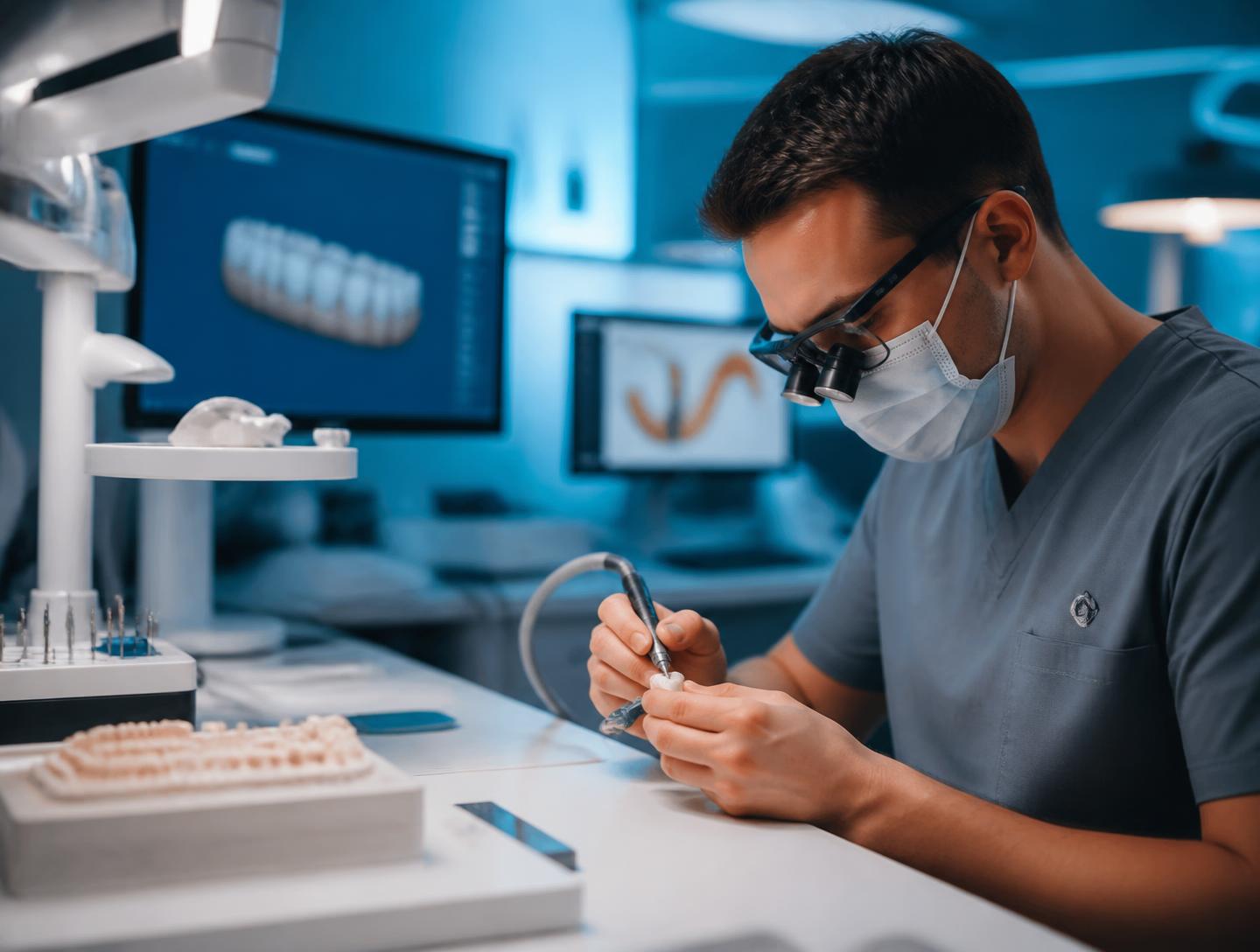
Istar is a full-service 3D dental lab running an in-house digital workflow — CAD design, 3D printing, CAM milling, ceramic work, and independent QC — across two plants with around 460 trained technicians. Routine crowns and bridges leave the floor in 2–3 business days, every job passes three independent QC gates before packing, and the quality system is audited to ISO 13485. English-speaking account managers stay with each case from file receipt through shipment, with FDA, UK MHRA, and EU MDR documentation available on request.
Single-unit and multi-unit restorations in monolithic or layered zirconia, finished to the shade and surface the prescription asks for.
Screw-retained or cement-retained restorations built on verified implant libraries, with abutments matched to the implant system you use chairside.
Full-arch solutions for edentulous and terminal-dentition cases, including verification jig and try-in stages before the final bar or bridge is released.
Complete and partial dentures with record-setup, wax or digital try-in, and finishing — covering both conventional and digitally designed workflows.
Occlusal appliances built to the hardness and thickness the dentist prescribes, with consistent wall thickness across the arch.
Tooth-, mucosa-, or bone-supported guides for predictable implant placement, planned from CBCT merged with an intra-oral scan.
Pre-treatment visualization and communication aids for complex esthetic and prosthodontic case planning, including gingival-mask options.
Short-term crown-and-bridge restorations for the healing and provisional phases, finished to a smooth surface that handles tissue well.
Inside a 3D printing dental lab the handoffs are what move the schedule, not the machines. A routine zirconia crown-and-bridge case passes nine stages:
Receipt and triage. Scans and prescriptions arrive by email, transfer platform, or courier. File counts are confirmed back inside business hours.
CAD design. A senior CAD specialist reviews the design before a puck is cut.
Working model. The model is printed and the case moves to milling and the ceramic bench in parallel.
Milling. Zirconia is milled and nested for the furnace.
Sintering and shade work. Logged sintering profiles, per batch.
Porcelain layering, staining, glazing. The ceramic team handles layering and glaze.
Polishing and finishing. Bench-finished by a trained technician.
Inspection. Three independent gates run before anything is packed.
Packing. Shock-absorbing packaging; the parcel leaves with a tracking number.
All-on-X and full-arch cases add a technical-lead review before milling and again before release.
Three failure points come up more often than the rest. Each is caught at a different stage:
Incomplete or contradictory data at receipt. Production pauses the same day and the question goes back to the clinic. The lab clock restarts only once the file is complete — waiting on design approval, a missing asset, or a client reply sits outside the quoted number.
Margin and seating problems during CAD. Unclear prep margins, scan bubbles, or a model that won't seat get flagged at the CAD review before any material is cut.
Shade, contact, or occlusion drift at the end. Final release goes to an independent QC technician — one who did not fabricate the piece. If any gate fails, the case re-enters production without waiting for permission.
If something still slips through, report it within 24 hours of receipt with patient name, case number, product, complaint reason, and photographs. That package is what lets the technician and QC lead trace the cause and fix it.
Digital cases. STL, PLY, OBJ, DCM, 3Shape native, and major CAD exports are all accepted, together with the opposing arch, bite registration, and a shade photograph when color is critical.
Physical cases. VPS, polyether, or condensation-silicone impressions are preferred, with stone or printed resin models accepted. Impressions with margin issues or deformation that would compromise fit are flagged on receipt and a re-impression requested before production starts.
Istar works in monolithic and multilayer zirconia, dental porcelains and stains, titanium and casting alloys, denture base resins and acrylic teeth, PEEK, and 3D-printing resins for guides, models, and temporaries. All materials come from CE-marked suppliers with biocompatibility verified under USP Class IV elution testing and the ISO 10993 series — the pathway called out as the standard in MDPI Journal of Composites Science 9(11):579.
Restorations shipped to the United States fall under the matching FDA device-listing category for custom crowns, bridges, abutments, dentures, and temporaries, within the dental-device framework of 21 CFR Part 872. Per case, we can hand over material batch number, country of origin, and certificate of conformity.
Precision follows peer-reviewed thresholds: full-arch resin models produced on current SLA and DLP systems reach RMS trueness of 73.9–194 µm, every value inside the 0.2 mm clinically acceptable threshold (Scientific Reports, 2025). Digital-workflow planning follows the ADA 3D Printing in Dentistry guide.
A 3D dental lab is only as reliable as the last pair of eyes on each case. Every job passes three independent gates: incoming data check, in-process audit, and final release by a QC technician who was not the fabricator. Any additional acceptance criteria set in writing at design approval become the standard for the account.
Fixed restorations — margin seal, intaglio surface, interproximal contact, and occlusion on the model; centric, protrusive, and lateral excursions verified; premature contacts removed.
Implant work — interface fit, screw-channel geometry, passive seat with no rocking under finger pressure, part-number matching across every component.
Full-arch and bridges — passive seat, cross-arch dimensional symmetry, midline.
Release measurement — magnification, scan-match verification, and digital measurement where it adds information the eye cannot.
Workmanship remakes are free. On fixed work that covers margin opens, open contacts, high bites, non-seating crowns, shade mismatches traceable to us, visible aesthetic flaws, and form errors. On removable it covers framework non-seating, flange over-extension, poor clasp design, patient-visible aesthetics, bite inaccuracy, and verifiable shade complaints.
Charged: changes of shade or material requested after approval, and cases built to a known-poor impression you asked us to proceed on.
Remake cases are scheduled ahead of routine work and typically add 3–5 business days. If a case fails after two consecutive remakes, we refund it.
Routine cases: 2–3 business days. Complex cases: 5–7 business days. The clock starts once case data is complete and covers the production floor only; shipping, customs, weekends, and Chinese public holidays sit outside it.
Outbound shipping runs through DHL, FedEx, UPS, or SPIDER (France), billed to your account or ours, with cases consolidated into a single parcel where possible. Rush work is accepted at any point, and a priority slot opens if a case needs a re-scan or re-impression mid-production.
Each account gets a dedicated account manager plus a case-coordination team. Support runs 09:30–18:00 China time, and managers stay reachable into the evening on complex cases. Technical questions are usually answered within the hour during working hours, and 12 hours is the outside limit across time zones. Case meetings, complex-case reviews, EU custom-device declarations, material certificates, and product labels are handled in English.
The referring dentist owns shade, shape, occlusion, contact tightness, framework design, and material choice.
Changes requested before a puck is cut or a part printed stay inside the quoted turnaround and fee. Approvals and change requests are logged in writing — a verbal approval does not reach the floor.
Multi-site DSOs get per-dentist preferences stored and tagged by site, so a crown from clinic A cannot pick up clinic B's contact or shade habits.
Design approvals, production status, and QC results are visible in your account channel.
A 3D printing dental laboratory holds patient scans by nature, so the handling rules are explicit. Every case carries a unique job number that follows it through design, production, and inspection. The floor uses the number instead of a patient name; patient details stay with the coordinators who need them.
Original scan data, patient images, and materials you send remain your property, and our use of them is limited to producing that case. An NDA can be signed with the company, with individual coordinators, or with both. Case photographs are not used in marketing or training without written authorization from clinic and patient, and anonymization comes first when such use is approved. Records are held for 3 months by default, longer on written request, and deleted within an agreed window on request — only the minimum compliance audit trail is retained.
Customer audits of the quality system, production records, and supplier records are supported.
Shenzhen opened in 2012; Huizhou followed as the order book grew past what one site could absorb. Both plants run on the same SOPs, the same equipment profiles, and the same QC thresholds — so a case does not pick up a different habit depending on which building catches it.
CAD, milling, implant, ceramic, removables, and QC each run as a dedicated team instead of a shared bench. The payoff is specialist judgment on every stage of a case and a bench deep enough that a technician's absence does not shift your turnaround.
Normal month: around 8,000 zirconia crowns, 2,000 bridge cases, 20 All-on-X arches, and 4,000 removable units. Peak month: roughly 15,000 / 3,000 / 40 / 6,500. The lift comes from a trained reserve already on the roster, so busy season does not borrow against QC.
ISO 13485 governs the laboratory; FDA establishment registration and device listings cover the US market; UK MHRA registration and the EU MDR custom-device route cover post-Brexit Britain and the EU for Class IIa restorations. The paperwork is current and the device-listing numbers can be sent on request.
Independent clinics ship weekly in consolidated parcels. Multi-site DSOs route cases to each location direct. Partner labs that outsource get design previews, STL files, screenshots, and QC assets handed back in their format and under their acceptance standards — a white-label workflow that keeps their client relationship intact.
A single case is the fastest way to see whether the workflow fits yours. Dentist-direct accounts can send one and go; partner-lab accounts agree a working volume up front, so shipping and scheduling make sense from the first batch.
One design round plus two free revisions. Further changes are treated as a new design assignment.
Yes. Each case number is bound to the technician who ran each stage, the equipment used, the raw material batch, and the inspection result at every gate. Those records are archived and available to the account.
The reference shade, reference photographs, and original design file are locked at the start. Material batch and sintering profile are fixed for the run, a reference sample is kept beside the batch for comparison, and QC cross-checks colour, translucency, and anatomy between batches rather than within one.
Bank transfer or PayPal, settled per batch, with a monthly statement for accounts that prefer one. New accounts can apply for 30-day terms.
Custom occlusal splints, pre-formed soft guards, dual-laminate guards, and periodontal splints. Thickness is measured with calipers at several points against the prescription, edges are checked for smoothness and extension, and retention is tested on the model for seat and release.
The simplest route is to send a case through whichever channel you already use — email, transfer platform, or courier. A file confirmation goes back inside business hours, and a design preview comes before any material is cut.
Ask for the product and material catalogue — the complete list of what we make and what we make it from.
Book a 20-minute technical call with an account manager to walk through workflow, acceptance standards, and documentation.
Schedule a plant visit at either site, or a video audit if travel is not practical.
Email the sales team or reply through your existing account channel to set any of these up.
Want to get in touch directly? Reach out to our sales representative via WhatsApp at +8618925410015 for a quick response and a price quote!