Istar removable denture production

Partial Dentures — Case-First Lab Service for Clinics

A partial denture is a removable appliance that replaces a few missing teeth while the natural teeth that remain stay in the mouth. From a lab point of view, that short definition hides most of the real decisions: which case belongs on a cast metal frame and which does not, how a free-end saddle changes the clasp map, when a flexible nylon makes sense and when it blocks future additions, and what a model has to look like before any of this is worth starting.

overview — recommended upload 1440 × 960 pixels

Partial Dentures We Build

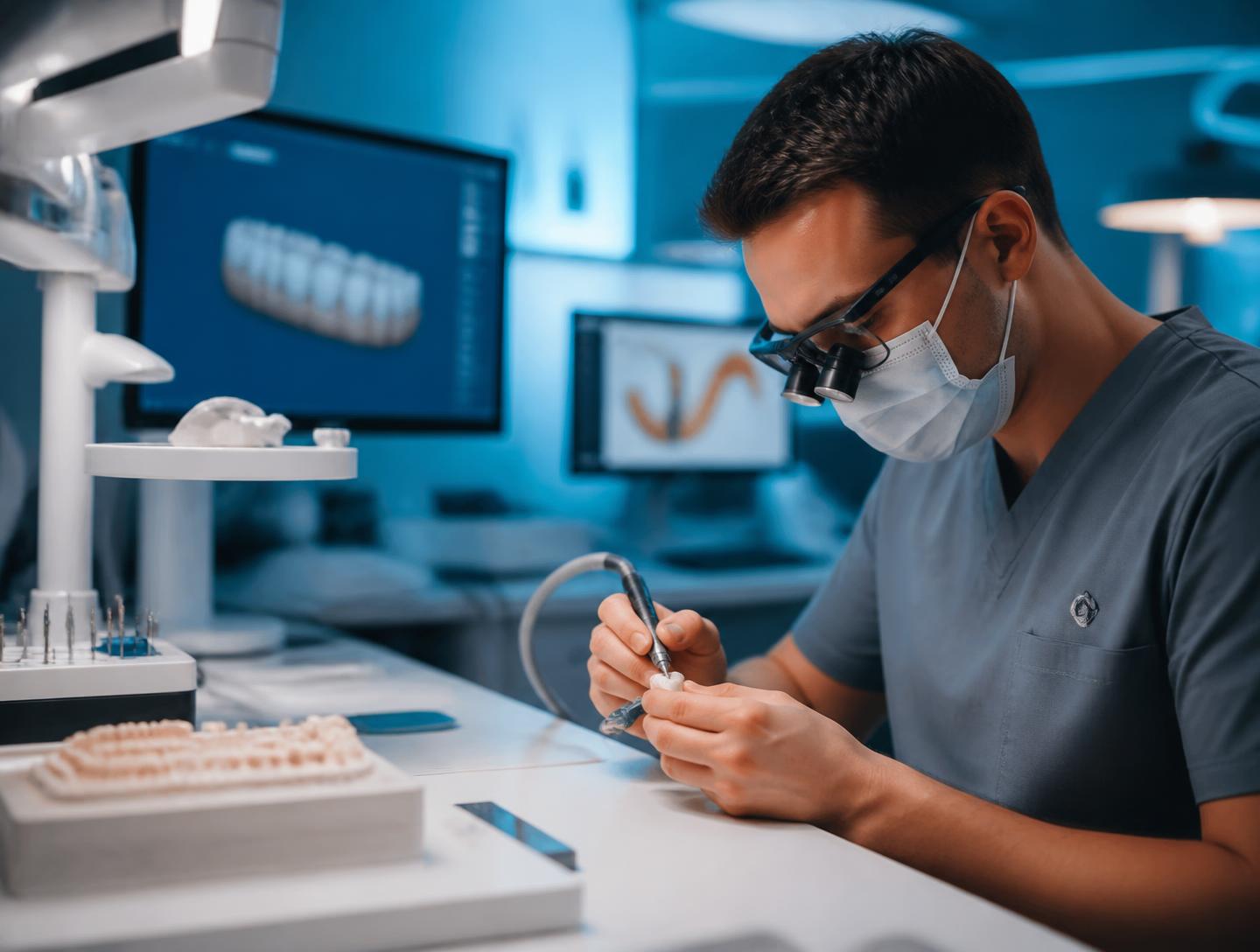
Istar Dental Lab has been running a full-service dental laboratory since 2012, with in-house facilities in Shenzhen and Huizhou. The Removable Denture Department has around 55 technicians and a backup pool for peak weeks; monthly removable capacity is roughly 4,000 cases in normal months and up to 6,500 in peak season, which is why individual rush slots do not displace a case already on the schedule.

All partial dentures below are produced in-house end-to-end. We do not sub-contract cases to a third-party lab.

product-0 — recommended upload 1440 × 960 pixels

Cast metal partial denture (cobalt-chromium, Vitallium, titanium, PEEK)

A rigid framework with rests, guiding planes, major connector and clasps, finished with heat-cured acrylic and prosthetic teeth. The frame carries the load; the acrylic carries the aesthetics.

  • Best for: Kennedy Class I and II (free-end saddles), long-span Class III, high occlusal load cases, patients who want a slim palatal plate instead of a horseshoe of acrylic.
  • Frame alloys we stock: cobalt-chromium, Vitallium (nickel-free CoCr), commercially pure titanium, PEEK. Nickel-free and titanium framework options are available for patients with a documented nickel sensitivity.
  • How we make it: CAD design of the frame on the surveyed model, CoCr milling or casting, acrylic finishing by the removable team, three-stage QC. Mesh and bead retention are set in the frame so acrylic locks mechanically rather than relying on chemical bonding alone.
  • Why dentists choose it: rigidity, long service life, easier reline of distal extensions, repairable by soldering or laser-welding. Alloy-specific specifications sit on the metal denture pages, including Vitallium and titanium.
product-1 — recommended upload 1440 × 960 pixels

Flexible nylon partial denture (Valplast-style)

A one-piece thermoplastic nylon with tooth-colored resilient clasps.

  • Best for: single missing anterior or a short posterior gap, patients allergic to nickel/cobalt or who refuse any visible metal, transitional cases while an implant site heals.
  • What a flexible nylon cannot do, and we will tell you on the prescription: it is not a long-term substitute for a frame in high-load bruxers; it is harder to reline chairside; adding a tooth is possible but limited; deep undercuts and large edentulous spans with heavy occlusion are poor candidates. If the lab notes any of these, we will flag it before start, not after delivery.
  • How we make it: digital design of the clasp arms along the survey line, injection of a dental-grade nylon, hand finishing and polish. Shade and design options are listed on the flexible denture page.
product-2 — recommended upload 1440 × 960 pixels

Acrylic partial denture (flipper and interim)

An all-acrylic base with prosthetic teeth and, if needed, wrought-wire clasps.

  • Best for: short-term and immediate replacement, space maintenance after extraction, pre-implant or pre-ortho transitional appliances, cost-sensitive first-step restoration.
  • Base options: heat-cured PMMA, injection-molded PMMA, printed denture base resin. Patient teeth options: VITA, Ivoclar, Shofu, Sinkoyo.
  • What to tell your patient: acrylic flippers are not designed to carry full occlusal load for years. We build them to work, not to disguise themselves as a cast frame. Base and teeth options are on the acrylic partial denture page.
repairs — recommended upload 1440 × 960 pixels

Reline, rebase, add-a-tooth, and repair

We accept repairs of partials you did not originally make. For a reline or add-a-tooth we need upper and lower models (or scans), the existing appliance, and a wax bite that records the current occlusal position. Fractured frameworks are evaluated case by case and photographed on arrival; if the geometry cannot be restored we will say so before quoting.

attachments — recommended upload 1440 × 960 pixels

Attachments and implant-retained partials

Locator, bar, extracoronal and precision attachments. For an implant-overdenture we need the implant brand, platform, connection type, diameter, position, and the Locator or bar components you intend to use. For scan-based cases, the scan body brand/model and the matching CAD library are required so the dataset drops cleanly into the design software.

How We Pick the Design for Your Case

Most of the complaints that come back on a partial have one of three origins: an impression or scan that could not record the real functional border, a design decision that fought the biology instead of using it, or a bite that was taken in a position the patient does not actually sit in. The design stage is where those three can still be caught.

For every case we start with the Rx and the data, run the model through CAD, and send a surveyed design preview before any metal is cut. One design round plus two free revisions are included; the preview marks the clasp map, rest seats, guiding planes, major connector dimension, mesh and bead layout for the acrylic retention, and the finish line of each saddle. The dentist signs off; we start production.

Case-type map — what we build and what we need from you

Case profile (what you see on the Rx)Design we recommendWhat we need to start
Single anterior missing, patient refuses metal showFlexible nylon with tissue-colored clasp, or acrylic flipper for interimScan/VPS impression of both arches, opposing bite, shade photo at the laboratory light setting (ISO100, 1/125–1/200s, 5500K)
Short bounded saddle, posterior, moderate occlusionCast CoCr frame with Akers or wrought-wire clasps on sound abutmentsImpressions/scan, survey line decisions can be made on the digital model; mark the finish line yourself if any abutment is prepared
Kennedy Class I or II, free-end saddleCast frame with RPI/RPA on the distal abutment, broad coverage major connectorFull-arch scan with soft tissue, opposing arch, centric bite, note on the state of the ridge
Multiple edentulous areas, long span, high loadCast CoCr or titanium frame, mesh base, posterior cross-arch stabilizationFull-arch scan or VPS, opposing arch, centric bite, altered-cast or functional impression if ridge is resorbed
Documented nickel/cobalt sensitivityTitanium frame, Vitallium (Ni-free CoCr), or PEEK; or flexible nylonSame inputs plus a note of the allergen on the Rx
Transitional case pre-implantAcrylic interim with wrought clasps, designed to be adjusted after extractionsPre-operative models/scans and the planned extraction sites
Overdenture retained by implantsBar overdenture or Locator-retainedImplant brand/platform/connection, position, scan bodies with matching library, verification jig for cross-arch accuracy

Case data we need (per prescription)

  1. Digital workflow: STL, PLY, OBJ or 3Shape DCM native — the scanner list and format limits are on the digital dental laboratory page. We accept exports from 3Shape TRIOS, Medit, iTero, CEREC (Sirona), Shining3D Aoralscan, Planmeca, and any other scanner that writes open mesh. 3Shape Communicate and Medit Link orders are accepted directly.
  2. Analog workflow: addition silicone (VPS) is strongly preferred over alginate for international transit; polyether is accepted. Alginate loses dimension in transit and is also a customs concern because of organic content.
  3. Prescription: clinic and dentist ID, patient case number (patient full name is not required — a clinic-side case ID is preferred), teeth to replace, abutment conditions, clasp preference, shade, border extent decisions, due date, and any patient allergies.
  4. Scan check: scan validity is confirmed within one business day. If the margin or ridge data is unreadable we ask for a rescan before anything goes to design.

Design and Materials — The Decisions That Actually Matter

Clinic-facing material names mean less than the way the material behaves in a mouth. Four decisions decide most of a partial's working life:

Frame material. Cobalt-chromium is the default for cost and rigidity. Vitallium removes nickel. Titanium removes both nickel and some weight. PEEK is non-metallic, lighter still, more flexible than CoCr and useful for allergy cases, with the trade-off of a less rigid feel in long-span prostheses. Two points from the ADA's patient reference are worth repeating when a patient asks why one option costs more: a partial may use a metal framework and clasps, or connectors that are more natural looking, and precision attachments are generally more aesthetic than clasps but usually cost more and often need crowns on the abutments to fit properly (MouthHealthy — Dentures (Partial)).

Clasp strategy. For a free-end saddle, RPI and RPA designs transfer less torque into the distal abutment than a conventional Akers clasp. For anterior aesthetics, a flexible resin clasp is often what the patient actually wants; where load matters more than show, we keep a metal clasp.

Base and attachment of acrylic to frame. We use mechanical retention — mesh, beads, undercuts — as the primary bond, with a chemical primer only as an adjunct. Chemical priming alone has been linked to acrylic separation under load, which is why we insist on the mechanical layer first.

Base resin and processing. Heat-cured PMMA is traditional and economical; injection-molded PMMA cures under pressure, with less shrinkage and better fit; printed denture base resin is used in the digital workflow when margin reproduction is simple and shrinkage control matters more than tissue-side texture. For complex soft-tissue cases, we recommend injection or a hybrid flow.

The evidence base here is thinner than the marketing in this category implies. The Cochrane review of RCTs for partially absent dentition screened 21 trials and concluded there is insufficient evidence to recommend any one method of tooth replacement over another — including between removable designs (Cochrane — Interventions for replacing missing teeth: partially absent dentition). That is why this page does not argue "RPD beats implant" or the reverse. The choice is the dentist's; our job is to say what a given design can and cannot carry, and to build it to that limit.

Translation table — the words patients hear vs the words on your Rx

A useful habit when a patient complains. Nothing on this page is intended as patient-facing education, but these are the three or four terms that come back to the clinic most often.

On the prescription / in CADWhat the patient will tell you
Rest seat / occlusal rest"The slot the hook sits in"
Guiding plane"Why it only goes in one way"
Major connector / lingual bar"The metal bar across my mouth"
Reline / rebase"It got loose, we re-fit the base"
Free-end / distal extension"There is no back tooth on that side"

In-House Workflow and Quality Control

Full-service means every stage runs inside Istar — case intake, CAD, model print or pour, framework milling or casting, wax try-in, injection or heat cure, finish, polish, QC, pack. We have around 460 employees total across the two sites; the Removable Denture Department has about 55, plus a 25-person QC team that works independently from production. CAD is around 100 people, milling 70, implant 80, ceramic and metal 70, customer service and case coordination 40, sales 10. Backup technicians are kept trained for peak seasons so cases do not get pushed when volume spikes.

Standard production flow for a removable partial

workflow-0 — recommended upload 1440 × 960 pixels
Case intake — Rx and data cross-checked, patient case ID assigned, missing items flagged within one business day.
workflow-1 — recommended upload 1440 × 960 pixels
Scan or model prep — model printed or stone poured, surveyed digitally if not already surveyed in the clinic.
workflow-2 — recommended upload 1440 × 960 pixels
CAD design — clasp map, rest seats, guiding planes, major connector, mesh and bead layout, finish lines.
workflow-3 — recommended upload 1440 × 960 pixels
Design preview sent to the dentist for approval. One round plus two free revisions are included.
workflow-4 — recommended upload 1440 × 960 pixels
Framework manufacture — milled or cast CoCr/Vitallium/titanium, or 3D printing/injection for all-resin and flexible cases.
workflow-5 — recommended upload 1440 × 960 pixels
Wax try-in or digital try-in — provided on request.
workflow-6 — recommended upload 1440 × 960 pixels
Processing — injection or heat cure for acrylic saddles; polishing with a step that specifically avoids rounding over the fit surface or shortening borders.
workflow-7 — recommended upload 1440 × 960 pixels
Three-stage QC — stage checks at design, frame, and processing, with a final independent release.
workflow-8 — recommended upload 1440 × 960 pixels
Pack and ship with tracking.

What QC actually checks on a partial

  1. Framework Fit

    Framework seats passively on the model with no rock, no finger pressure. If the frame rocks on the model it is a frame problem, not an impression problem — we remake. If the frame seats on the model and does not seat in the mouth, the impression is the first thing to check.
  2. Clasp Retention

    Clasps engage the recorded survey line with the designed retention; tips are not over-polished.
  3. Rest Seats & Guiding Planes

    Rest seats and guides are checked against the four design rules that decide whether a frame works: the floor of the rest seat is inclined toward the centre of the tooth, so the seating force runs down the long axis of the abutment; the rest carries at least 1–1.5 mm of metal at its junction with the minor connector so it does not fracture off; guiding planes are at least 2 mm high and sit in the middle third of the crown; and no connector is allowed to terminate on the free gingival margin or on the crest of the rugae, with retentive tips kept at least 1 mm above the free gingival margin. Those four are the Dalhousie manual's own figures (Dalhousie — RPD Manual, PDF). Two further numbers on our drawings are Istar shop standards rather than textbook values: 1.5–2 mm of relief under the gridwork, and a minimum 4 mm clearance for the palatal bar.
  4. Occlusal Contacts

    Occlusal contacts in CR and in excursions are checked against the opposing cast; rest seats are not relieved on delivery.
  5. Major Connector

    Major connector thickness and tissue clearance match the design.
  6. Acrylic Saddles

    Acrylic saddles are inspected under light transillumination for internal porosity; borders match the border mold on the final impression or the recorded functional border on the digital design; the fit surface is polished only to remove sprue traces, not reshaped.
  7. Flexible Nylon

    Flexible nylon dentures have the clasp arm engagement tested on the model, and the surface is finished without high-speed polish that can glaze over internal reliefs.
  8. Final Design & Rx Check

    Finally, each case is cross-checked against the signed design and the Rx. If the final does not match them, it is remade.

Materials — brands we stock

CategoryBrands we stock
Framework alloysCobalt-chromium (Bego), Vitallium (nickel-free), commercially pure titanium, PEEK
Framework ceramics (PFM facings when combined with partial)Ivoclar, Shofu, Noritake
Denture base acrylic — premiumLucitone 199 (Dentsply Sirona), heat-cured and injection
Denture base acrylic — standardHeat-cured PMMA (domestic), printed denture base resin
Flexible denture resinDental-grade nylon (Valplast-type)
Prosthetic teethVITA, Ivoclar, Shofu, Sinkoyo
AttachmentsLocator, extracoronal, bar, precision — according to the brand you specify

Working With Us — What a Case Looks Like, End-to-End

Istar is a direct manufacturing facility, not a middleman. That matters mostly in two moments: when a case needs a decision at 1 am local time, and when something goes wrong — because the technician who made it is the technician who can also fix it.

Starting your first case

  1. Open a lab account. You give us the clinic name, the ordering dentist, email, phone. Price list and prescription template are sent back the same business day. We can sign an NDA, a quality agreement, or a supplier questionnaire on request.
  2. Send the data. Digital files to the case inbox published on the how-to-send page, or through your connected scanner platform; physical impressions by courier (the lab address and an airway-bill template are on the same page). We confirm receipt and completeness within one business day; if the scan or impression has a problem that will cost you a rescan later, we tell you then, not at try-in.
  3. Design preview. We send the surveyed design back for approval before any metal is cut or any acrylic is poured. One design plus two revisions are free.
  4. Production and QC. Three independent inspection stages. The final release is signed off by QC, not by the technician who made it.
  5. Delivery. DHL, FedEx, UPS or SPIDER (France). Tracking number sent on the day of dispatch. Each box lists case number, patient case ID (not patient name unless you require it), work sheet, and the materials used.

Partnership terms, briefly

  • Communication: a dedicated manager and case coordinator per account. Working hours 9:30 am to 6:00 pm China time, extended for complex cases; expect a reply within one business hour during local hours, 7–8 hours outside them.
  • Rush cases: free rush service for accounts under about 10 cases per month; larger accounts have scheduled rush slots.
  • Rework: lab-side defects are remade free of charge, prioritized ahead of regular queue. Examples that qualify include a framework that does not seat, a flange that lifts, a clasp set in the wrong position, visible contouring issues inside the mouth, incorrect occlusion, or shade mismatch outside the agreed tolerance. Changes requested after sign-off, or remakes on a model that was flagged as poor at intake and shipped on the dentist's own instruction, are quoted separately.
  • Confidentiality: NDAs available. For outsourcing-lab customers, white-label packaging is available and Istar does not contact the end dentist of a wholesale account.
  • Compliance: Istar maintains ISO 13485 at the lab, with current US FDA establishment and listing, UK MHRA registration, and EU MDR custom-device notifications relevant to removable prostheses. Material certificates, batch numbers and manufacturer technical files are available per case.
  • Factory visit: we welcome in-person visits or scheduled video audits of the Shenzhen or Huizhou facilities.

Why dentists refer complex removable cases to us

A removable partial fails more often from decisions made before manufacture than from a technician mistake at the bench. The design preview, the pre-start data check, and the independent final release are the three places where those decisions get caught. The lab does the technical work; the dentist keeps the clinical call.

factory — recommended upload 1440 × 960 pixels

FAQ

What exactly do you make under "partial dentures"?

Cast metal frameworks in cobalt-chromium, Vitallium (nickel-free), titanium or PEEK, with heat-cured or injection-molded PMMA saddles and VITA, Ivoclar, Shofu or Sinkoyo teeth. All-acrylic partials and flippers. Flexible nylon partial dentures. Reline, rebase, add-a-tooth and repair for appliances made by us or by another lab. Attachment-retained and implant-overdenture partials when the implant brand, platform and components are specified.

What do you need to start a removable partial case?

A digital scan (STL, PLY, OBJ or 3Shape DCM) or VPS impressions of both arches, a centric bite, a shade photo at the lab light setting, and an Rx that names the teeth to replace, the abutment status, clasp preference, border extent decisions, due date and any allergy notes. A patient case ID is enough — the patient's full name is not required.

Will you tell me if a scan or impression is not usable?

Yes, within one business day of arrival. The two most common calls we flag are an unclear ridge border on a free-end case and a bite recorded in a position the opposing cast does not confirm. Both are faster to fix at intake than at try-in.

How many health teeth does a patient need for a partial?

The design decides this, not a fixed number. In practice, a cast frame is more predictable when there is at least one sound abutment on each side of the arch and two or three in total for a Class III situation; a single-tooth flipper does not require two abutments. For a Class I or II free-end case the number is less important than the condition of the remaining teeth and the ridge. We will tell you after reviewing the scan or model whether the design we would propose is well supported by the dentition you have.

Do you make partial dentures for front teeth or back teeth?

Both. For anterior cases, the question is usually how much metal the patient will accept — a flexible nylon or a cast frame with aesthetic clasps are the two common answers. For posterior and free-end cases, rigidity and clasp strategy matter more than how metal looks.

Can a partial denture replace one tooth, or several?

Yes to both. A single anterior gap is often best served by a flexible nylon or an acrylic flipper; a multi-tooth or long-span case usually earns a cast metal frame. The clinical trade-off against a bridge or an implant stays with the dentist.

What about Partial Dentures Amazon or an online partial denture kit?

A direct-to-consumer kit (DTC flexible or over-the-counter online kit, usually sold in S/M/L sizes) skips the parts of the workflow that matter most for a partial: no survey of the abutments, no bite registered in a reproducible position, no border mold, no finished occlusion, and no articulated check of the opposing arch. The common failure modes on a lab-made partial — framework rock, clasp fatigue, flange lifting, worn rests, failed reline — are themselves mostly consequences of decisions made before the appliance exists. Removing the clinical stage removes those decisions, not the failures.

How are failed or returned partials handled, and what counts as a failure?

Routine failure modes on removable partials: base fracture, clasp fatigue or deformation, rest wear, reline failure after ridge resorption, debonded acrylic from the framework. Each is logged under the case ID with the original design and production records; QC does a root-cause review against the stage checks and the signed design. If the cause sits with the lab, we remake, free, prioritized. If the cause sits upstream — a dropped box, a changed opposing arch, a prescription that was later modified — we quote the repair or remake separately and show the trace. The point is to make the attribution visible, not to argue it.

What is the typical turnaround for a removable partial?

Turnaround depends on the design — a cast CoCr frame with a wax try-in has more stages than a flipper. We confirm the schedule in the design preview, not before. One decision that genuinely shortens the schedule: digital cases skip the stone-pour and the physical shipment of a model, which usually saves one to two working days versus a physical-impression case of the same complexity. Rush slots are available; see "partnership terms" above for how they work.

Do you accept outsourced-lab orders?

Yes. White-label packaging and prescriptions are available, Istar does not contact your end dentist, and NDAs or quality agreements are signed on request. A minimum monthly lab-fee threshold applies for ongoing wholesale accounts — single-case shipments are accepted for trial, but a long-term account that would not cover the back-and-forth courier cost is not a fit for either side.

What is the warranty on a partial denture?

Lab-side defects — a framework that does not seat, a flange that lifts, a clasp placed incorrectly, inaccurate occlusion against the sign-off, shade outside agreed tolerance — are remade free. We cover the remake and the return shipping within our courier scheme; implant parts and third-party components are quoted separately. Changes requested after design sign-off, or remakes on data flagged at intake, are not free. The published terms behind that policy are on the refund and returns page.

Can patients sleep with a partial denture in?

That is a clinical call, and the two public references do not say quite the same thing. The NHS tells patients to remove dentures every night, and warns against wearing them overnight unless the dentist advises it: trapped food raises the risk of gum infection and decay, and there is a choking risk (NHS — Dentures). The ADA patient page linked above takes a staged view — a brand-new partial may be worn almost continuously at first, because that is the quickest way to find the spots that need adjusting, and after those adjustments the dentist will usually have the patient take it out before bed and put it back in the morning. Both converge on "out at night, kept moist" for a settled appliance; the early phase is a clinical decision, not a lab one. We build to the wear instruction on the prescription and do not set a schedule from the lab.

How long does a partial denture last, and what tells you it is time to remake one?

The ACP position statement is blunt about the premise: removable complete and partial prostheses are medical devices with limited lifespans, not permanent restorations, and their longevity is limited by continuing change in the hard and soft tissue under the base — which is what drives relining, rebasing, and eventually remaking (ACP — The Frequency of Denture Replacement). On incoming cases the triggers matter more than a year range: a frame that has started to rock because a distal abutment moved; a clasp that no longer engages the survey line; a flange that lifts after ridge resorption; a fracture that keeps recurring at the same point, which usually means the design is fighting the occlusion rather than that the acrylic was bad. Any of these is a signal to reassess. A reline buys time when the tissue has changed but the frame and teeth are sound; a remake is the honest answer when the frame no longer fits the teeth it was designed around.

Do you also make a full denture or a dental partial denture retained on implants?

Yes. The removable department produces both full dentures and implant-retained overdentures. For implant cases, we need the implant brand, platform and connection, scan body model with the matching CAD library, and — for cross-arch work — a verification jig to confirm the scan.

Start a Case

Partial-denture cases do not scale well on a "contact form". Tell us the case type so the right coordinator picks it up.

  • New-account enquiry (price list, Rx template, NDA): include the clinic name, ordering dentist, country, and average monthly case volume for removable prostheses.
  • Trial case: send a scan or ship a VPS impression. We confirm readiness within one business day. The first case is a real case; we quote it as such and treat it as such.
  • Case consultation (free-end, long-span, allergy, implant overdenture): send the scan or model along with the Rx; we return a design preview and a case plan.
  • Repair, reline, or add-a-tooth on a partial we did not make: ship the appliance with a current wax bite and both-arch models/scans.

Factory visits and video audits of the Shenzhen or Huizhou facilities are arranged through the same contact form.

Want to get in touch directly? Reach out to our sales representative via WhatsApp at +8618925410015 for a quick response and a price quote!

References

Every outside source is linked once, at the point where it is used, so you can check the claim without hunting:

Used forSourceWhere
Metal framework vs precision attachments, and why attachments cost moreAmerican Dental Association, MouthHealthy — Dentures (Partial)Design and Materials
How long a partial lasts and what drives remakingAmerican College of Prosthodontics — The Frequency of Denture ReplacementLongevity FAQ
Whether one tooth-replacement method is better than anotherCochrane Oral Health — Interventions for replacing missing teeth: partially absent dentitionDesign and Materials
Rest seat inclination, rest metal thickness, guiding-plane height, clasp and connector clearancesDalhousie University — Removable Partial Denture ManualQC checklist
Night wear and cleaningNHS — DenturesNight-wear FAQ