Appliance
Custom-made occlusal splint (hard)
Typical use pattern
Rigid, adjustable occlusal surface; chairside spot-grinding and polishing are possible
Material family
Rigid acrylic / copolyester sheet

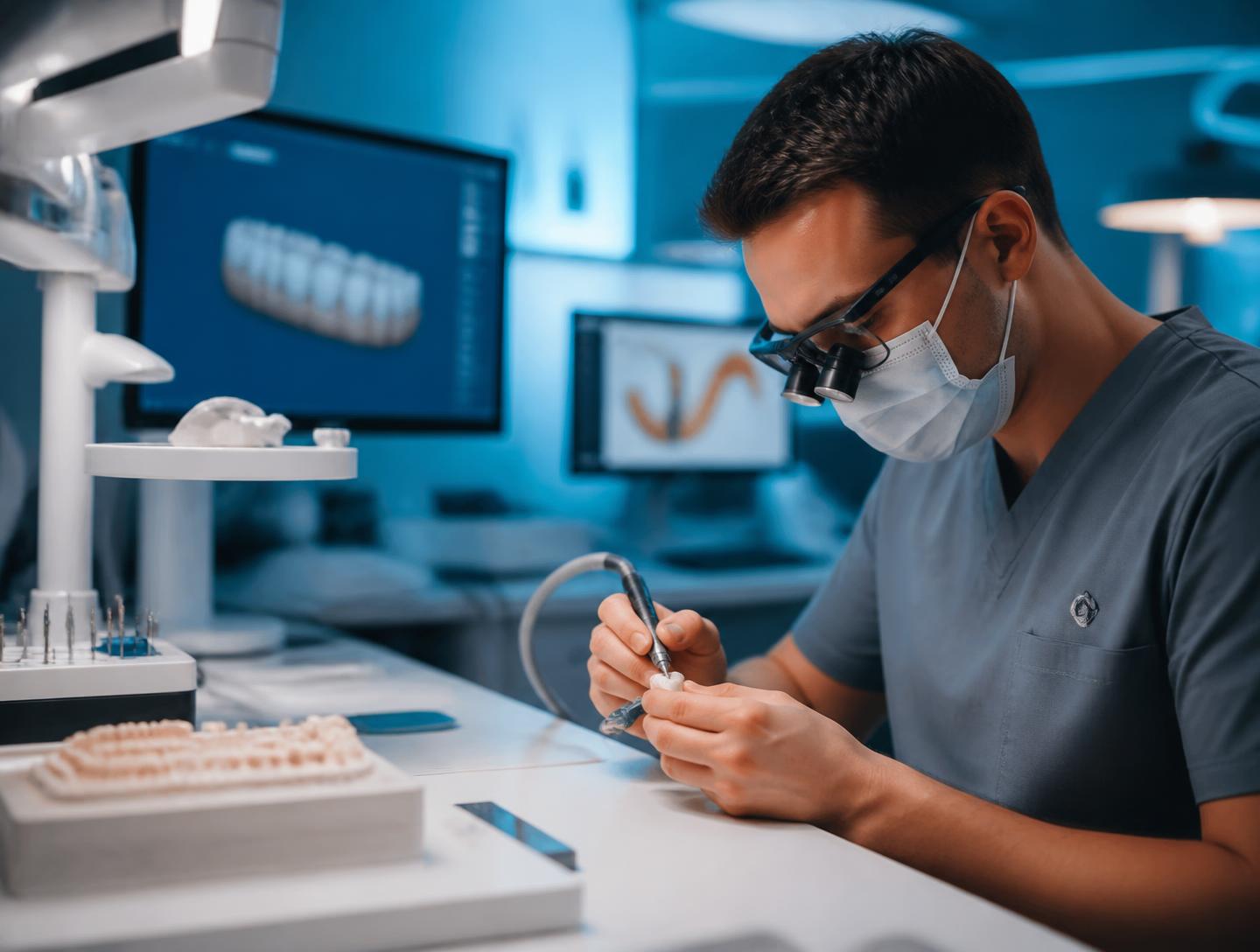
Istar Dental Lab fabricates custom night guards, custom bite guards, and custom bruxism mouth guards for dentists, clinics, DSOs, and partner labs. We are a full-service manufacturing lab, not a trading company or a middleman — every step from case receipt to packaging happens inside our own facilities.
This page documents what we make, the case profiles it is prescribed for, how we make it, how we inspect it, how we ship it, and the operational commitments that come with the order. Clinical selection — hard versus soft, upper versus lower, exact thickness — is a dentist's decision, and we do not substitute our judgment for the prescribing clinician's.
We make the following occlusal and retention appliances in-house:
Retainers (Hawley, Essix / vacuum-formed, bonded lingual) are available on the same production line but are not scoped on this page.
Every appliance is built to the prescription you send. We do not override the following case-level decisions:
Material brand, origin, lot number, and the corresponding conformity certificates are available per case upon request.
A custom night guard, a custom bite guard, and a custom bruxism mouth guard are protective dental appliances supplied to a prescribing clinician. They are not a substitute for diagnosis or clinical decision-making. Suspected sleep apnea, undiagnosed orofacial pain, active periodontal disease, loose teeth, or ongoing orthodontic movement all need to be addressed by the clinician before fabrication is appropriate — a protective guard is not an airway device and will not resolve an underlying condition (AASM oral appliance guidance for OSA, NIDCR TMD overview, NHS teeth grinding information).
The following case profiles are referenced from the prescribing dentist's assessment — this section describes case patterns a dentist may prescribe one of our appliances for, not conditions we claim to resolve. All selection decisions, including hardness, coverage, and whether a splint is appropriate at all, remain the prescribing clinician's.
Where the submitting dentist has already assessed one of the following, we incorporate it into fabrication:
If a prescription does not clearly specify these parameters, we send a clarification request rather than make an assumption.
We will decline or redirect, rather than quietly fabricate, when:
Our current production method for night guards, bite guards, and bruxism guards is pressure thermoforming of pre-formed thermoplastic sheet. The sheet is heated evenly, formed over the model under stable pressure, and allowed to cool to full hardness under sustained pressure before demolding.
We do not currently route this product category through CAD/CAM milling or 3D printing; cases that require a milled or printed splint should be flagged on the prescription so we can advise.
We run three dedicated inspection stages on every case:
Complex, full-arch, or aesthetically critical cases get an additional specialist review on top of the three stages.
The QC team is organisationally separate from the production team. QC technicians do not fabricate the cases they inspect — their only job is to verify a finished appliance against the confirmed prescription and the written quality standard, and they alone sign off on release. This separation is intentional and non-negotiable.
For every finished night guard, bite guard, or bruxism guard:
Inspection photos or a brief QC report can be included with shipment on request.
We publish a 95% first-time terminal-inspection acceptance rate, with the definition made explicit so the number is auditable:
> First-time acceptance rate = cases that pass terminal inspection on the first check ÷ total cases submitted for terminal inspection in the period × 100%. Cases that only pass after rework are not re-counted.
The 5% that fails terminal inspection goes back for rework, automatically — we do not call the customer first to debate whether to ship a borderline case.
Thermoforming units, trimming tools, and measurement instruments are on a calibration and maintenance log. Equipment showing abnormal readings is pulled from production until re-verified. Calibration and maintenance records are retained in the equipment file.
Our QC verifies the appliance against the prescription and against our written quality standard. It does not replace the clinician's chairside fit check — final seating in the patient's mouth, bite-check in centric relation, and any chairside adjustment all remain the dentist's responsibility. Our standard draws the line between "clinically adjustable at the chair" and "must come back for lab rework".
Every appliance is packed individually:
Each case bag or box carries the patient name or the case ID, matching the paperwork inside. Our case coordinator re-checks every QC-cleared case against the shipping manifest before boxing — case number, product spec, and quantity all verified at the pack-out step.
We ship to the great majority of international markets — Europe, North America, Asia-Pacific, Oceania — subject to sanctions and embargo restrictions. Some jurisdictions have specific dental-device import requirements; those are confirmed before order placement. Return-direction impressions from certain countries (Australia, New Zealand, Canada, the United States, most EU members) are subject to biological-sample controls on physical impressions — if you are shipping physical impressions in, confirm disinfection and biological-sample packaging requirements first.
If a dispatch is going to miss its date for any reason — equipment issue, material shortfall, carrier delay, customs hold — the logistics coordinator notifies the customer ahead of time, in writing, with the revised ETA and a contingency option.
Where multiple cases are shipping to the same address, we consolidate on request to lower per-case cost and material waste. Packaging materials are recyclable, and lower-impact packaging options are available on client request.
Istar is the manufacturer, not a trading company and not an intermediary. Every step for standard restorative and appliance work happens inside our own facilities. We do not re-outsource case work to third-party labs — we invest in our own capacity instead. The lab was founded in 2012 and operates from facilities in Shenzhen and Huizhou; both sites are open to on-site visits or video audits by appointment.
Each of the following is written and auditable, not marketing language:
For partner labs and DSOs that resell under their own brand:
Material brand, origin, lot number, and the corresponding conformity documentation can be supplied per case, on request. If your prescription specifies a particular brand or batch, we can source and document accordingly. Conformity documentation can be included in the case paperwork so your downstream customer gets the same traceability you do.
For context, published 2026 U.S. consumer-side pricing puts mail-order impression-based custom guards at roughly 95–300 per appliance, and dentist-prescribed custom guards at roughly 300–800+ (consumer cost reference, second consumer cost reference). Those are retail routes; our pricing reflects wholesale fabrication service to the clinical or lab channel.
If you'd like a formal quote or want to discuss a specific case workflow:
Published consumer-side pricing comparisons and appliance-longevity figures from the public dental literature are referenced in the sections above with sources — none of our own commitments depend on those external figures. The commitments on this page are drawn from our own operating record.
Want to get in touch directly? Reach out to our sales representative via WhatsApp at +8618925410015 for a quick response and a price quote!