0 1
Direct manufacturer, no middle layer
Every unit on the quote is built inside our own facility, by our own ceramists. There is no outsourced bench, no re-labeled work from a sister lab, and no middle margin layered on top of the price you see.
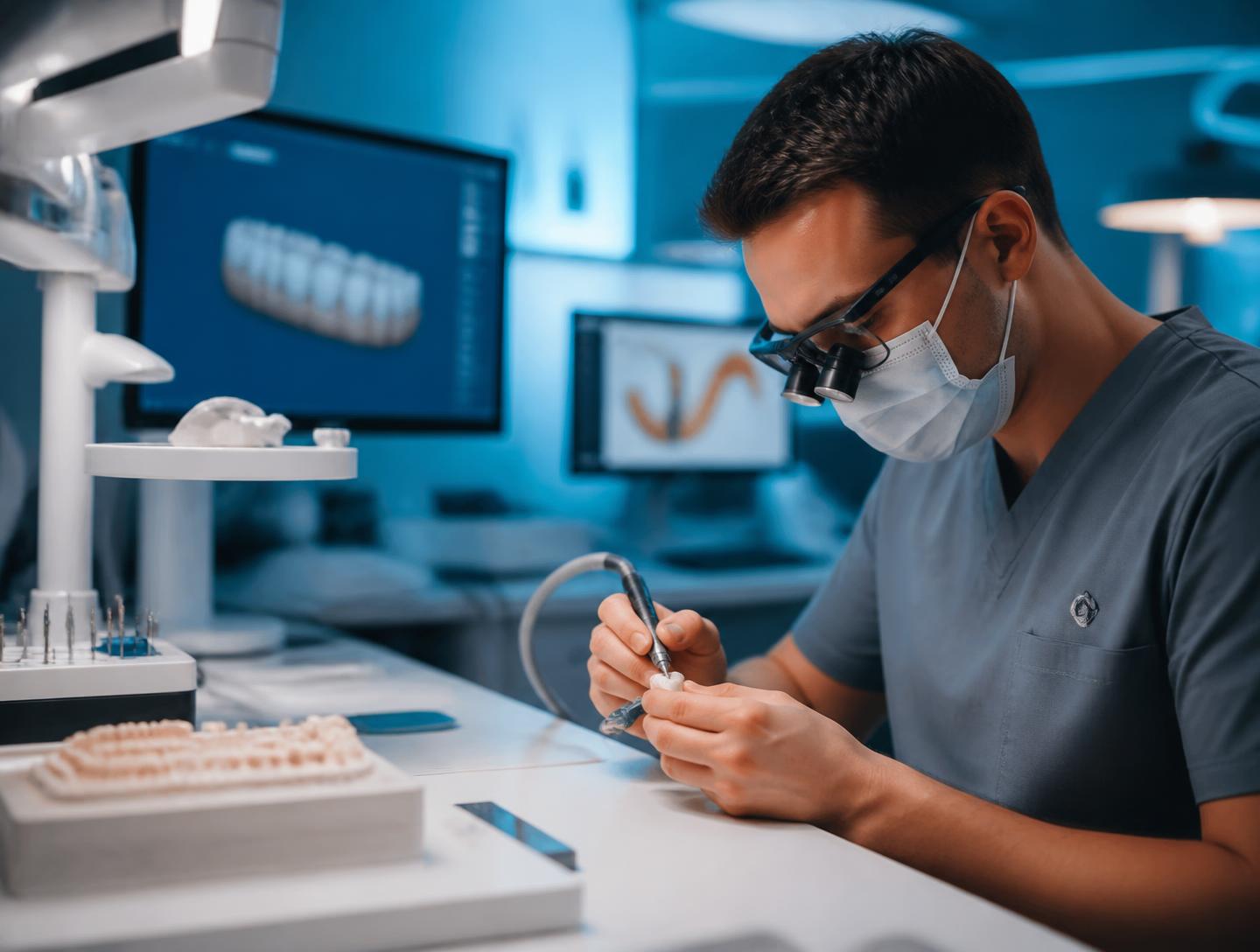
Direct-manufacturing dental ceramics lab for dentists, clinics and partner laboratories. Every zirconia, lithium disilicate, PFM and all-ceramic restoration is built end-to-end inside Istar's own facility.
Every unit on the quote is built inside our own facility, by our own ceramists. There is no outsourced bench, no re-labeled work from a sister lab, and no middle margin layered on top of the price you see.
Single crowns and short-span bridges run 2–3 days in the lab from Rx-complete to pack-out. Full-arch implant work, long-span zirconia bridges and anterior esthetic cases needing bisque try-in run 5–7 working days. Rush slots are quoted in writing against a confirmed delivery date.
Separate groups for CAD design, CAM milling, implant superstructures, ceramic + metal, and removables — plus a case-coordination desk that handles your account thread. The anterior esthetic group is staffed independently from the posterior line, so a single-unit smile case isn't competing for bench time with a long-span bridge.
400+ dentists, 100+ clinics and 50+ partner laboratories ship to Istar from the United States and across Europe. Account references available on request.
Design file, milling record, sinter cycle, QC photo and courier label are all stored against one case ID from intake to pack-out. If a question comes back weeks later, the full history is one lookup away.
Every line a dental ceramist at Istar works to lives in one of the cards here.
Milled from a single zirconia disc, surface-stained and glazed — no porcelain layer. Posterior, bruxers, limited occlusal clearance.
Pre-shaded multi-layer zirconia disc that carries a color and translucency gradient from cervical to incisal. Posterior to premolar; some anterior single units where occlusion rules out a layered build.
Zirconia coping with hand-layered porcelain over it. Anterior esthetic work; higher labor cost and bench time, same framework strength.
Pressed or milled lithium disilicate, stained and glazed. Anterior and premolar single units with adequate reduction; characterization sits in the glaze cycle, not under a layer.
Monolithic lithium disilicate with the incisal third cut back and layered with feldspathic porcelain. Smile-line single units and small anterior bridges where internal effects and incisal halo matter.
Base-metal, semi-precious or high-noble alloy coping with hand-layered porcelain. Long-span bridges, cases where cement-retained metal collars make sense, and clinics with established alloy preferences.
Zirconia frameworks milled from a single blank; PFM frames cast from your preferred alloy. 3-unit to full-arch spans, with cross-arch verification jigs on long cases.
Pressed or hand-stacked laminates for smile-line work. Minimum thickness and bonding substrate drive the choice between the two.
Partial-coverage restorations where cuspal coverage and prep depth decide which material fits.
Custom abutments, screw-retained crowns and bridges, All-on-X frameworks. Original-brand componentry or compatible alternatives — your call, priced separately on the quote.
Full and partial dentures and clear retainers, produced by a dedicated removables group alongside the fixed-work floor.
For laboratories that want to keep the ceramist's bench in-house but outsource design, milling or sintering. De-branded files and packaging; monthly volume floor set at account opening.
Shade reproducibility isn't a ceramist problem on its own — most mismatches arrive on the information path. The protocol here is what keeps the match reproducible from the first case.
VITA Classical, VITA 3D-Master or an Ivoclar/Chromascop designation — whichever your clinic standardizes on, as long as the Rx, the stump-shade note and the photos all use the same system. Mixed references are the single biggest cause of shade reworks.
A separate note for the die color, taken against a stump-shade guide before the prep is dried out. On anterior single units this is non-negotiable; the final crown's underlying color is set here, not in the glaze oven.
Straight-on, cross-polarized where available, and inverted with the shade tab held edge-on at the gingival third. Natural daylight at the window, no overhead loupe light, no flash fired straight at the tab. Phone photos are fine if the exposure isn't blown out.
If the neighbors are existing crowns, veneers or composites, note it. The ceramist will match the restoration to the neighbors, not to a fresh tab — otherwise the new unit will stand out even when the number on the Rx is "correct."
For single anterior units in the smile line, we offer a bisque try-in step — the restoration ships before final glaze so the clinic can confirm shade and shape intraorally, with the glaze cycle run after approval. Adds 2–3 days to in-lab time; usually prevents a remake.
Every case runs the same five stages. Core manufacturing and esthetic finishing are where a zirconia crown, a PFM bridge and a lithium disilicate veneer actually diverge — same bench, different hands, different firings.
Rx completeness, scan or impression readability, shade and photo set, implant library match. Anything missing or unclear, case coordination calls the clinic the same working day; the production clock pauses until the record is clean.
CAD for digital cases, wax-up for cast PFM, set-up for removables. Over-reduced preps, unreadable subgingival margins and implant platform mismatches get flagged here, before anything goes to production.
The restoration takes shape and reaches final density. The route depends on the material:
Zirconia — milled from a disc, then sintered to full density
Lithium disilicate — milled or pressed from an ingot, then crystallization-fired
PFM — alloy coping cast from the wax pattern, then oxidized before the first opaque firing
Removables — bases and frameworks set up and polymerized on the model
Color, surface and contour done to the Rx. The depth of this stage is what separates the crafting levels — stain-and-glaze is a quick cycle, a layered anterior crown lives here for days. Smile-line single units move to the anterior ceramist group; posterior monolithic work stays on the main line. Final polish and glaze cycle run as a pair.
Independent QC checks marginal fit, interproximal contact, occlusal clearance, surface quality and shade before anything ships; anterior esthetic, All-on-X and intake-flagged cases get a senior ceramist on the gate. About 3.8% of single-unit crowns are rejected at try-in in the wider field — this is the gate that keeps those off the chair. Released units are photographed, packed and shipped via DHL, FedEx, UPS or SPIDER (France); every record stays tied to the case ID.
US FDA Device Establishment Registration and Listing — covers custom crowns, bridges, inlays, onlays, veneers, custom implant abutments, implant superstructures and complete and partial dentures.
EU MDR custom-made-device notification (Annex XIII) — custom-made-device statement issued with each shipment.
UK MHRA registration — custom-made devices.
ISO 13485 — lab quality management system.
Material-level documentation — zirconia, lithium disilicate, PFM alloys and acrylic bases carry CE marking and ISO 10993 biocompatibility testing; certificates and batch numbers are kept on file per case.
Registration numbers are provided in writing before account opening; see our compliance page for the full documentation list.
Send a photo and the case ID within 30 days of delivery. If the cause traces back to Istar's design, sinter cycle, cast or shade work, the remake and the return shipping are on us; if it traces to a record issue we flagged on intake, or to a change made after design approval, we quote the remake in writing before we start. The full three-part policy — what's covered, what's quoted at a reduced rate, who pays shipping — lives on our remake policy page.
The ADA doesn't "approve" dental ceramic materials in the regulatory sense that question usually implies. What matters is that the materials carry US FDA clearance where that applies to the device category, CE marking and ISO 10993 biocompatibility testing from the manufacturer. The ADA's publications on CDT codes and ceramic workflows are the reference point we align our paperwork with.
A photo of the implant packaging or the original-brand scan body is usually enough to pin down platform, diameter and connection type before design starts. Istar confirms the match with you rather than guess, and quotes the componentry as a separate line either way.
Yes to both. On-site visits are welcome at either of our two plants, with production-line walk-throughs and manufacturing-capability conversations built in. For partners who can't travel, a scheduled video walk-through covers the production floor and the QC desk. Scheduled through your sales contact.
Standard international courier to the quoted address is included in the base price. Remote-area surcharge, broker fee, duty, VAT and local import tax sit with the recipient — we don't act as importer of record.
Send the case: restoration type and tooth numbers, material and crafting level (or ask for a proposal), unit count, implant system and platform if applicable, due date, and shade system plus shade. Attach the scan or impression and we confirm receipt the same working day.
The written quote comes back by email with the case thread opened — base unit price, componentry, any design-complexity adjustment, standard courier line and the expected ship date. Email, WhatsApp or the case portal; three channels, one case thread.
Want to get in touch directly? Reach out to our sales representative via WhatsApp at +8618925410015 for a quick response and a price quote!