Istar dental laboratory

Metal Dentures for Dental Professionals — Cast Co-Cr, Titanium, PEEK & Vitallium Partial Frameworks

Metal dentures — also called cast partial dentures, chrome partial dentures, or more precisely Co-Cr framework removable partial dentures (RPDs) — are still the workhorse of removable prosthodontics when a case needs rigidity, a thinner palate, or a reliable rest-and-clasp design on sound abutments. Flexible and acrylic alternatives have grown, but a well-planned cast metal framework still wins on long-term framework stability for most Kennedy Class I–IV situations.

overview — recommended upload 1440 × 960 pixels

What we make

Istar Dental Lab is a full-service manufacturing lab founded in 2012, with facilities in Shenzhen and Huizhou and roughly 460 in-house staff — including a 55-person removable department and a 70-person ceramic & metal department. We do not outsource cases. Everything below is produced on our own floor, from scan or model intake through final QC.

Metal partial denture product list

product-0 — recommended upload 1440 × 960 pixels

Cast Co-Cr RPD (standard)

Framework material
Cobalt-chromium
Typical use
Kennedy I–IV, most tooth-supported and tooth-tissue cases
Clasp / retention options
Cast circumferential (Akers), bar/I-bar (RPI), combination
product-1 — recommended upload 1440 × 960 pixels

Vitallium 2000-type RPD

Framework material
Co-Cr (Vitallium)
Typical use
Cases where you want a lower-density, well-polished finish
Clasp / retention options
Same as above
product-2 — recommended upload 1440 × 960 pixels

Titanium framework RPD

Framework material
CP titanium or Ti alloy
Typical use
Patients with Ni/Co/Cr hypersensitivity, or where the referring dentist specifically requests titanium
Clasp / retention options
Cast or milled clasps per design
product-3 — recommended upload 1440 × 960 pixels

PEEK framework RPD

Framework material
High-performance PEEK
Typical use
Metal-sensitive or esthetically sensitive cases where a non-metal, radiolucent framework is acceptable
Clasp / retention options
PEEK or thermoplastic clasps
product-4 — recommended upload 1440 × 960 pixels

Flexible / nylon partial (Valplast-type)

Framework material
Thermoplastic nylon
Typical use
Transitional or esthetically driven cases with limited extension
Clasp / retention options
Gingival-colored clasps
product-5 — recommended upload 1440 × 960 pixels

Hybrid acrylic + metal mesh

Framework material
PMMA with mesh strengthener
Typical use
Transitional appliances or budget-sensitive cases
Clasp / retention options
Wrought wire or cast
product-6 — recommended upload 1440 × 960 pixels

Combination (fixed + RPD)

Framework material
Co-Cr with precision attachments / rests on crowns
Typical use
Full-arch planning with crowned abutments
Clasp / retention options
Precision attachment, milled rest/guide planes
product-7 — recommended upload 1440 × 960 pixels

Repair, reline, add-a-tooth

Framework material
Original framework re-finished
Typical use
Fractured clasp, new extraction site, tissue change
Clasp / retention options
Case-dependent

When a cast metal partial is the right call

Metal dentures only perform as well as the case selection and design behind them. A rigid Co-Cr framework rewards good abutments and punishes compromises. The judgment calls below are the ones that most often change the outcome, and they are the ones we want to review with you before we start the design.

Good indications

  • Kennedy Class I and II with sound abutments, where you want the rigidity of a cast major connector and a controlled stress-breaking design (RPI or similar) over the distal extension.
  • Multi-unit tooth-supported cases (Kennedy III, IV) where a cast framework can be made thin, hygienic, and well-supported.
  • Patients who could not tolerate the bulk of a full acrylic plate, especially on the palate.
  • Opposing a stable arch (natural dentition or a well-made opposing prosthesis), so occlusal loading stays predictable.
  • A long-term prosthesis, not a transitional one — the fabrication time and clinical adjustments pay off over years.

Cautions and relative contraindications

These are the cases where we will usually come back with questions before we cast:

  1. Known Ni, Co, or Cr hypersensitivity. Co-Cr alloys are generally well-tolerated, but allergic reactions to dental alloys are documented. The systematic review on allergic reactions to dental materials is a useful reference, and the titanium allergy literature review is worth checking before you default to Ti as the "safe" alternative. Patch testing is a dermatology referral, not a lab decision — but once a result is on hand, we can switch the framework to CP titanium, Ti alloy, or PEEK. If you prefer to stay with Co-Cr, we can supply a nickel-free, beryllium-free alloy on request.
  2. Severely periodontally compromised abutments. The CADTH review on metal vs acrylic RPDs in periodontal patients and this clinical study on RPDs and the periodontal health of abutment teeth are both honest about the trade-offs. Perio must be stabilized first; after that, framework design should offload the compromised teeth rather than load them.
  3. Insufficient inter-arch space or heavy bruxism without a plan for occlusal management. A cast framework with no room for the major connector or no occlusal protection will fracture a clasp before year two.
  4. Deep abutment undercuts with no path of insertion. Surveying is non-negotiable. If a surveyed cast is not available, send models and intraoral photos and we will do the survey analysis before quoting.
  5. Patient primarily wants invisibility of clasps. A combination case with precision attachments or a nylon flexible partial may be the better recommendation. We will say so when we see the case.

The Co-Cr vs titanium vs PEEK trade-off, in one paragraph

Co-Cr remains the default because of its stiffness-to-thickness ratio, long clinical track record, and cost. Titanium is lighter and the usual answer for a documented Co/Ni/Cr allergy, with a slightly thicker minimum section to compensate for lower modulus — see the titanium framework RPD case report for a metal-allergic patient for a worked example. PEEK is radiolucent, light, kinder to the opposing arch, and has growing published support including this performance comparison of PEEK vs cobalt chromium frameworks and the integrative review on PEEK for RPD frameworks; but it is less rigid, so your clasp design and connector dimensions need to change accordingly. We will not substitute materials silently — if we think the prescription would do better in a different alloy, we send a note before cutting.

Framework materials and what they mean for the design

MaterialBrand(s) we currently stockWhy pick itDesign points we flag
Cobalt-chromium (standard)In-stock Co-Cr casting alloyDefault choice; stiff, well-polished, long clinical track recordWatch minor connector thickness; polish-around rests to prevent plaque traps
Vitallium (Co-Cr family)VitalliumSlightly lower density finish, long market historySame as above
Commercially pure titanium / Ti alloyCP Ti / Ti alloyDocumented Co/Ni/Cr allergy, lighter weightLower modulus — expect slightly thicker sections; cast or milled
PEEKPEEKMetal-sensitive cases, radiolucency wanted, lighter restorationClasps need redesign; palate coverage sometimes larger
Hypoallergenic Co-CrNickel-free / beryllium-free Co-CrConfirmed nickel sensitivity but Co-Cr preferred for stiffnessWe provide material cert on request

Toxicology context. The MDPI article on Cobalt–Chromium dental alloys, metal exposures and CMR classification and this PMC systematic review on toxicological risks of Co-Cr alloys in dentistry are both worth reading if a patient brings up metal release concerns; the general finding is that properly cast and polished Co-Cr frameworks release very low amounts of ions, but you should answer the question honestly rather than wave it away. Our lab-end ISO 13485 covers process control; material-level biocompatibility documentation (ISO 10993-type) is handled by the alloy manufacturer and can be forwarded on request.

Longevity, in evidence. The ten-year retrospective on longevity of acrylic and Co-Cr removable partial dentures is the cleanest reference for setting patient expectations about survival and complications, and the Dental Update continuing-education piece on complications and maintenance in RPD prosthodontic care is a good handout for your front desk.

How we actually build a cast metal partial

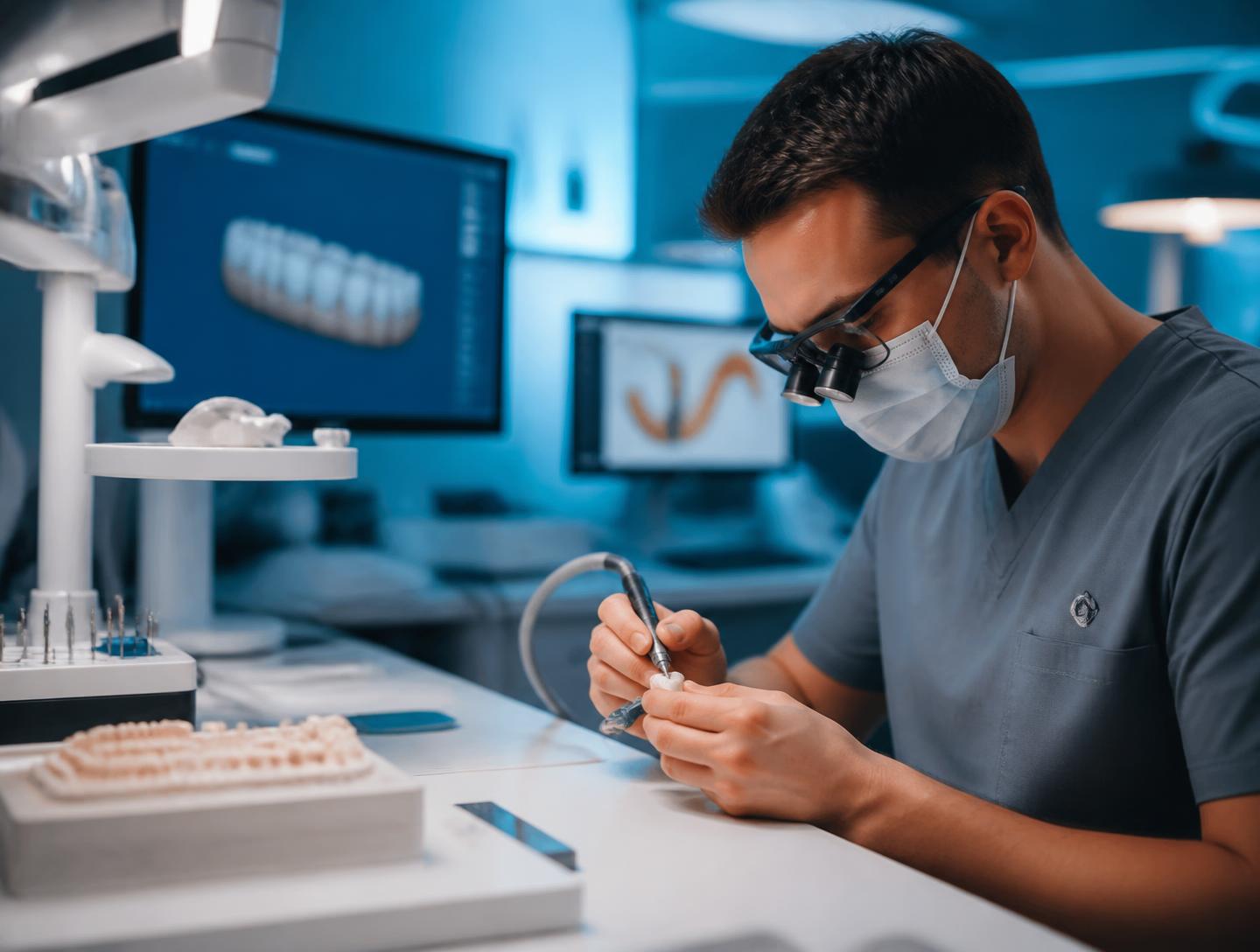
Our removable workflow is the same whether you send a physical impression or a digital file. The judgment and the hand-work live mostly in the design review and the finishing — the CAD/CAM only earns its keep if the design was right.
workflow-0 — recommended upload 1440 × 960 pixels
Case intake and review. Case coordinator checks for a complete prescription, surveyed cast or scan, bite record, shade (if gingival shade matters), and any requested framework material. If something is missing, we pause and message you — the clock does not start until the file is complete.
workflow-1 — recommended upload 1440 × 960 pixels
Scan or model prep. Physical impressions are poured and scanned on our floor; STL files are run through case-level verification for closed meshes, trimmed arch, and bite integrity.
workflow-2 — recommended upload 1440 × 960 pixels
CAD design and survey. Our RPD designer places the survey line, rests, guide planes, major and minor connectors, clasp arms (cast circumferential, bar, RPI, RPA, or combination as prescribed), finish lines, and relief areas. The design is sent back to you for approval before anything is cut or cast.
workflow-3 — recommended upload 1440 × 960 pixels
Framework production. Co-Cr frameworks are produced through our in-house casting line; titanium and PEEK through milling where appropriate. Each framework is fitted onto the master cast, then onto a verified duplicate when the case calls for it.
workflow-4 — recommended upload 1440 × 960 pixels
Framework try-in option. On request, we send the finished metal framework for a chairside try-in before tooth setup. Catching a seat problem at the metal stage saves a full remake downstream.
workflow-5 — recommended upload 1440 × 960 pixels
Record setup, tooth selection, wax try-in. Teeth and gingival shade per your prescription; if the case calls for a face-bow or Gothic-arch bite registration, we build to those records. Wax try-in files or physical try-ins are supported.
workflow-6 — recommended upload 1440 × 960 pixels
Processing and finishing. Base processing in Lucitone 199 (DeNtsply) or a comparable heat-cure PMMA per your preference; polish, clasp adjust, occlusal check, insertion-path verification.
workflow-7 — recommended upload 1440 × 960 pixels
Multi-stage QC and release. Framework fit on model, occlusal check in centric and in protrusive/lateral, clasp retention check, major-connector contour, polish inspection, prescription cross-check. First-pass QC acceptance ("first-time right") is tracked internally at the finished-case stage.
workflow-8 — recommended upload 1440 × 960 pixels
Pack and ship. Each case is boxed individually, cushioned, labelled with your case number and patient reference, and shipped via DHL, FedEx, UPS, or (for France) SPIDER. Private-label packaging is available.

Clasp and major-connector selection cheat sheet

ScenarioFramework design we usually recommend
Kennedy I, mandibular, bilateral distal extensionLingual bar major, RPI on primary abutment, I-bar on second abutment, cingulum rests up front
Kennedy II, maxillaryAP palatal strap or palatal plate; combination clasp on tipped abutments
Kennedy III, short spanLingual plate or lingual bar; circumferential clasps on sound abutments
Kennedy IV, anterior estheticAnterior palatal strap; combination clasps or precision attachments if esthetics are critical
Known allergy, otherwise straightforward designCP Ti framework, same connector logic, 10–15% increase in connector thickness

If you want a different design philosophy than the one we would default to, say so in the prescription — we build to your prescription, not to our habit.

What to send us

A clean submission avoids 90% of back-and-forth. This is the full checklist; include whichever applies to the case.

Minimum for a cast metal partial:

  1. Complete prescription (your lab slip or ours) with Kennedy classification, framework material, clasp preference, tooth shade and base shade
  2. Diagnostic or master cast — physical impression or digital scan (STL/PLY/OBJ, we accept all common open file formats)
  3. Centric bite registration (wax, PVS, or digital)
  4. Opposing arch
  5. Any intraoral photos that show the smile line or clasp display concerns

Add if applicable:

  1. Surveyed cast or your preferred path of insertion
  2. Face-bow transfer and lateral records for complex occlusal cases
  3. Previous denture or prosthesis photos
  4. Try-in schedule (framework try-in only, wax try-in only, or both)
  5. Patch-test results or alloy-restriction note if there is a documented allergy
  6. Any CDT code you plan to bill under (D5213, D5214, D5225, D5226, D5281, etc.) — not required, but it helps our team confirm we are quoting the same scope you are billing

We accept STL and all common open scanner formats. Digital cases shave 1–2 days off the overall cycle versus physical impressions, mostly from skipping cross-border model shipping.

Pricing, lead time, and remake policy

We quote in lab-fee terms. The number you see is what you pay us; it is not a patient-facing price. B2B price lists are issued by your account manager after a short intake call — the price list covers single-arch and bilateral cases, framework material tiers, upgrade options, and private-label packaging.

What the lab fee includes

  1. Case review and design, including survey analysis
  2. CAD design file and client-side design approval
  3. Framework fabrication (casting or milling)
  4. Base processing, tooth setup, polish
  5. Standard DHL/FedEx/UPS packaging and labelling
  6. Material certificate and lot traceability on request

What is separately quoted

  1. Rush turnaround on monthly volumes greater than 10 cases (small rush volumes are not surcharged)
  2. Precision attachments (brand-specific)
  3. Framework try-in or wax try-in beyond one stage, if the case requires repeated chairside visits
  4. Return shipping on single-case orders below the usual package threshold

Lead time

Lead time is quoted in working days, from the day we receive a complete case, with design approval and client reply time not counted toward the clock. Weekends and Chinese public holidays are not production days. Digital cases are typically 1–2 working days faster than physical-impression cases.

Account setup

  1. Single trial cases are welcome for new partners.
  2. Long-term single-case service is not economical for either side — we recommend batching, with weekly pickups for smaller clinics.
  3. Rush cases are not surcharged at normal monthly volumes.

Remake and credit policy

  1. Free remake when the issue is on us — fit, framework break, finish, or a QC miss.
  2. Chargeable rework only when scope is changed after design approval or when the submitted record was flagged ambiguous and the client asked us to proceed anyway. We flag this before we start, not after.
  3. Shipping-damage cases are documented with a time-stamped unboxing video and the original packaging retained; we file the carrier claim together, and the remake runs on priority.
  4. Multi-remake credit. If a case cannot be made right after repeated rework attempts, we issue a credit — this is a rare case and documented individually.

Quality control and traceability

Every case runs through case-level QC at the end of each production stage and a final whole-case inspection before packing. We log:
Case ID, assigned technician, equipment, material lot, QC pass/fail at each stage
Prescription scan, design approval record, and any changes requested after approval
Internal records are retained for three months by default, longer on request
quality-control — recommended upload 1440 × 960 pixels

The lab operates under an active ISO 13485 quality system. For international shipments we maintain FDA, MDR, and MHRA registrations — covering custom dental devices, which includes custom partial dentures and other removable restorations. On request we can supply the lot numbers, material brand, country of origin, and manufacturer's certificate of conformity for your case file. For audits, we support supplier questionnaires, annual reviews, on-site visits, and video walkthroughs at both the Shenzhen and Huizhou facilities. NDAs and quality agreements can be signed before any file is exchanged.
Working with us

  1. English communication across design review, technical meetings, and compliance documentation.
  2. Dedicated account manager and case coordinator per client — one point of contact for the lifetime of the account.
  3. Response time inside working hours is typically within one hour; outside working hours up to 12 hours due to time-zone offset.
  4. Shipping accounts can be yours or ours. For partners that use our DHL/FedEx/UPS accounts, we pass through the volume discount at cost.
  5. Private-label packaging and prescription forms are available for clinics and labs that resell our work.
  6. DSO and multi-location routing. We ship cases directly to the end clinic location that provided the file — a common DSO pain point.
  7. Factory visit and video audit. Shenzhen and Huizhou lines, pre-booked through your account manager.

Case examples

framework-examples — recommended upload 1440 × 960 pixels

We prefer to show your own cases back to you when you need them. Published case galleries with patient-identifying content are not posted on this page, both to protect the referring practice and to avoid making outcome claims we cannot verify in your clinic.

If you would like to see representative anonymized before/after photographs of our cast Co-Cr, titanium, and PEEK frameworks under a specific case type (Kennedy I distal extension, Kennedy IV anterior, metal-allergic swap to titanium, etc.), request them through your account manager and we will share from our internal gallery under NDA.

FAQ

Do you still make traditional cast metal partial dentures, or only digital/flexible options?
Yes. Cast Co-Cr RPDs are a core line in our removable department (roughly 55 technicians). We also produce milled titanium, PEEK, flexible nylon, and acrylic partials — the right one depends on the case, not on what is new.
What is the practical difference between a "metal partial denture" and a "cast partial denture"?
In the way most clinicians use the terms, nothing. "Cast partial denture" emphasizes the fabrication method (cast metal framework); "metal partial denture" emphasizes the material. On a prescription we treat them as the same product family, and we will clarify in writing before we start if your prescription seems to imply something different (for example, a milled rather than cast framework).
What alloys do you offer for the framework?
Standard cobalt-chromium, Vitallium, commercially pure titanium / Ti alloy, and PEEK. On request we can supply a nickel-free, beryllium-free Co-Cr variant for sensitivity cases. Material certificates and lot numbers are available for every case.
My patient tested positive for a nickel allergy. What are the real options?
The common path is a titanium or PEEK framework. Co-Cr alloys are generally low in free nickel, but if the patch test flags nickel the safe default is to switch material; we also stock a nickel-free Co-Cr for cases where the referring dentist prefers to keep the Co-Cr family. The two reviews linked in the cautions section above — the JCDR systematic review on allergic reactions to dental materials and the titanium allergy literature review — are worth reading before you commit to a plan.
Do you provide a framework try-in before tooth setup?
Yes, on request. For complex Kennedy I and IV cases we often recommend it — catching a seat or clasp issue at the metal stage avoids a full remake later.
How long does a cast partial last?
Clinical evidence is mixed because so much depends on case design, oral hygiene, and opposing dentition. The ten-year survival analysis linked above is the clearest reference we point clinicians to for setting expectations with patients.
What file formats do you accept from intraoral scanners?
We accept STL and all common open scanner exports. If you work in a closed ecosystem that normally does not export, let your account manager know — we have workarounds for most of the major platforms.
Can you bill against a specific CDT code?
We quote lab fees to you, not patient-facing prices, so CDT codes do not sit on our invoices. But if you tell us the code you plan to bill under (D5213 / D5214 for maxillary and mandibular cast metal frameworks, D5225 / D5226 for flexible, etc.), we will confirm the lab fee scope matches the clinical scope that code covers, so your billing lines up with the appliance you are receiving.
What happens if a clasp breaks later?
Send the case back. For most Co-Cr frameworks we can laser-weld or re-cast a replacement clasp; if the framework distortion is beyond repair we quote a remake. If the issue is traceable to our fabrication, the repair is free.
Can you add a tooth after an extraction?
Yes for most framework materials. Flexible/nylon partials accept add-a-tooth too; see the FAQ in the removable workflow doc for the records we need.
Do you support private-label packaging?
Yes. Prescription forms, labels, box, and documentation can be customized so your clinic or lab's branding is what the end client sees.
Can we audit the lab?
Yes. We support supplier audits, year-over-year reviews, on-site factory visits (Shenzhen or Huizhou), and video audits for clients who cannot travel. NDA and quality agreements can be signed first.

Request a quote

If you have a case in hand, the fastest route is to send the records and we will respond with a lab fee and a working-day lead time — usually inside one working hour, up to 12 hours across time zones.

  • Email a case: send STL plus prescription, or a photo of your written slip, to your account manager.
  • No account yet: request an intake call. We will walk through case types, materials, pricing tiers, shipping accounts, and remake policy before you send a trial case.
  • Trial case: single-case trials are welcome. We recommend starting with one straightforward Kennedy III cast Co-Cr case so you can audit our design review, framework quality, and finishing on a predictable job.

Istar Dental Lab — direct manufacturing partner for dental clinics, dentists, DSOs, and labs. Shenzhen and Huizhou, China. Operating since 2012. All metal denture frameworks produced in-house.

Want to get in touch directly? Reach out to our sales representative via WhatsApp at +8618925410015 for a quick response and a price quote!