Istar dental laboratory production

Custom Mouth Guard Lab Services for Dentists, Clinics, and Partner Labs

A custom mouth guard — in a dental laboratory context — is a prescription-made intraoral appliance built from your patient's own impression or intraoral scan. The term covers several device families: occlusal splints for bruxism and TMD symptom management, protective night guards, orthodontic retainers, and periodontal splints. These are dental devices, built to a dentist's written prescription. They are not the same category as a store-bought boil-and-bite sports mouthguard — the ADA draws the same line, noting that night guards and sports guards are different devices with different jobs. This page covers the dental-restorative side.

overview — recommended upload 1440 × 960 pixels

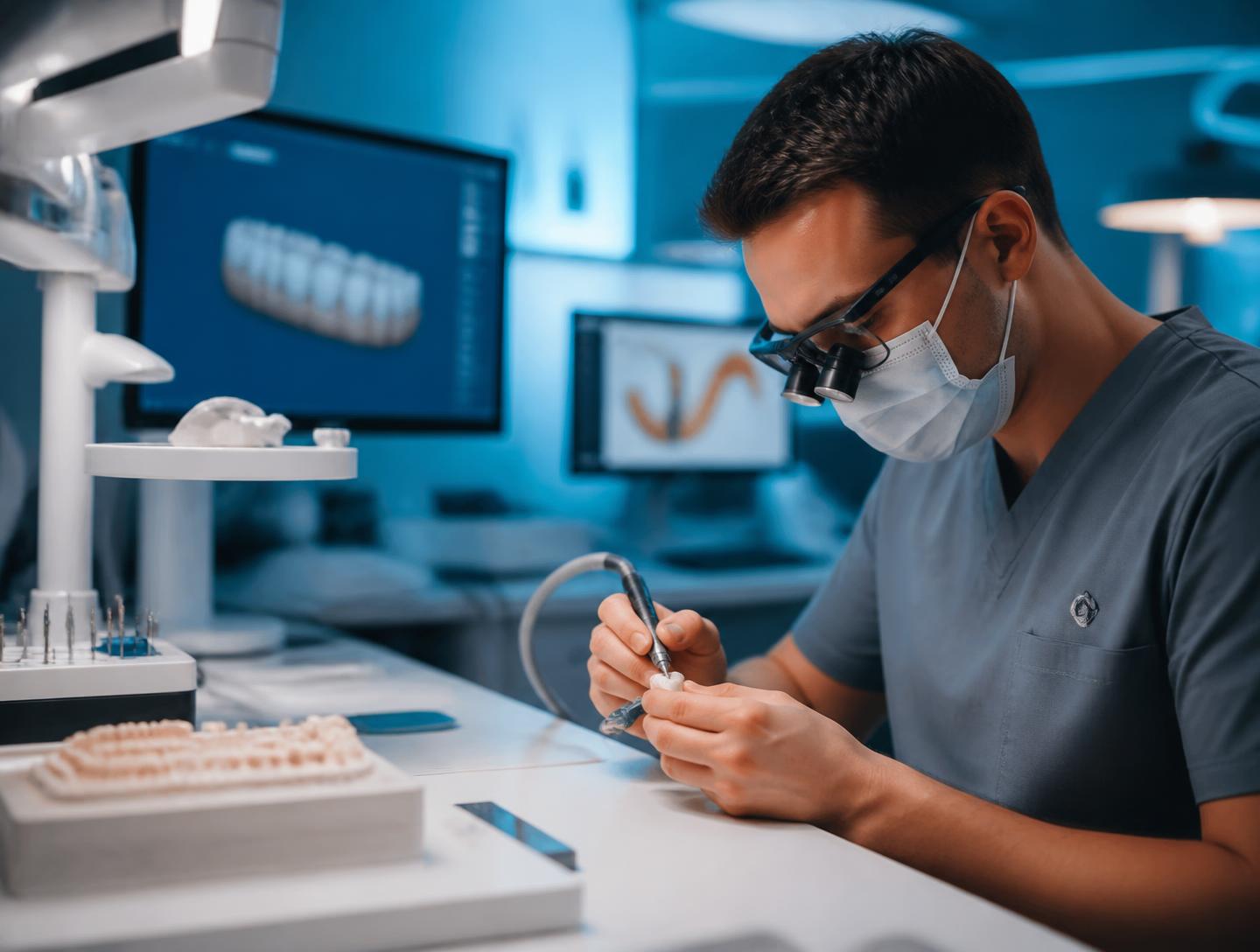
Istar Dental Lab produces this full line of custom dental guard and splint appliances in our own facilities in Shenzhen and Huizhou, China. We ship directly to dentists, clinics, DSOs, and partner laboratories across the United States, the Netherlands, Germany, France, Belgium, Austria, the United Kingdom, Luxembourg, Switzerland, and other European markets. We have been doing this since 2012, with roughly 460 in-house technicians and a dedicated appliance team. Case files, scans, patient-identifying information, and the finished device — the entire chain is handled under one roof, by named staff, with signed NDAs when you need them.

Product Families

Every item in this section is produced in-house, from a scan or physical impression, following the prescribing clinician's written design. Hardness, thickness, coverage, retention, and intended arch are decided by the prescribing dentist, not by us. We flag physical or occlusal risks on the model but do not substitute clinical judgment.

Custom Occlusal Splints (Hard / Soft / Dual-Laminate)

splint-0 — recommended upload 1440 × 960 pixels
Variant

Soft occlusal splint

Typical indication noted on referring Rx
Light-to-moderate parafunction, TMJ-area soreness, clicking, limited opening, fatigue from clenching or sleep bruxism, uneven occlusion contributing to joint loading
How we build it
Pressure-formed from soft thermoforming sheet; relieved on model; verified against the prescribed bite record
splint-1 — recommended upload 1440 × 960 pixels
Variant

Hard occlusal splint

Typical indication noted on referring Rx
More severe parafunction, cases where the dentist wants to distribute occlusal force, relax masticatory muscles, protect teeth and TMJ, or temporarily reposition the mandible as part of TMD management
How we build it
Pressure-formed from hard sheet; adjusted on articulator to the prescribed occlusal scheme
splint-2 — recommended upload 1440 × 960 pixels
Variant

Dual-laminate guard

Typical indication noted on referring Rx
Cases where the clinician wants a hard outer shell with a cushioned inner surface — common when a patient tolerates soft but needs the wear resistance of a hard outer
How we build it
Laminated hard-outer / soft-inner construction, pressure-formed

Hardness, thickness, and whether the splint goes on the upper or lower arch are the dentist's call. We fabricate to the Rx; the Rx is the record.

family-0 — recommended upload 1440 × 960 pixels

Night Guards for Bruxism and Clenching

Prescription night guards — soft, hard, or dual-laminate — built to protect the dentition and existing restorations from the forces of nocturnal grinding and clenching. We stay inside what the published evidence actually supports. Splints are used to protect teeth and restorations from parafunctional load; NIDCR describes a mouth guard as separating the teeth to prevent tooth damage. What the evidence does not support is the claim that a splint cures bruxism. Cochrane's review of occlusal splints for sleep bruxism found insufficient evidence that splints are effective for treating the condition, and concluded only that "it may be that there is some benefit with regard to tooth wear." Please represent the device to your patient the same way.

family-1 — recommended upload 1440 × 960 pixels

Periodontal / Bite Splints

Bonded or removable splints used in periodontal stabilization or as part of a treatment sequence where the clinician needs to immobilize mobile teeth or distribute load. Built from your model and treatment plan; the clinician specifies anchor teeth and material.

family-2 — recommended upload 1440 × 960 pixels

Orthodontic Retainers

  • Hawley retainers — wire-and-acrylic design, adjustable, traditionally the longest-serving retainer type
  • Essix / vacuum-formed clear retainers — pressure-formed thermoplastic retainers, pressed on a printed model, trimmed and polished for a smooth gingival margin
  • Bonded / lingual (fixed) retainers — wire fabricated and prepared for chairside bonding by the dentist

For orthodontic retainers and clear-tray staged work, we also package each stage in its own sealed, patient-numbered pouch to prevent mix-ups between appointments.

How a Custom Fit Is Actually Produced

A custom fit mouth guard depends on two things: an accurate record of the dentition, and consistent control at the lab bench. We'll describe each stage honestly, including what is manual.

What We Accept From You

Digital intake. We accept STL, PLY, OBJ, and DCM (3Shape native) scan files, along with editable CAD files from exocad and 3Shape when you have them. We work with case-exchange portals and scanner platforms including 3Shape Communicate, iTero, Medit Link, Shining 3D, Dexis, Ori, Primescan, DS Core, Panda, and WeTransfer. Email submission is fine for smaller cases.

Physical impressions. We prefer vinyl polysiloxane (VPS / addition-silicone), condensation silicone, or polyether. We do not recommend alginate for international shipping — alginate dehydrates and distorts in transit and raises customs-inspection concerns. Pour-up stone models and 3D-printed resin models are accepted, including implant models with analogs. Impressions must be disinfected at your office before shipment, with a record of the disinfectant used and contact time per standard infection-control practice; we repeat appropriate re-processing in our dedicated intake area when the case arrives.

Prescription (Rx) requirements. Clinic and dentist identification, patient identifier (clinic case number is fine — see "Patient data" below), appliance type, material and thickness preference, intended arch, occlusal scheme, and due date. Opposing arch and bite record are required. Alginate photographs, old appliance photos, diagnostic wax-up images, or temporary-restoration photos are welcome as references.

scan-coverage — recommended upload 1440 × 960 pixels

Opposing-Arch Scan Coverage

For splint and retainer work especially, the opposing scan must cover the entire occlusal arch — distal to the last molar and mesial through the anteriors — plus two to three teeth of context on either side of any prepared area, and the adjacent gingival soft tissue. Full-arch scans benefit from continuous single-direction capture with at least 30% overlap on stable landmarks (cusps, incisal edges). We will flag stitching errors in the file and ask for a rescan rather than guess.

In-Lab Workflow for Pressure-Formed Appliances

workflow-0 — recommended upload 1440 × 960 pixels
Stage

1. Case intake

Our case-coordination team checks that the Rx, scans/impressions, bite record, and patient ID are all present and internally consistent. Missing or contradictory data pauses the case — we contact you, log the issue, and the clock restarts after you reply.
By whom
Case coordinators (team of about 40)
workflow-1 — recommended upload 1440 × 960 pixels
Stage

2. Model preparation

Dental 3D printing on a dedicated dental-grade printer, or stone model from a physical impression. We regularly print standard test specimens and verify dimensions against reference, to catch printer drift early.
By whom
Model team
workflow-2 — recommended upload 1440 × 960 pixels
Stage

3. CAD review

For digital cases, we check the scan quality, bite registration, and arch coverage in dental CAD. For complex occlusion we re-mount the record and verify.
By whom
CAD department (~100 technicians)
workflow-3 — recommended upload 1440 × 960 pixels
Stage

4. Pressure forming

Thermoforming is our current main process for splints, night guards, and clear retainers: even heating of the sheet, stable positioning on the model, uniform pressure during forming, cooling under pressure until the material fully sets.
By whom
Appliance technician
workflow-4 — recommended upload 1440 × 960 pixels
Stage

5. Trim, finish, polish

Flash removed, borders trimmed to the prescribed extension, intaglio surface preserved (we polish externally and only lightly adjust the intaglio to avoid breaking seat), occlusal relief as specified, high polish on external surfaces to reduce plaque retention.
By whom
Appliance technician
workflow-5 — recommended upload 1440 × 960 pixels
Stage

6. QC — thickness, borders, retention

See the Quality Management section below.
By whom
Independent QC
workflow-6 — recommended upload 1440 × 960 pixels
Stage

7. Pack, label, ship

High-pressure cleaned, individually bagged, labeled with patient identifier and case number, cross-checked against the shipping manifest.
By whom
Packaging & dispatch

Quality Management and Case Inspection

A custom appliance is only "custom" if the lab can prove, case by case, that it was built to that patient's record. Our process has three dedicated inspection gates and a case-by-case defect log — not a "100% satisfaction guarantee" slogan.

Three Inspection Gates per Case

  1. Intake / data pre-check. Rx completeness, scan or impression quality, bite record, prescriber signature, patient identifier consistency.
  2. In-process spot checks. During CAD review and after forming/trimming, the responsible technician plus a floor lead confirm thickness, border extension, and seating on the model before polishing.
  3. Final independent QC. A dedicated QC inspector — organizationally separate from production technicians, with no role in making the piece — performs the final release check against the signed-off Rx.

What Final QC Measures on a Guard / Splint / Retainer

CheckHow it's performedPass criterion
ThicknessCaliper, multiple points across the archWithin the prescribed thickness tolerance recorded on the Rx
BordersVisual plus tactile sweep of the full perimeterSmooth, no sharp edges, no flash; coverage matches the prescribed extension
Fit to modelSeat on the master modelFull seat without lift or rock; retention consistent with the clinician's design
Intaglio surfaceVisual, aided by magnification where indicatedNo voids, no residual bubbles, no over-polishing that would compromise seat
Overall integrityVisual, bending-light inspectionNo cracks, no trapped air bubbles, no stress whitening
Patient identificationCross-check Rx, work order, model label, bag label, shipping manifestAll five identifiers match the same patient number

We can share QC photographs or a written inspection record on request at ship-out — not every case gets photographed automatically, but you can ask us to include them, especially for complex or esthetically sensitive cases.

If It Doesn't Pass QC

If a piece fails final inspection, we remake it ourselves and do not ship the defective one — you don't need to catch our mistakes for us. If a case needs clinical input before we can continue (ambiguous bite, insufficient space, missing opposing arch), the case pauses and your assigned coordinator contacts you by shared work-group chat or email the same day. The documented defect, root cause, and corrective action go into the case file.

Equipment and Materials Governance

  1. Thermoforming machines, printers, and milling equipment are on a scheduled calibration and maintenance log; records are kept per device.
  2. Sheet material is tracked by lot and shelf life. On request we can provide the lot number and material certificate for any case.
  3. Material substitution requires written customer approval before we proceed. We do not quietly swap sheet brands.

Returns, Remakes, and Responsibility

Our internal remake rate on general restorative work runs around 2–3%. For appliance work we hold ourselves to the same gate. If a dentist has already adjusted a device chairside and then reports a fit or material issue, the remake responsibility usually sits with the lab — our standing policy is to take responsibility rather than argue over who did what, as long as the Rx and records support it. For root-cause purposes, we still log it: documentation serves future cases, not the invoice.

Regulatory, Material Traceability, and Patient Data

We are registered with and listed by:

  1. United States — FDA. Facility establishment registration and device listing for custom restorative devices. You can verify Istar directly in the public FDA registration and listing database — no account required.
  2. European Union — MDR. Custom-made Class IIa dental devices (crowns, bridges, inlays, onlays, veneers, partial and full dentures, custom superstructures) are notified under MDR Annex XIII (custom-device route). We issue the required custom-device statement and our EU authorized representative handles EUDAMED-related reporting. Dental implant bodies and Class III custom implantables are not within this notification.
  3. United Kingdom — MHRA. Active registration for applicable device categories.
  4. Quality system — ISO 13485. Active registration.

Certificates and registration documents can be shared in electronic form within the scope of our authorizations.

Material traceability. For any case we can provide the material brand, country of origin, lot number, and material certificate / certificate of conformity. We would rather you ask than guess.

patient-data — recommended upload 1440 × 960 pixels

Patient data. You do not need to send the patient's full name. A clinic internal case number is sufficient and is in fact what we recommend. Scans and files are transmitted over encrypted channels and stored with access controls; only our case-coordination team sees case-identifying material, and that team is under written NDA. We will sign a mutual NDA or data processing agreement when you request one. Case electronic records are kept per applicable regulation; you may request deletion in writing and we will delete within the agreed window, retaining only what we are legally required to keep for traceability.

We never contact a partner lab's end-dentist directly, and we never use a case photograph, model, or patient record for marketing, portfolio, or training without written authorization from both the clinic and the patient.

Working With Us

Partner Types We Fit

  1. Independent dental clinics — single-location or small-group. If shipping cost is a concern on single cases we usually recommend consolidating one shipment per week.
  2. DSOs and multi-location groups — we have experience routing finished cases directly to the correct branch rather than requiring a central hub.
  3. Partner dental laboratories — if you're a lab that wants to outsource appliance work, white-label is standard: your packaging, your Rx form, your branding on the shipping label. No Istar branding anywhere unless you ask for it.

First Case: Test Order

We welcome a single test case from a new partner. Send the Rx and the digital files (or the physical impression — tell us and we can issue a return waybill), and we'll fabricate the appliance under the same workflow and QC as a production case. The point of a test case isn't to prove our marketing claims; it's to let you see our turnaround, communication, packaging, and finish quality with your own patients.

We do not run long-term single-case accounts, because international shipping on a single appliance is uneconomic for everyone involved. The test is to decide whether to batch regular work with us.

Case Submission Checklist

Before you hit send, please have:

  1. Dentist name, clinic name, and clinic/patient case number
  2. Appliance type, intended arch, hardness, and target thickness
  3. Occlusal scheme preference (balanced, canine-guided, group function) if relevant
  4. Digital files (STL/PLY/OBJ/DCM/native CAD) or a disinfected physical impression + bite record + opposing cast / scan
  5. Any photos, old-appliance references, or notes on patient preference
  6. Required-by / due date and shipping destination

We acknowledge receipt and flag any missing items the same working day. Design review typically includes one initial design and up to two complimentary revisions; further rounds can be arranged.

Communication

Every regular partner is assigned a shared work-group chat (plus email) with a dedicated case coordinator; important design decisions, material substitutions, and remake decisions are confirmed in writing. Video walk-throughs during factory hours are available by appointment.

Turnaround

Our standard restorative in-lab production time for routine crown-and-bridge work is 2–3 business days; complex implant or full-arch work is 5–7 business days. Appliance cases that go through our standard thermoforming workflow follow similar lab-side timelines; final delivery depends on your scan/impression arriving complete. Lab turnaround is counted in business days, starting from the moment we receive a complete case. Time waiting for the clinician to answer a design question does not count against our stated turnaround — nor does customs clearance, remote-area last-mile, Chinese public holidays, or weekends.

Rush handling. If you have fewer than ~10 cases per month that need rush processing, we generally do not charge a rush fee for them. Rush can be requested before or after case submission. For higher volumes of rush orders, we agree the surcharge up front.

Pricing and Payment

Pricing is driven by appliance type, unit count, material, and any added complexity (implant componentry, complex occlusion). The quote includes design, model production, standard componentry, packaging, and shipment preparation; we confirm the full price before production starts. If an added part or operation is needed mid-case, we message you — in the work-group or by email — and wait for your written approval before proceeding.

Payment: bank transfer or PayPal, in your preferred supported currency; FX differences settle at the day's rate. New accounts can request net-30 payment terms. Invoicing is per batch by default; monthly statements are available for partners that prefer them. Clinic case numbers, patient identifiers, or PO numbers can appear on the invoice if you need them to.

Shipping

shipping — recommended upload 1440 × 960 pixels

We ship via DHL, FedEx, UPS, and SPIDER (for France). You can either use your own courier account or use ours at the batch-negotiated rate. Outbound shipping (your material to us) is on you; return shipping of finished cases is on us above a package-value threshold, below which you pay a share. For partners who send physical impressions, we can issue a prepaid return waybill. Customs duties, broker fees, taxes, and remote-area surcharges are the receiver's responsibility.

Each case is independently bagged and labeled; implant screws, bite records, and small components are packaged separately and cross-checked at pack time. Tracking numbers are issued the day the shipment leaves our facility.

Insurance: by default shipments are uninsured; declared-value insurance is available on request, with coverage capped at fabrication cost or declared value (indirect losses are not covered). If you need to change a shipping address or urgently split a batch, we can do it as long as the case hasn't been packed yet; once a shipment is in the courier's hands we can only ask the courier to adjust.

White-Label and Outsourced Lab Partners

For dental laboratories outsourcing appliance work to us, we provide fully white-labeled output. We can match packaging format, use your Rx template, print your clinic-facing labels, and receive design queries in the format your technicians already use. We never reach out to the end-dentist directly — that's a business boundary we don't cross.

Factory Visits and Audits

Istar welcomes partner visits to our Shenzhen or Huizhou facilities. We can arrange a factory tour, a production-line walk-through, a video audit, or a technical capability discussion. For lab or clinic partners who need to inspect our quality system, production records, or supplier records as part of your own compliance process, we support that audit directly. Email your assigned coordinator to schedule.

factory — recommended upload 1440 × 960 pixels
equipment — recommended upload 1440 × 960 pixels
environment — recommended upload 1440 × 960 pixels

FAQ

How is a custom mouth guard different from a boil-and-bite guard?

A custom mouth guard (as a dental appliance) is made from your patient's own scan or impression, matches the dentition's actual anatomy, and is prescribed by a dentist with a specific material, thickness, and intended function. A boil-and-bite is a factory-made shell softened in hot water and shaped by the patient's own bite — it fits approximately rather than specifically, and nothing on it is adjustable to the clinician's occlusal plan.

What's the clinical evidence boundary we should present to patients?

Occlusal splints and night guards are prescribed to protect dentition and restorations from parafunctional load — that is what they are for. What is not established is that a splint stops the grinding itself. The Cochrane review cited earlier in this page found insufficient evidence that splints are effective for treating sleep bruxism, and noted only a possible benefit for tooth wear. We produce the device; the way it's represented to the patient is the clinician's call, and we recommend staying inside the published-evidence envelope.

Will the device work for patients with crowns, veneers, or implant restorations?

Usually yes, but we need you to tell us. Scans or impressions must capture the restoration surfaces accurately. For heavily restored cases, additional opposing-arch coverage and clear occlusal records help us avoid interference. The design — relief areas, retention design, which arch — remains the clinician's decision.

What about patients with active TMD symptoms?

A splint can be part of a TMD management plan, but the diagnosis and the treatment plan are yours. We fabricate to the Rx; we won't try to diagnose from a lab bench.

How thick should the appliance be?

That's prescribed by the clinician. We've seen Rx requests spanning the common range (approximately 1–3 mm for occlusal splints and night guards depending on indication). Thinner guards are more comfortable; thicker ones distribute force differently. If the Rx leaves it open and the case suggests risk (heavy bruxer, large restorations), we flag it and ask.

How long does a splint or night guard last?

Longevity varies with material, patient parafunction severity, oral-care habits, and whether the appliance has been exposed to heat. There is no universally mandated replacement interval — replacement is driven by the condition of the device, not by a calendar. Signs that it's time include cracks, perforations, measurable thinning, loss of retention, a change in how the bite feels, persistent odor after cleaning, or any visible damage. In practice, clinicians commonly see several years of service from a well-maintained hard splint and shorter life from softer materials, but the actual number is case-specific and belongs to the treating dentist's recall exam.

How should patients clean the appliance?

The patient should rinse with cool water (or alcohol-free mouthwash), brush gently with a soft brush and non-abrasive cleanser, dry fully, and store in a ventilated case. Hot water will deform the material — the same reason thermoforming works. Dishwashers, boiling water, and leaving the device in a hot car are all common ways to destroy a perfectly good splint. We're happy to include a one-page patient-care card in shipments on request so your chairside team doesn't have to re-explain this every visit.

Which scanner platforms are you compatible with?

STL, PLY, OBJ, and DCM (3Shape native) are accepted directly. We also work with case files from 3Shape Communicate, iTero, Medit Link, Shining 3D, Dexis, Ori, Primescan, DS Core, Panda, and WeTransfer. If your platform isn't on this list, send a test file and we'll confirm compatibility.

Can we see the design before you cut material?

Yes. We can share design screenshots or an STL preview over the shared work-group chat or by email for sign-off. Design-approval cases add about 1–2 days to the schedule because of the review loop; that trade is often worth it on complex or esthetic cases.

Will Istar branding appear anywhere if we're outsourcing?

No, unless you ask. Default behavior for outsourced lab partners is full white-label: your packaging, your Rx forms, your labels, no Istar name on anything that reaches the end-dentist. We also do not contact your end-clients directly.

What happens if a device doesn't seat correctly at chairside?

First, before anything else, check that the fit issue isn't the model or the bite record — most seating issues trace back to the record, not the lab. If the Rx was clear and the records were adequate, send us a photo (occlusal view, intaglio view, and a shot of the patient's dentition for reference) and the responsible coordinator will route it to the technician who made it. Remake decisions are logged against the case so we can trend-analyze causes over time.

Where to Start

For a first case, email your assigned coordinator with:

  • Your clinic/lab name and contact

  • Appliance type and intended arch

  • STL / scan files, or notification that a physical impression is on the way

  • Your required-by date

  • Any specific hardness, thickness, or occlusal scheme preferences

We'll confirm receipt within one business day and have a quoted turnaround on the way back.

If you'd rather talk before sending files — about scope, pricing bands, white-label setup, or an on-site/video audit — ask for a call and we'll schedule it.

Want to get in touch directly? Reach out to our sales representative via WhatsApp at +8618925410015 for a quick response and a price quote!