Open margins. Shade mismatches. A lab that quietly reroutes your case to a stranger's workshop. Rush fees added at the last minute. These are the problems a crown and bridge dental lab should be solving, not creating.
Istar has run every production step inside our own Shenzhen and Huizhou factories since 2012 — no outsourcing, no mystery supply chain. We're a crown dental lab and a bridge dental lab on the same floor, shipping roughly 10,000 fixed cases a month to clinics, DSOs, and partner labs across the US and Europe.
Each line solves a specific clinical problem. Pick the one that matches the case.
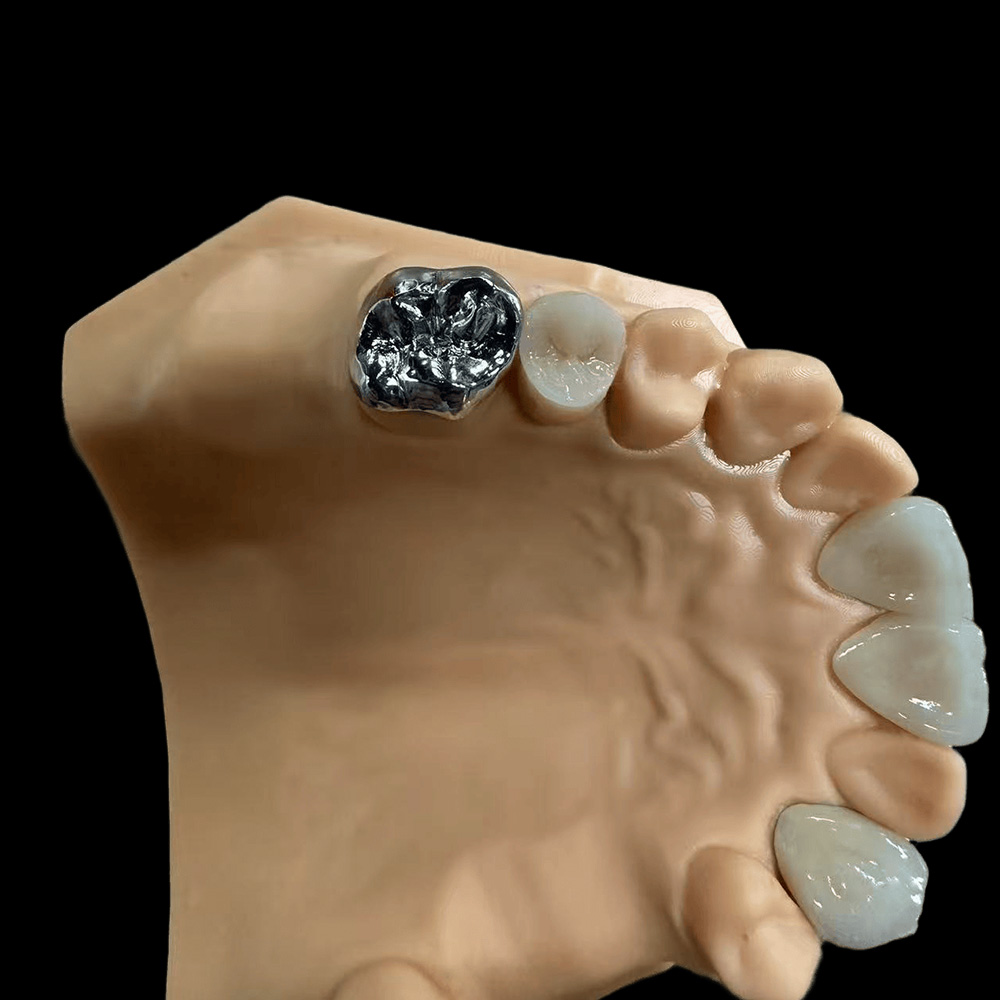
Build: cast or milled coping — CoCr, Pd-Ag, white gold, or high gold — with layered porcelain
Choose when: long-span bridges, high occlusal load, cost-sensitive cases where translucency isn't the deciding factor
Options: nickel-free and beryllium-free alloys on request
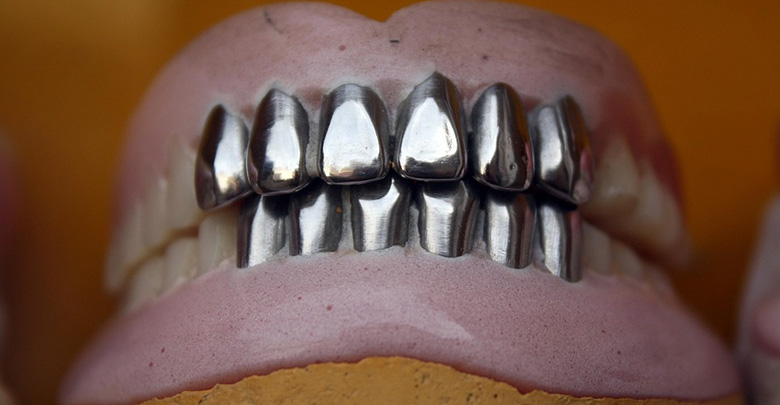
Build: solid cast gold or CoCr, no ceramic layer
Choose when: confirmed bruxers, cracked molars, or when the prep gives you only 0.5mm of occlusal clearance
Trade-off: no esthetics — posterior-only, out-of-the-smile-line work
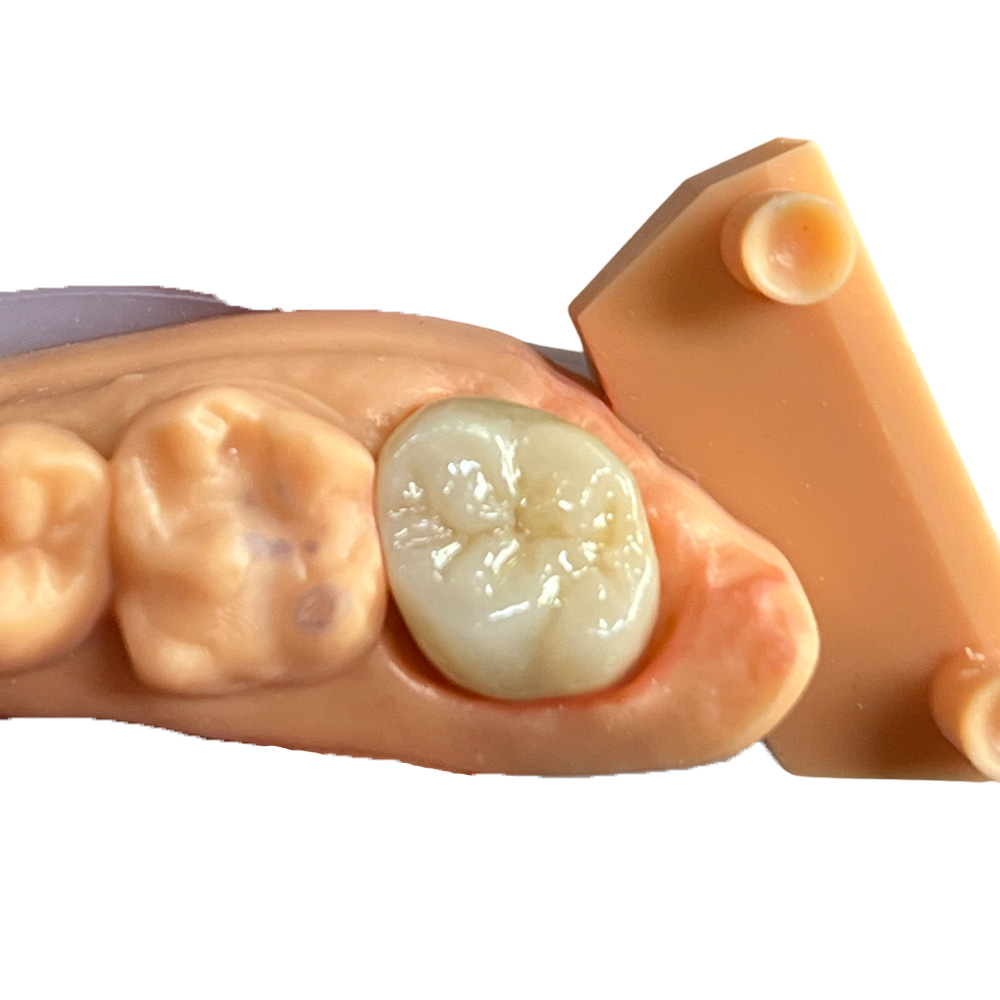
Build: monolithic (one solid block, highest strength), multilayer (factory-graded translucency, no veneer to chip), or layered (zirconia coping with hand-stacked porcelain)
Choose when: monolithic for bruxers and tight clearance; multilayer for anterior with a layered look; layered for stable-occlusion anterior esthetics
Volume: roughly 8,000 single units and 2,000 bridge cases a month
Brands: Aidite, Yucera, Wieland, 3M Lava
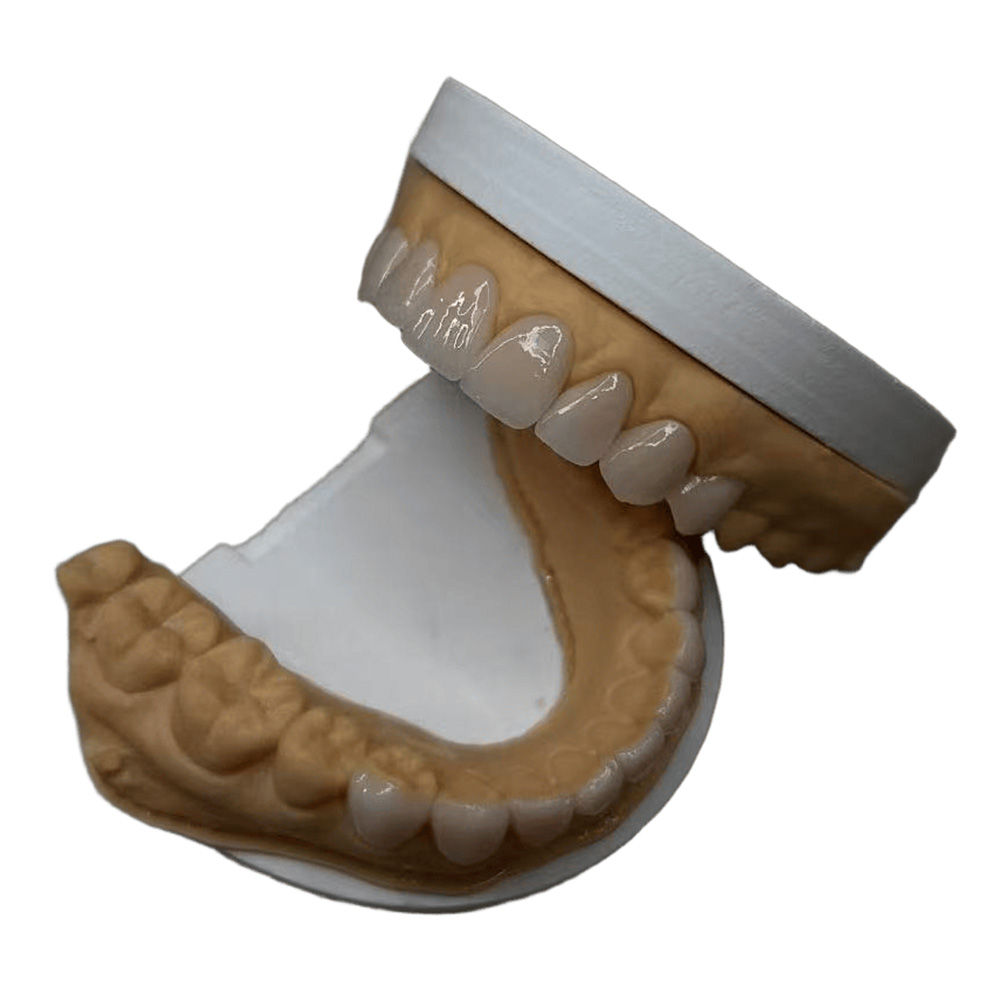
Build: lithium disilicate from Ivoclar Vivadent
Choose when: anterior esthetic crowns, post-endo posterior crowns with enough tooth left, single-tooth implant crowns, short-span anterior bridges
Avoid when: severe bruxers, large-span bridges — flexural strength sits in the middle of the pack
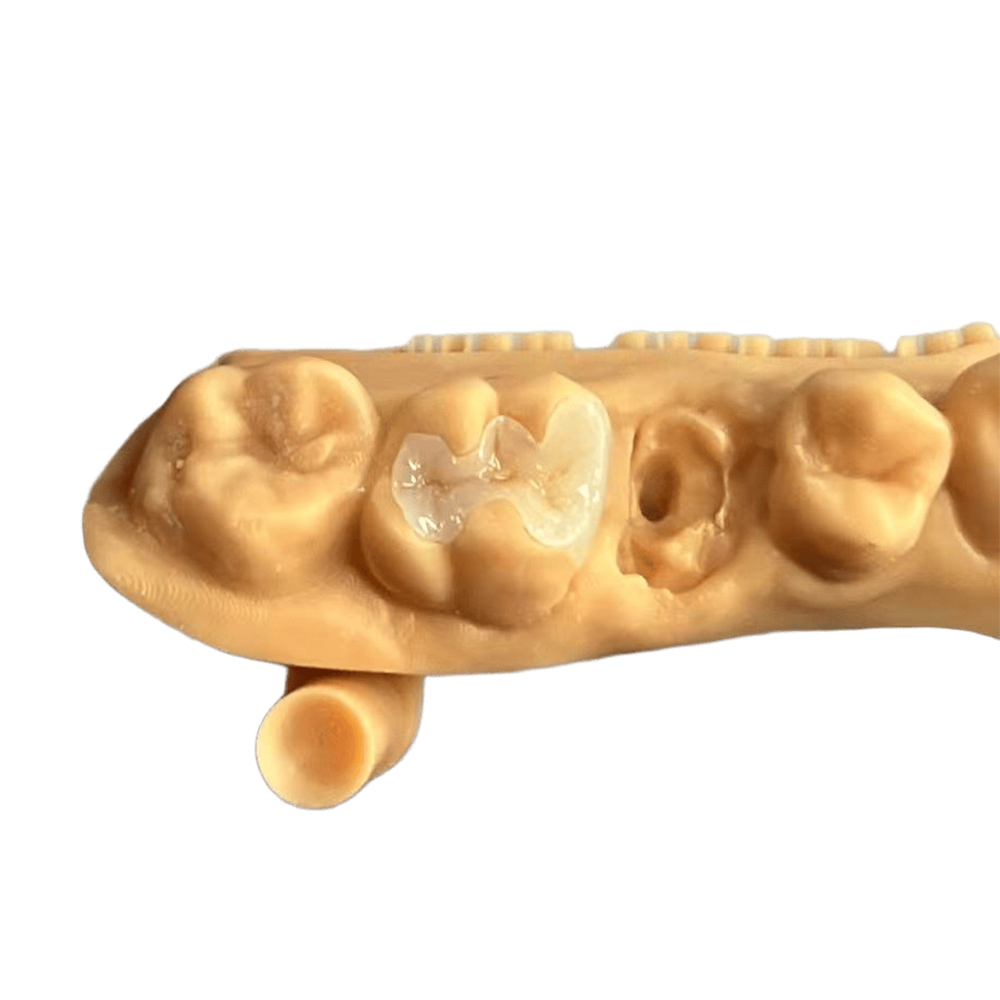
Build: E.max (anterior and esthetic), zirconia (high-load posterior), or cast gold (durability over color)
Choose when: you want to keep more sound tooth than a full crown would allow
Note: onlays are often a better call than a full crown on an endodontically treated molar
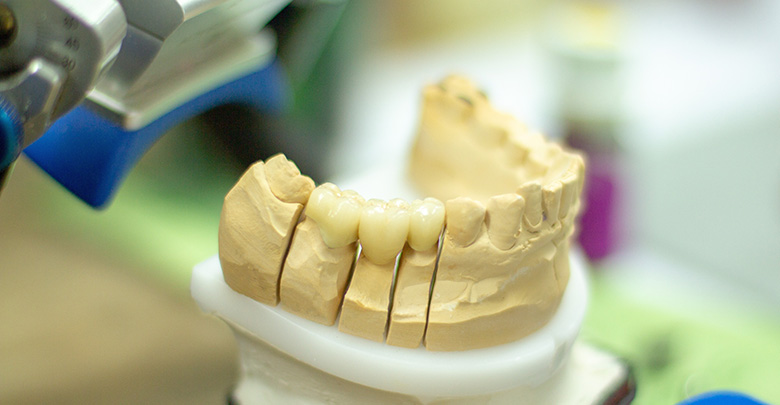
Build: milled or printed PMMA
Choose when: immediate provisionalization, extended-wear try-ins, second stage of a multi-visit plan
Why PMMA: holds dimensional fit over the full temporization window, where chairside bis-acryl often doesn't
ZirconiaIPS e.maxPorcelainAlloysPMMA
We don’t substitute brands quietly.
Our zirconia comes from Aidite, Yucera, Wieland Zenotec, and 3M Lava, chosen case by case for the right balance of strength and translucency.
Lithium disilicate is IPS e.max by Ivoclar Vivadent in both pressable and CAD/CAM form.
Layering porcelains run from Ivoclar Vivadent (IPS e.max Ceram, IPS d.SIGN), Noritake (CZR), and Shofu (Vintage).
For PFM and framework work we cast Bego’s Wirobond CoCr family alongside Pd-Ag, white-gold, and high-gold alloys, with titanium and Vitallium frameworks available where biocompatibility or weight matters — nickel-free and beryllium-free alloys stocked for sensitive patients.
Temporary crowns and bridges run on milled PMMA pucks, with Lucitone 199 (Dentsply) and composite resins from Ivoclar and Shofu on hand where cases pair with removable or chairside work.
Every case leaves the factory with a batch record identifying material brand, country of origin, and lot number — available on request.
| Parameter | Anterior | Posterior |
|---|---|---|
| Minimum restoration thickness | 0.5–1.5mm | 0.8–2.0mm |
| Connector cross-section | 6–12mm² | 9–16mm² |
Ceramic materials meet the flexural strength and biocompatibility requirements set by ISO 6872:2024 for dental ceramics. If a prep comes in under spec, we flag it before milling. You don't want to find out the restoration is under-strength when it fractures in the mouth; we don't want to be the lab that let it leave the floor.
01
Submit digital or physical. Scans: STL, PLY, OBJ, DCM, 3oxz from 3Shape, Medit, iTero, CEREC, Shining 3D, Planmeca. Physical impressions: VPS or polyether — alginate doesn't survive international shipping.
02
Validation in 1 working day. Either the case is ready for production, or you get an email with exactly what needs correcting. No silent waiting.
03
Production clock starts the day we have a validated case. Weekends, PRC public holidays, back-and-forth with you, and customs clearance don't count against it.
04
Rush service is free — all materials, all case types. Ask for a specific delivery date at submission.
| Case type | Lead time |
|---|---|
| Single crown, any material | 2–3 working days |
| Bridge up to 4 units | 2–3 working days |
| Long-span bridge (5+ units) | 3–5 working days |
| Inlay or onlay | 2–3 working days |
| Temporary crown or bridge | 2–3 working days |
| Multi-visit complex case | 5–7 working days |
Two facilities in Shenzhen and Huizhou, built for the specific workflows that fixed restorations demand.
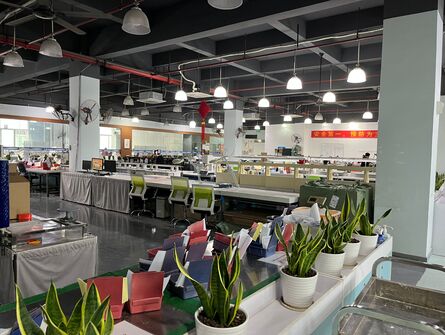
~460 full-time technicians across both sites, grouped by workflow stage — CAD design, milling, implant work, ceramics and metal, QC, and case coordination
~50 trained backup technicians join during peak season to protect lead times when case volume spikes
Capacity in a normal season: roughly 8,000 single zirconia units and 2,000 bridge cases per month, plus All-on-X and removable work on separate lines
Dedicated zones for digital workflow, CAM milling, metal casting and framework, ceramic layering, QC and finishing — no cross-contamination between material classes
One production standard across clinic, DSO, and partner-lab cases — no “fast lane” or “slow lane”
Yes. Clients and partners can arrange:
On-site factory visits at either Shenzhen or Huizhou — meet the technicians working on your cases
Video factory inspections when travel isn't practical — walk-through of production lines, QC area, and material storage
Supplier qualification audits — we support ISO-style audits with full access to our QMS documentation, training records, and traceability logs
Contact your account manager at least two weeks ahead for in-person visits; video inspections can be arranged within one week.
Every crown and bridge is inspected before it ships. Not sampled. The 2% you'd catch at seat appointment goes through the same gate as the 98% you wouldn't.
Pre-production — scan, Rx, and bite record checked for integrity. Cases with missing or contradictory inputs stop here.
In-process — each technician verifies their own work before handoff. Coping deformation after sintering, for example, gets caught here, not during final inspection.
Final release — independent QC technician (not the one who fabricated the case) checks marginal fit under magnification, passive seating, proximal contacts, centric and excursive occlusion, surface finish, and screw-channel integrity on implant cases.
Internal rework rate: 2–3%. If something's wrong when you receive the case: report within 24 hours with photos; open margins, open contacts, high occlusion, non-seating, incorrect shade, or visible defects get a free remake routed through rush handling.
Per-case material batch, conformity certificates, biocompatibility documents, and MDR custom-device declarations are available on request.
Most esthetic remakes trace back to the same gap — the dentist expected one thing, the lab fabricated another, and the information in between wasn't enough to catch it.
For routine single units, a Vita code plus a note on any discoloration to mask is enough. For anterior and high-esthetic work, we need the whole picture upfront:
Shades (both): prep base shade and target shade, each as a Vita code and a shade-tab photo taken in the patient's mouth
Incisal effect: transparency and opalescence notes, gradient zone marked
Surface texture: smooth, medium, or strong developmental texture, with a reference photo if you have one
Photo set: facial smile, retracted anterior, upper and lower occlusal, both lateral views, close-up with the gingival margin visible
Camera settings: ring or dual-point flash, 5500K, ISO 100, intra-oral at f/22
Phone photos we don't rely on — filters and auto-enhancement shift color enough to misread the target. If a design preview looks wrong on your monitor, send the Vita code or a new photo — we work from written confirmation, not screen rendering.
The fastest way to know whether we fit is to send a single case through our full production and inspection path. No trial-case tier, no "demo" standard — you see what every case looks like.
Want to get in touch directly? Reach out to our sales representative via WhatsApp at +8618925410015 for a quick response and a price quote!
Bank transfer or PayPal. Up to Net 30 for established partners; new clients prepay the first few cases. Transaction fees are typically borne by the sender; exchange rate settles on the payment date.
Partner labs: at least US$500 in monthly lab fees. Clinics and smaller senders aren't held to this.
DHL or FedEx by default. Transit: 3–5 business days to the US and EU, 4–6 to the UK. Duties and VAT are the receiving party's responsibility unless DDP is arranged upfront.
Yes while it's still in CAD. Once milled, cast, or sintered, a modification is effectively a new case. Mid-production material or shade changes are new orders too.
Yes. Our standard packaging and documentation carry no Istar branding, and packaging, Rx forms, labels, and client communication can run under your lab's name. We don't contact the dentists in your case files — not by call, email, or marketing. If a dentist reaches us independently, we route them back to you. Case files are used only to fabricate your current order, not for training datasets or marketing libraries. NDAs, DPAs, and SQAs — send your template; we review and counter-sign.
Yes — active FDA (US), MDR (EU), MHRA (UK), and ISO 13485. These are administrative registrations and quality-system certifications, not product-level "approvals." Registration numbers and certificates are available on request within our authorization scope.
Yes by default; we only archive if you ask. Digital files are retained for the standard operational window — longer retention is arranged in writing.
Dedicated receiving area, verification, documentation, and material-appropriate disinfection before anything enters the production floor. ADA infection control guidance sets the reference standard.
Within 1 hour during working hours (China Standard Time 9:30–18:00); 7–8 hours outside working hours due to time zone, up to 12 hours worst case. Urgent cases escalate to the technical director or plant director.