Cast Co-Cr RPD (standard)
Framework material
Cobalt-chromium
Typical use
Kennedy I–IV, most tooth-supported and tooth-tissue cases
Clasp / retention options
Cast circumferential (Akers), bar/I-bar (RPI), combination
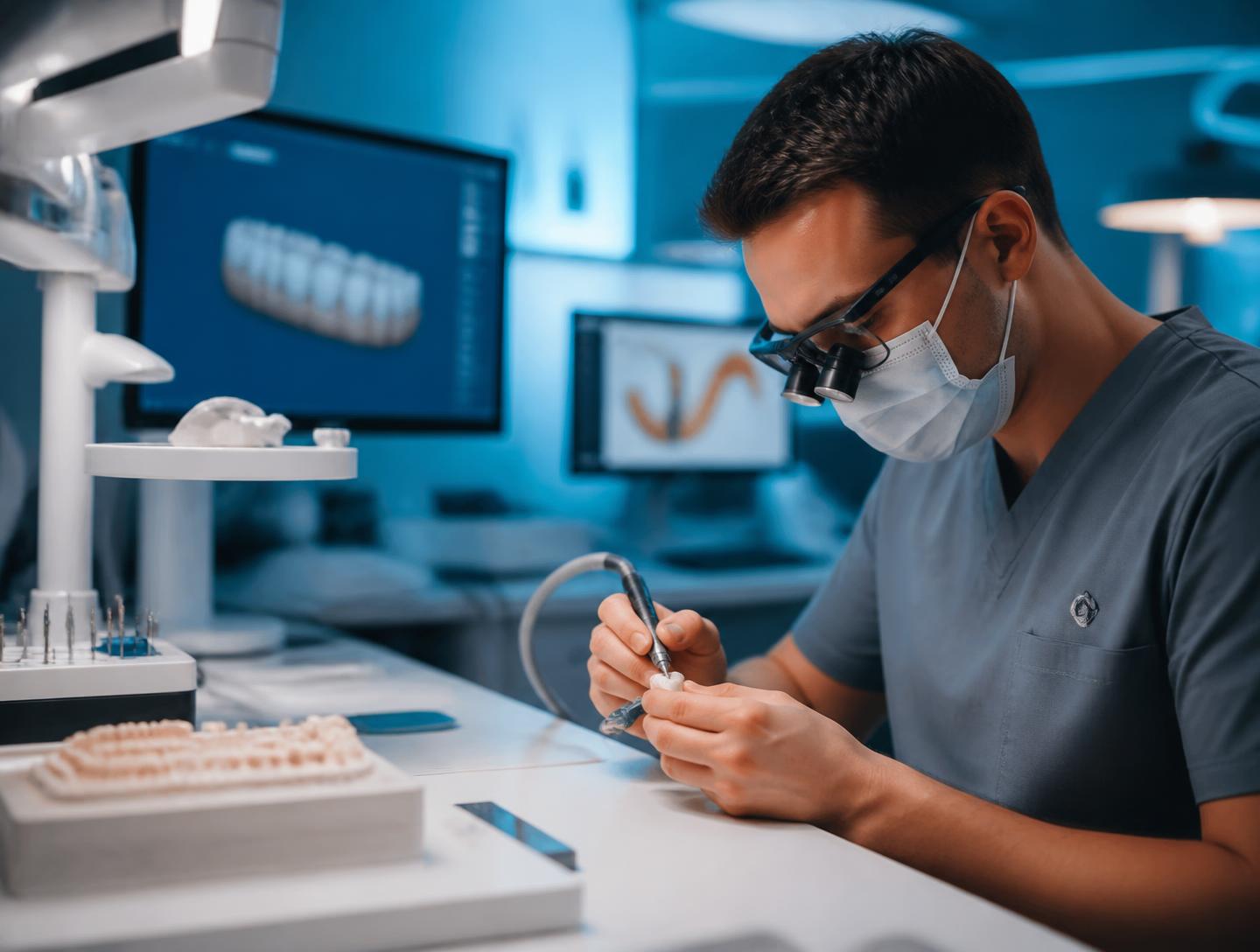
Metal dentures — also called cast partial dentures, chrome partial dentures, or more precisely Co-Cr framework removable partial dentures (RPDs) — are still the workhorse of removable prosthodontics when a case needs rigidity, a thinner palate, or a reliable rest-and-clasp design on sound abutments. Flexible and acrylic alternatives have grown, but a well-planned cast metal framework still wins on long-term framework stability for most Kennedy Class I–IV situations.
Istar Dental Lab is a full-service manufacturing lab founded in 2012, with facilities in Shenzhen and Huizhou and roughly 460 in-house staff — including a 55-person removable department and a 70-person ceramic & metal department. We do not outsource cases. Everything below is produced on our own floor, from scan or model intake through final QC.
Metal dentures only perform as well as the case selection and design behind them. A rigid Co-Cr framework rewards good abutments and punishes compromises. The judgment calls below are the ones that most often change the outcome, and they are the ones we want to review with you before we start the design.
These are the cases where we will usually come back with questions before we cast:
Co-Cr remains the default because of its stiffness-to-thickness ratio, long clinical track record, and cost. Titanium is lighter and the usual answer for a documented Co/Ni/Cr allergy, with a slightly thicker minimum section to compensate for lower modulus — see the titanium framework RPD case report for a metal-allergic patient for a worked example. PEEK is radiolucent, light, kinder to the opposing arch, and has growing published support including this performance comparison of PEEK vs cobalt chromium frameworks and the integrative review on PEEK for RPD frameworks; but it is less rigid, so your clasp design and connector dimensions need to change accordingly. We will not substitute materials silently — if we think the prescription would do better in a different alloy, we send a note before cutting.
| Material | Brand(s) we currently stock | Why pick it | Design points we flag |
|---|---|---|---|
| Cobalt-chromium (standard) | In-stock Co-Cr casting alloy | Default choice; stiff, well-polished, long clinical track record | Watch minor connector thickness; polish-around rests to prevent plaque traps |
| Vitallium (Co-Cr family) | Vitallium | Slightly lower density finish, long market history | Same as above |
| Commercially pure titanium / Ti alloy | CP Ti / Ti alloy | Documented Co/Ni/Cr allergy, lighter weight | Lower modulus — expect slightly thicker sections; cast or milled |
| PEEK | PEEK | Metal-sensitive cases, radiolucency wanted, lighter restoration | Clasps need redesign; palate coverage sometimes larger |
| Hypoallergenic Co-Cr | Nickel-free / beryllium-free Co-Cr | Confirmed nickel sensitivity but Co-Cr preferred for stiffness | We provide material cert on request |
Toxicology context. The MDPI article on Cobalt–Chromium dental alloys, metal exposures and CMR classification and this PMC systematic review on toxicological risks of Co-Cr alloys in dentistry are both worth reading if a patient brings up metal release concerns; the general finding is that properly cast and polished Co-Cr frameworks release very low amounts of ions, but you should answer the question honestly rather than wave it away. Our lab-end ISO 13485 covers process control; material-level biocompatibility documentation (ISO 10993-type) is handled by the alloy manufacturer and can be forwarded on request.
Longevity, in evidence. The ten-year retrospective on longevity of acrylic and Co-Cr removable partial dentures is the cleanest reference for setting patient expectations about survival and complications, and the Dental Update continuing-education piece on complications and maintenance in RPD prosthodontic care is a good handout for your front desk.
Our removable workflow is the same whether you send a physical impression or a digital file. The judgment and the hand-work live mostly in the design review and the finishing — the CAD/CAM only earns its keep if the design was right.
 01
 02
 03
 04
 05
 06
 07
 08
 09
| Scenario | Framework design we usually recommend |
|---|---|
| Kennedy I, mandibular, bilateral distal extension | Lingual bar major, RPI on primary abutment, I-bar on second abutment, cingulum rests up front |
| Kennedy II, maxillary | AP palatal strap or palatal plate; combination clasp on tipped abutments |
| Kennedy III, short span | Lingual plate or lingual bar; circumferential clasps on sound abutments |
| Kennedy IV, anterior esthetic | Anterior palatal strap; combination clasps or precision attachments if esthetics are critical |
| Known allergy, otherwise straightforward design | CP Ti framework, same connector logic, 10–15% increase in connector thickness |
If you want a different design philosophy than the one we would default to, say so in the prescription — we build to your prescription, not to our habit.
A clean submission avoids 90% of back-and-forth. This is the full checklist; include whichever applies to the case.
Minimum for a cast metal partial:
Add if applicable:
We accept STL and all common open scanner formats. Digital cases shave 1–2 days off the overall cycle versus physical impressions, mostly from skipping cross-border model shipping.
We quote in lab-fee terms. The number you see is what you pay us; it is not a patient-facing price. B2B price lists are issued by your account manager after a short intake call — the price list covers single-arch and bilateral cases, framework material tiers, upgrade options, and private-label packaging.
Lead time is quoted in working days, from the day we receive a complete case, with design approval and client reply time not counted toward the clock. Weekends and Chinese public holidays are not production days. Digital cases are typically 1–2 working days faster than physical-impression cases.
Every case runs through case-level QC at the end of each production stage and a final whole-case inspection before packing. We log:
The lab operates under an active ISO 13485 quality system. For international shipments we maintain FDA, MDR, and MHRA registrations — covering custom dental devices, which includes custom partial dentures and other removable restorations. On request we can supply the lot numbers, material brand, country of origin, and manufacturer's certificate of conformity for your case file. For audits, we support supplier questionnaires, annual reviews, on-site visits, and video walkthroughs at both the Shenzhen and Huizhou facilities. NDAs and quality agreements can be signed before any file is exchanged.
We prefer to show your own cases back to you when you need them. Published case galleries with patient-identifying content are not posted on this page, both to protect the referring practice and to avoid making outcome claims we cannot verify in your clinic.
If you would like to see representative anonymized before/after photographs of our cast Co-Cr, titanium, and PEEK frameworks under a specific case type (Kennedy I distal extension, Kennedy IV anterior, metal-allergic swap to titanium, etc.), request them through your account manager and we will share from our internal gallery under NDA.
If you have a case in hand, the fastest route is to send the records and we will respond with a lab fee and a working-day lead time — usually inside one working hour, up to 12 hours across time zones.
Istar Dental Lab — direct manufacturing partner for dental clinics, dentists, DSOs, and labs. Shenzhen and Huizhou, China. Operating since 2012. All metal denture frameworks produced in-house.
Want to get in touch directly? Reach out to our sales representative via WhatsApp at +8618925410015 for a quick response and a price quote!