Istar night guard production

Custom Night Guard Services | Istar Dental Lab

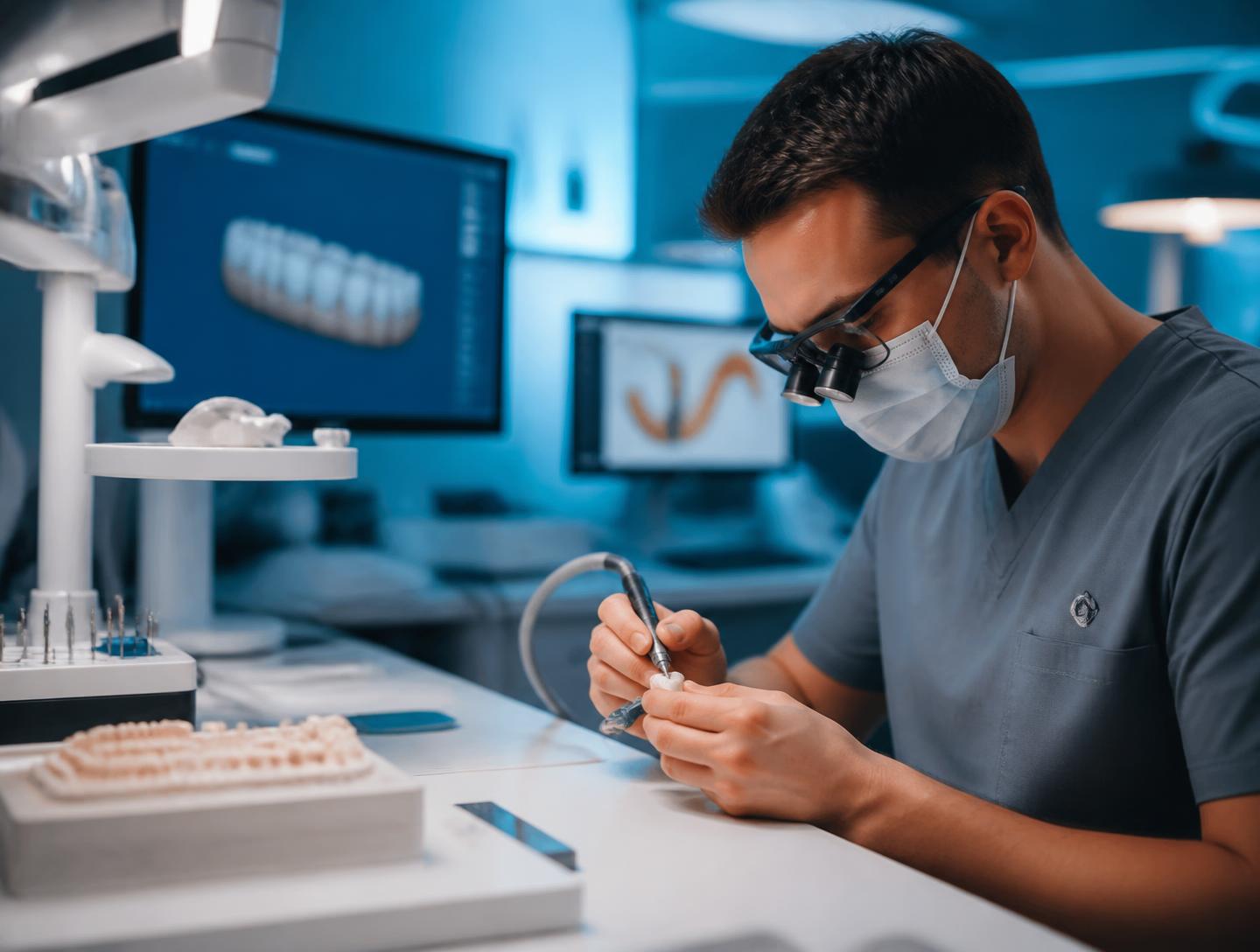
Istar Dental Lab fabricates custom night guards, custom bite guards, and custom bruxism mouth guards for dentists, clinics, DSOs, and partner labs. We are a full-service manufacturing lab, not a trading company or a middleman — every step from case receipt to packaging happens inside our own facilities.

This page documents what we make, the case profiles it is prescribed for, how we make it, how we inspect it, how we ship it, and the operational commitments that come with the order. Clinical selection — hard versus soft, upper versus lower, exact thickness — is a dentist's decision, and we do not substitute our judgment for the prescribing clinician's.

overview — recommended upload 1440 × 960 pixels

1. Product Technical Specifications

1.1 Appliance Types We Fabricate

We make the following occlusal and retention appliances in-house:

product-0 — recommended upload 1440 × 960 pixels
Appliance

Custom-made occlusal splint (hard)

Typical use pattern
Rigid, adjustable occlusal surface; chairside spot-grinding and polishing are possible
Material family
Rigid acrylic / copolyester sheet

product-1 — recommended upload 1440 × 960 pixels
Appliance

Soft night guard (preformed / soft)

Typical use pattern
Flexible appliance; patient comfort priority
Material family
EVA-family thermoplastic sheet
product-2 — recommended upload 1440 × 960 pixels
Appliance

Dual-laminate guard

Typical use pattern
Soft inner layer against the dentition, harder outer layer at the occlusal surface
Material family
Laminated thermoplastic sheet
product-3 — recommended upload 1440 × 960 pixels
Appliance

Periodontal splint

Typical use pattern
Splinting of mobile teeth per periodontist's design
Material family
Rigid thermoplastic / wire-reinforced
product-4 — recommended upload 1440 × 960 pixels
Appliance

Bite splint / occlusal splint (jaw-position reference)

Typical use pattern
Supplied per prescribing dentist's design
Material family
Rigid acrylic / copolyester

Retainers (Hawley, Essix / vacuum-formed, bonded lingual) are available on the same production line but are not scoped on this page.

1.2 Design Parameters We Follow

Every appliance is built to the prescription you send. We do not override the following case-level decisions:

  1. Hardness choice (soft / hard / dual) — determined by the prescribing dentist based on force pattern, restoration status, and TMD symptoms
  2. Arch — maxillary or mandibular, per dentist's instruction
  3. Thickness — specified on your prescription; we verify at multiple points with calipers against your spec
  4. Coverage — full arch or partial, with occlusal contact design per the submitted bite record
  5. Occlusal scheme — centric contact pattern and lateral/protrusive guidance as prescribed; we cross-check the model and bite registration on an articulator before fabrication

Material brand, origin, lot number, and the corresponding conformity certificates are available per case upon request.

1.3 Materials and Standards

  • Sheet materials: thermoplastic sheets intended for prolonged intraoral contact. Specific brand, lot, and origin are declared per case.
  • Biocompatibility reference: materials are selected to be consistent with the ISO 10993-1 biological evaluation framework for devices with prolonged oral mucosal contact (ISO 10993-1:2025, FDA biocompatibility basics).
  • CDT coding reference (U.S. billing): hard occlusal guard full arch = D9944; soft occlusal guard full arch = D9945; hard occlusal guard partial arch = D9946. A guard with a hard occlusal surface and a soft liner is coded as a hard appliance (ADA CDT guidance on occlusal guards).

1.4 Boundary of Use

A custom night guard, a custom bite guard, and a custom bruxism mouth guard are protective dental appliances supplied to a prescribing clinician. They are not a substitute for diagnosis or clinical decision-making. Suspected sleep apnea, undiagnosed orofacial pain, active periodontal disease, loose teeth, or ongoing orthodontic movement all need to be addressed by the clinician before fabrication is appropriate — a protective guard is not an airway device and will not resolve an underlying condition (AASM oral appliance guidance for OSA, NIDCR TMD overview, NHS teeth grinding information).

2. Clinical Indications and Case Scenarios

The following case profiles are referenced from the prescribing dentist's assessment — this section describes case patterns a dentist may prescribe one of our appliances for, not conditions we claim to resolve. All selection decisions, including hardness, coverage, and whether a splint is appropriate at all, remain the prescribing clinician's.

2.1 By Appliance Type

Appliance

Soft occlusal guard

Case patterns dentists prescribe it for
Mild to moderate occlusal cases; muscle fatigue associated with nocturnal grinding or clenching; patient comfort priority; first-time appliance users
Appliance

Hard occlusal splint

Case patterns dentists prescribe it for
Heavier occlusal cases where the dentist wants a rigid, adjustable occlusal reference surface; cases where the prescribing dentist is managing TMD symptoms per their own protocol; cases where chairside occlusal adjustment of the appliance is anticipated
Appliance

Dual-laminate guard

Case patterns dentists prescribe it for
Cases where the dentist wants the comfort profile of a soft layer against the dentition and the wear profile of a harder outer occlusal surface

2.2 Case Factors the Dentist Flags on the Prescription

Where the submitting dentist has already assessed one of the following, we incorporate it into fabrication:

  1. Deep overbite — overbite amount noted, with instructions on whether an anterior bite plane element, reduced cusp height, or increased vertical dimension is required
  2. Inadequate occlusal space — residual space thickness noted, with guidance on material thickness or appliance profile
  3. Full-mouth rehabilitation or vertical-dimension cases — face bow / semi-adjustable articulator records typically required
  4. TMJ-involved cases — joint-related findings flagged on the prescription so we fabricate to the dentist's specified occlusal scheme
  5. Occlusal plane irregularity, unilateral chewing pattern — accounted for in the fabrication specification per the dentist's note

If a prescription does not clearly specify these parameters, we send a clarification request rather than make an assumption.

2.3 B2B Audience Scenarios

  1. Dental practices and clinics: night guards fabricated per the practice's prescription, with case-level traceability, consistent per-prescription delivery, and private-label packaging if desired
  2. DSOs and group practices: standardised intake and quality metrics across multi-location prescriptions; consolidated shipping and reporting
  3. Partner / outsourcing labs: lab-to-lab fabrication, unbranded packaging by default, NDA-protected pricing and client relationships, with a monthly minimum lab fee of $500

2.4 Out-of-Scope Scenarios (We Will Say So)

We will decline or redirect, rather than quietly fabricate, when:

  1. The prescription asks for a protective bruxism appliance where airway management is the stated goal — that is a different device category and requires a different prescription
  2. Required records (bite registration, opposing arch, prescription parameters) are missing and cannot be clarified — the case is held, not guessed
  3. The requested material or workflow is outside the thermoforming scope — e.g., milled or printed splints — in which case we advise before accepting the order

3. Fabrication Process

workflow-0 — recommended upload 1440 × 960 pixels

3.1 Case Intake

  • Impressions: physical impressions with a bite registration, or an intraoral scan file in STL / PLY
  • Prescription: appliance type, arch, thickness, material/hardness preference, and any special design notes
  • Case data ownership: original scan data, patient records, and all submitted materials remain the property of the clinic or the referring customer. Istar's role is strictly processing — we use the data only for the specific case, store it per agreement, and delete on schedule. An NDA or data-processing agreement can be signed on request.
  • Response time: during working hours we normally reply to technical questions within one hour; outside working hours the response is delayed by time-zone offset — typically within 7–8 hours, never more than 12.
workflow-1 — recommended upload 1440 × 960 pixels

3.2 Design and Model Verification

  • Scan and bite record are inspected for coverage, articulation, and model clarity
  • Prescription is cross-checked against the submitted bite registration on an articulator before fabrication; discrepancies trigger a clarification request rather than an assumption
  • Any missing data or unclear instruction pauses the turnaround clock — the lab turnaround we commit to runs from the moment the case is complete, not from case receipt
workflow-2 — recommended upload 1440 × 960 pixels

3.3 Thermoforming

Our current production method for night guards, bite guards, and bruxism guards is pressure thermoforming of pre-formed thermoplastic sheet. The sheet is heated evenly, formed over the model under stable pressure, and allowed to cool to full hardness under sustained pressure before demolding.

We do not currently route this product category through CAD/CAM milling or 3D printing; cases that require a milled or printed splint should be flagged on the prescription so we can advise.

workflow-3 — recommended upload 1440 × 960 pixels

3.4 Finishing

  • Trimming to the margin specified on the prescription — no sharp or over-extended edges
  • Occlusal adjustment per the submitted scheme
  • Polishing to a smooth intraoral surface
  • Dual-laminate appliances: lamination is inspected for full bonding without voids before finishing
workflow-4 — recommended upload 1440 × 960 pixels

3.5 Pre-Shipping Cleaning

  • Pressure washing of the finished appliance to remove any residual polishing media or debris
  • Visual re-inspection for surface finish before the appliance enters the packaging station

4. Quality Control

4.1 Three-Stage Inspection on Every Case

We run three dedicated inspection stages on every case:

  1. Intake inspection — case data, prescription, impressions, and bite records are checked for completeness and clarity before any fabrication starts. If the model is unclear or the prescription has gaps, the case is held and a clarification request goes out.
  2. In-process sampling — intermediate checks during fabrication to catch deviations early rather than at the finish line.
  3. Terminal inspection — a dedicated QC technician inspects every finished appliance against the prescription before release.

Complex, full-arch, or aesthetically critical cases get an additional specialist review on top of the three stages.

independent-qc — recommended upload 1440 × 960 pixels

4.2 Independent QC Function

The QC team is organisationally separate from the production team. QC technicians do not fabricate the cases they inspect — their only job is to verify a finished appliance against the confirmed prescription and the written quality standard, and they alone sign off on release. This separation is intentional and non-negotiable.

4.3 What Terminal Inspection Checks on a Night Guard

For every finished night guard, bite guard, or bruxism guard:

  1. Thickness: measured with calipers at multiple points; compared against the prescription
  2. Margin: smoothness, extension range, and seating on the stone model; no burrs or warped edges
  3. Retention: trial seated and removed on the model; retention and clasping feel evaluated manually
  4. Integrity: cracks, voids, bubbles, delamination (for dual-laminate appliances)
  5. Prescription conformity: the finished appliance is matched line by line against the confirmed case specification before release

Inspection photos or a brief QC report can be included with shipment on request.

4.4 95% First-Time Acceptance Rate

We publish a 95% first-time terminal-inspection acceptance rate, with the definition made explicit so the number is auditable:

> First-time acceptance rate = cases that pass terminal inspection on the first check ÷ total cases submitted for terminal inspection in the period × 100%. Cases that only pass after rework are not re-counted.

The 5% that fails terminal inspection goes back for rework, automatically — we do not call the customer first to debate whether to ship a borderline case.

4.5 Rework and Case Traceability

  1. Every case is archived by case number, with original design files, production records, and defect evidence retained for traceability
  2. Defects are classified by root cause — our process, submitted clinical data, or communication gap — rather than lumped together. Patterns across cases trigger SOP updates
  3. Rework caused by our fabrication is remade at no charge; rework caused by a client-initiated change, revised dental work, or an impression flagged as unclear in advance is quoted transparently per standard pricing
  4. Rework cases are prioritised and typically turn in 3–5 working days on top of the original fabrication time

4.6 Equipment Discipline

Thermoforming units, trimming tools, and measurement instruments are on a calibration and maintenance log. Equipment showing abnormal readings is pulled from production until re-verified. Calibration and maintenance records are retained in the equipment file.

4.7 QC Reporting Boundary

Our QC verifies the appliance against the prescription and against our written quality standard. It does not replace the clinician's chairside fit check — final seating in the patient's mouth, bite-check in centric relation, and any chairside adjustment all remain the dentist's responsibility. Our standard draws the line between "clinically adjustable at the chair" and "must come back for lab rework".

5. Packaging and Logistics

packaging — recommended upload 1440 × 960 pixels

5.1 Per-Case Packaging

Every appliance is packed individually:

  • Single-case cushioned box, foam-stripped, with the appliance seated so it will not shift in transit
  • Independent sealed bag per appliance with a case label
  • Bubble wrap between cases in a multi-case shipment to prevent appliance-to-appliance pressure
  • Hard outer carton with void-fill cushioning, sealed

5.2 Case Identification on the Package

Each case bag or box carries the patient name or the case ID, matching the paperwork inside. Our case coordinator re-checks every QC-cleared case against the shipping manifest before boxing — case number, product spec, and quantity all verified at the pack-out step.
5.3 Private-Label and Custom Packaging

  1. Default packaging is unbranded — no Istar logo on standard packaging materials
  2. Private-label packaging, clinic-branded materials, custom labels, and no-Istar paperwork are supported
  3. Shipments can be split by clinic, branch, or patient case where the client needs it

5.4 Shipping Account and Documents

  1. You can ship via your own account or use Istar's shipping account and bulk rate
  2. Documents enclosed with every shipment: case processing manifest (order number + case detail), prescription slip, commercial invoice; all document information matches the physical content
  3. Customs declaration: product name "dental prosthesis / denture appliance"; declared value = fabrication fee as actually invoiced, no undervaluation; stated use = restorative use for individual clinical patient, not for retail sale
  4. Tracking number issued the day of dispatch; a dedicated person follows the shipment until arrival
delivery-coverage — recommended upload 1440 × 960 pixels

5.5 Delivery Coverage

We ship to the great majority of international markets — Europe, North America, Asia-Pacific, Oceania — subject to sanctions and embargo restrictions. Some jurisdictions have specific dental-device import requirements; those are confirmed before order placement. Return-direction impressions from certain countries (Australia, New Zealand, Canada, the United States, most EU members) are subject to biological-sample controls on physical impressions — if you are shipping physical impressions in, confirm disinfection and biological-sample packaging requirements first.

5.6 Address Changes and Split Dispatch

  1. Address changes can be made before pack-out; once the carton has left the facility, the correction has to go through the carrier
  2. Split shipping before fabrication starts is straightforward; splits after fabrication is already in progress carry extra handling and shipping cost and require approval

5.7 Transit Damage and Claims

  1. A tracking number is issued the day of shipment and a dedicated shipping coordinator stays with the parcel until delivery
  2. If a carton arrives damaged: within 24 hours, open-the-box video with the shipping label visible, photos of the damage, and the original packaging retained. With that evidence package, we prioritise a free remake. Post-signature mishandling by the end user is not covered
  3. Lost-parcel and mis-delivery claims are filed by the customer with the carrier; we supply the order documentation

5.8 Delay Communication

If a dispatch is going to miss its date for any reason — equipment issue, material shortfall, carrier delay, customs hold — the logistics coordinator notifies the customer ahead of time, in writing, with the revised ETA and a contingency option.

5.9 Consolidated and Lower-Impact Shipping

Where multiple cases are shipping to the same address, we consolidate on request to lower per-case cost and material waste. Packaging materials are recyclable, and lower-impact packaging options are available on client request.
consolidated-shipping — recommended upload 1440 × 960 pixels

6. Why Choose Istar

6.1 A Full-Service Manufacturing Lab, Not a Broker

Istar is the manufacturer, not a trading company and not an intermediary. Every step for standard restorative and appliance work happens inside our own facilities. We do not re-outsource case work to third-party labs — we invest in our own capacity instead. The lab was founded in 2012 and operates from facilities in Shenzhen and Huizhou; both sites are open to on-site visits or video audits by appointment.

factory — recommended upload 1440 × 960 pixels

6.2 Capacity and Workforce

  1. Approximately 460 technicians across the full production chain, distributed roughly as: CAD design 100 · milling 70 · implant 80 · porcelain/metal 70 · removable 55 · QC 25 · administration 10 · sales 10 · case coordination 40, plus about 50 standby technicians for peak coverage.
  2. Thermoforming for night guards runs on a dedicated line within the removable production group. We do not publish a monthly unit cap specific to night guards here, because the KB does not record one; capacity planning for a specific partner is confirmed at onboarding against actual case mix.
  3. Cumulative service history: approximately 50 partner labs, 100 clinics, and 400 individual dentists.

6.3 Transparent Operational Commitments

Each of the following is written and auditable, not marketing language:

  1. Response time: within 1 working hour during business hours; outside hours up to 7–8 hours typical, never more than 12
  2. Turnaround accounting: working days only; design-approval wait, missing-data clarification, and client-reply time do not count against the quoted lab time
  3. Holiday schedule: Chinese weekends and statutory holidays are not production days and are explicitly excluded from the committed turnaround
  4. Quality metric: 95% first-time acceptance rate with a published definition (see §4.4)
  5. Rework and remake policy: the vast majority of rework carries no charge; remakes initiated by the client (specification change, unclear impression after prior notice, revised dental work) are quoted transparently per standard pricing
  6. Peak-season handling: existing scheduled cases get priority; new bulk orders may be staged or delivered in batches rather than compressing existing commitments

6.4 Private-Label and Lab-to-Lab Service

For partner labs and DSOs that resell under their own brand:

  1. Default packaging is unbranded
  2. Private-label packaging, labels, and no-Istar paperwork are supported
  3. Pricing, brand, and end-client relationships are protected under NDA
  4. The lab-to-lab channel operates with a monthly minimum lab fee of $500 — below that threshold the economics do not work for either side, and we will say so rather than onboard a channel we cannot support
  5. Direct-to-end-client is not our channel. Partner-lab orders stay inside the lab-to-lab relationship — we do not contact your dentists or clinics behind you.

6.5 Material Transparency

Material brand, origin, lot number, and the corresponding conformity documentation can be supplied per case, on request. If your prescription specifies a particular brand or batch, we can source and document accordingly. Conformity documentation can be included in the case paperwork so your downstream customer gets the same traceability you do.

6.6 Pricing Structure (Not a Price List)

  1. Base: unit count sets the base
  2. Material: material grade sets the base price point
  3. Design complexity and special attachments: priced as add-ons
  4. Included in the quote: design, model, parts, packaging, and shipping
  5. Per-unit pricing is quoted case by case because every variable above moves — a published flat price would mislead on at least one dimension. Contact our sales desk with your specification set for a formal written quote.

For context, published 2026 U.S. consumer-side pricing puts mail-order impression-based custom guards at roughly 95–300 per appliance, and dentist-prescribed custom guards at roughly 300–800+ (consumer cost reference, second consumer cost reference). Those are retail routes; our pricing reflects wholesale fabrication service to the clinical or lab channel.

6.7 Compliance Posture

  1. We operate as a dental manufacturing laboratory and work within the ISO 13485 quality management framework and the EU CE conformity routes that apply to the dental devices we fabricate.
  2. A night guard made to a licensed dentist's individual prescription is a prescription device supplied to the prescribing clinician. We also avoid the common misnomers — the categorical FDA endorsement claims and the "grade" labels — because they are not accurate descriptors for this product category.
  3. U.S. product-classification context, for information only: ordinary bruxism mouthguards are listed by FDA under product code OBR (over-the-counter) or MQC (prescription) — not 21 CFR 872.5570, which covers intraoral devices for snoring and obstructive sleep apnea and is a separate category (FDA product code OBR, FDA product code MQC, eCFR 21 CFR 872.5570, FDA guidance on "approved" and "cleared").

7. Working with Us

If you'd like a formal quote or want to discuss a specific case workflow:

  • Send your specification set — appliance type, arch, hardness, thickness, coverage, scan/impression format
  • Flag any special requirement up front: material brand preference, private-label packaging, batch-level certificate, or NDA
  • We confirm scope, lab turnaround (in working days from a complete case), and pricing in writing before any work starts

Published consumer-side pricing comparisons and appliance-longevity figures from the public dental literature are referenced in the sections above with sources — none of our own commitments depend on those external figures. The commitments on this page are drawn from our own operating record.

Want to get in touch directly? Reach out to our sales representative via WhatsApp at +8618925410015 for a quick response and a price quote!