Istar retainer production

Dental Retainer Fabrication | Laboratory-Grade Orthodontic Retention Solutions

Overview

A dental retainer is a passive orthodontic appliance prescribed after active tooth movement to maintain achieved tooth positions and reduce relapse. Retention is now understood as an ongoing phase of treatment rather than a short-term accessory—professional bodies including the American Association of Orthodontists, British Orthodontic Society, and Cochrane systematic reviews recognize that long-term or lifelong retention reduces relapse and age-related tooth movement.

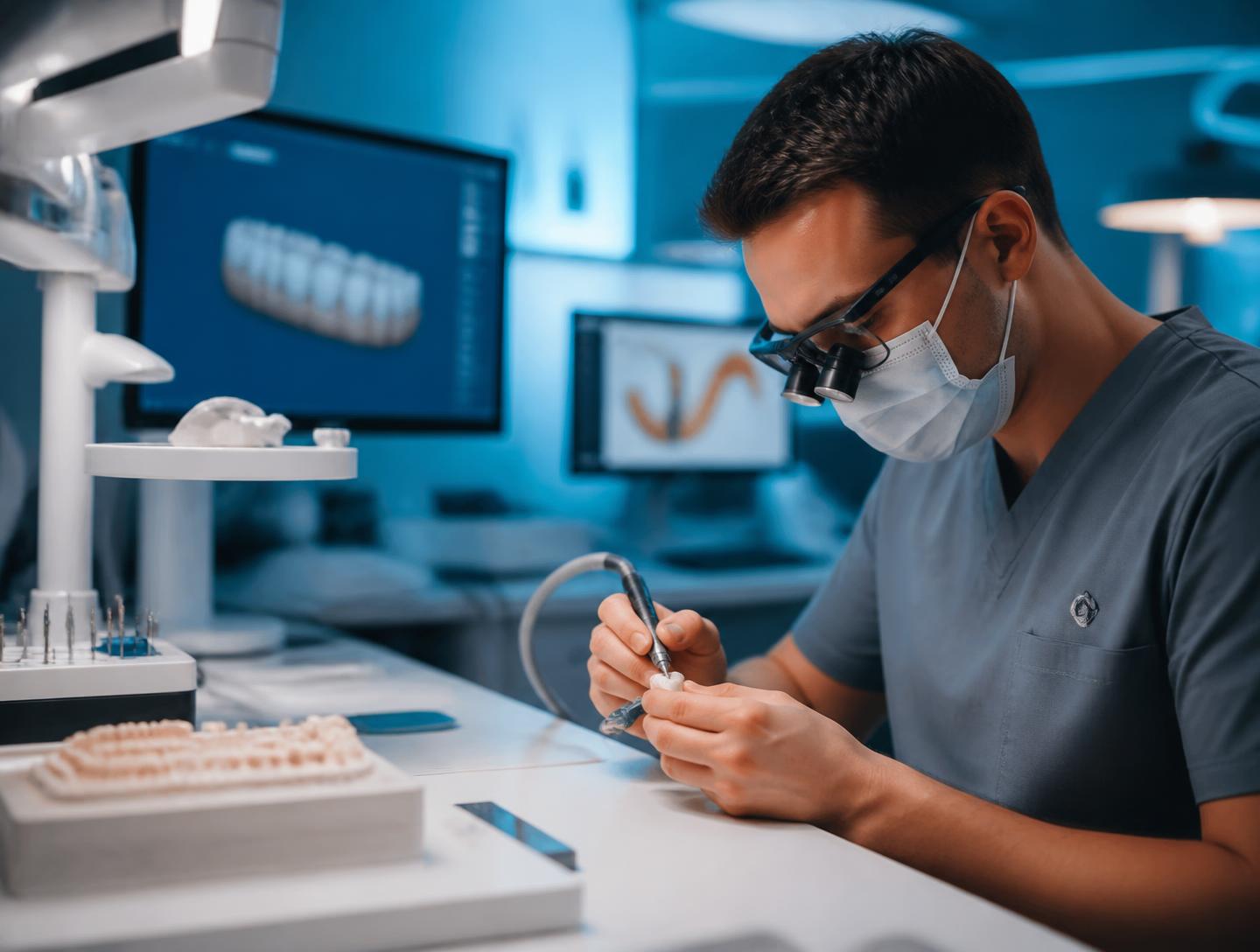
Istar Dental Lab manufactures orthodontic retainers for dental professionals—dentists, orthodontists, clinics, and peer laboratories. We work exclusively from practitioner prescriptions. Our capabilities cover the full spectrum of removable orthodontic retainers (thermoformed/clear vacuum-formed and Hawley-type) as well as fixed/bonded retention systems.

overview — recommended upload 1440 × 960 pixels

Retainer Types

All three major retention designs are available. Each has distinct materials, structural characteristics, and clinical considerations.

product-0 — recommended upload 1440 × 960 pixels

Clear Vacuum-Formed (Thermoformed) Retainers

Materials: PET, PETG, polypropylene, copolyesters, polyurethane (TPU). Material selection affects stiffness, transparency, fatigue resistance, water sorption, and forming behavior. PETG is commonly specified for a balance of clarity, thermoformability, and lower reported chemical leaching; TPU offers higher flexibility but may require different forming parameters.

Sheet thickness: Commercial retainer stock typically ranges from 0.5 to 1.5 mm. That thickness is the starting point, not the finished appliance value. During thermoforming, material thins unevenly across the arch—incisal edges and cusp tips are the zones of greatest reduction. Final thickness at high-stress zones affects fatigue life, occlusal perforation risk, and retention force. We verify post-forming thickness at multiple reference points before release.
product-1 — recommended upload 1440 × 960 pixels

Hawley-Type Removable Retainers

Materials: Heat-cured, autopolymerized, or laboratory-polymerized PMMA acrylic baseplate + stainless-steel labial bow and clasping components. Optional springs, bite planes, or auxiliary wire can be incorporated by prescription.

Hawleys are adjustable and generally more repairable than thin clear retainers. They require hand finishing and wire work, which makes turnaround slightly longer than thermoformed appliances but allows for mid-treatment modifications when prescribed.

Fabrication Routes

Each retainer type follows a distinct in-house fabrication workflow, with its own quality-control checkpoints and failure-mode considerations.

Thermoforming Workflow

thermoforming-0 — recommended upload 1440 × 960 pixels
Verify the treatment-end digital model or print a physical working model from your scan
thermoforming-1 — recommended upload 1440 × 960 pixels
Apply blockout where indicated (undercuts, attachments, gingival relief)
thermoforming-2 — recommended upload 1440 × 960 pixels
Heat the selected sheet above its glass-transition temperature
thermoforming-3 — recommended upload 1440 × 960 pixels
Adapt it over the model using vacuum or positive-pressure thermoforming
thermoforming-4 — recommended upload 1440 × 960 pixels
Cool, separate, trim to the prescribed margin, smooth edges, and polish
thermoforming-5 — recommended upload 1440 × 960 pixels
Inspect seating, marginal extension, thickness distribution, occlusal clearance, and sharp edges
thermoforming-6 — recommended upload 1440 × 960 pixels
Clean, disinfect, package with material identification and care instructions

Quality-control checkpoints: Sheet thinning at incisal edges, distortion during separation, rough or overextended margins, inadequate seating, occlusal perforation, and midline fatigue cracking are the documented risks in thermoformed retainer fabrication. Each appliance undergoes passive-fit verification and visual inspection for these specific failure modes before shipment.

Why appliances crack or warp: A 591-retainer survival study reported that vacuum-formed retainers had a median survival of approximately 105 days, with fracture as the dominant failure mode—distinct from Hawleys (which were most often lost, median ~1,529 days) and fixed retainers (which debonded, median ~1,604 days). That study's vacuum-formed sample was small, so these figures should not be taken as guaranteed lifespans. The takeaway for fabrication is that thin-wall fracture is a materials and process challenge, not solely a patient-compliance issue. We address it by selecting fatigue-resistant polymers, avoiding excessive thinning during forming, and designing margins that distribute stress away from known fracture initiation sites (commonly the midline between central incisors).

hawley-fabrication — recommended upload 1440 × 960 pixels

Hawley Hand Fabrication

  1. Survey and block out undercuts on the digital or physical model
  2. Bend and adapt the wire framework (labial bow, Adams clasps, or other retention components)
  3. Add auxiliary components if prescribed
  4. Process the acrylic base against the model
  5. Deflask, trim, finish, and polish
  6. Verify passive fit, wire-to-acrylic integration, and occlusion before disinfection and delivery

Fixed Retainer / Wire Supply

We supply the wire and, if requested, an indirect-bonding tray or digitally designed positioning jig.

Lab deliverables:

  • Preformed or CAD/CAM-bent retention wire
  • Transfer tray or indirect-bonding jig (if requested)
  • Positioning protocol

Clinical bonding, isolation, curing, and post-bonding occlusal verification remain the clinician's responsibility.

fixed-wire — recommended upload 1440 × 960 pixels

What You Need to Provide

Every retainer case starts with a complete prescription and current case data. Under 21 CFR 807.65(i), dental-laboratory work is generally performed under a licensed dentist's written prescription or work authorization.

Required Information

Your prescription should include:

  1. Patient identification and prescribing dentist/orthodontist
  2. Arch: maxillary, mandibular, or dual-arch appliance
  3. Appliance type: removable clear (vacuum-formed), Hawley, fixed/bonded wire, or hybrid
  4. Current scan or impression: intraoral scan file, digital model, or physical impression
  5. Material specification: thermoplastic sheet type and thickness (if clear retainer); acrylic type and wire gauge (if Hawley); wire type, diameter, and teeth span (if fixed)
  6. Trim and extension design: margin position, coverage, relief areas, blockout requirements
  7. Delivery deadline and remake authorization
  8. Batch/lot documentation requirements: if regulatory traceability, audit, or end-user disclosure is needed

If you already have an established workflow with standardized specifications, we can reference your standing order. For new partnerships, we'll work with you to define material preferences, design parameters, and delivery expectations.

Material Selection and Standards

Which Materials Can You Specify?

Thermoplastic sheets for clear retainers:

  1. PET / PETG: Rigid to semi-rigid; good clarity; PETG generally reports lower BPA leaching in published extraction studies
  2. Polypropylene / Polyethylene: Flexible; opaque or translucent; good fatigue resistance
  3. Polycarbonate: High stiffness and impact resistance; historical BPA-leaching concerns (modern formulations vary)
  4. TPU (thermoplastic polyurethane): High elasticity; useful for cases requiring flexibility or resilience
  5. Copolyesters: Proprietary blends optimized for thermoforming and optical clarity

Your specification can name the polymer family, commercial product line, thickness, and manufacturer. If no material is specified, we will select based on the case requirements and confirm with you before fabrication.

Acrylic for Hawley base plates: heat-cured PMMA, autopolymerized (cold-cure) PMMA, or other laboratory-polymerized acrylic. Brand and batch can be specified or left to our standard stock.

Wire for fixed retention: stainless steel (specify single-strand or multistranded), NiTi, or fiber-reinforced composite. Diameter and span by prescription.

Material Standards and Documentation

ISO 20795-2 (Dentistry—Base polymers—Part 2: Orthodontic base polymers) specifies requirements and test methods for polymers used in orthodontic appliances, including passive retention devices. This is the applicable base-polymer standard for retainers—not ISO 20795-1, which covers denture base polymers.

ISO 10993-1 (Biological evaluation of medical devices—Part 1) is a risk-management framework, not a blanket "biocompatible" certification. FDA guidance applies ISO 10993-1 by considering material composition, nature of tissue contact, duration of contact, and relevant biological endpoints. Oral retainers are prolonged mucosal-contact devices and require assessment appropriate to that contact duration.

What we provide with each case:

  1. Material trade name, manufacturer, and polymer family
  2. Batch or lot number
  3. Applicable standard (ISO 20795-2 where relevant)
  4. Manufacturer's declaration of intended appliance type and contact duration
  5. Processing conditions (forming temperature, post-cure protocol for 3D-printed components)

If your case requires certificates of analysis, biocompatibility test summaries, or regulatory documentation beyond standard traceability, specify those requirements in the prescription. We source materials from manufacturers who can supply that documentation, but obtaining and forwarding it adds lead time.

Chemical Safety: What the Data Actually Show

BPA leaching from orthodontic thermoplastics is condition-dependent. Under specific laboratory extraction conditions, polycarbonate-based materials released approximately 7.63 µg/g BPA, while PETG and TPU formulations showed low or non-detectable leaching in the same study. Systematic reviews note that "BPA-free" does not equal chemically inert—substitute bisphenols (BPS, BPF) and phthalates have been detected in some retainer materials, though the evidence base for clinical harm remains thin and the detected levels are often below regulatory thresholds.

What that means for case management: In vitro leachate data do not directly translate to clinical exposure or harm. If a patient or practitioner expresses concern about chemical exposure, specifying PETG or TPU over polycarbonate can reduce measurable BPA leaching based on current published extraction studies. We do not claim that any material is "toxin-free" or "completely safe"—those are conclusions that require clinical context, dose-response data, and individual risk assessment.

Fabrication Quality and Verification

passive-fit — recommended upload 1440 × 960 pixels

What "Passive Fit" Means

Passive fit is not the same as "the patient can insert the appliance." An appliance that requires force to seat, distorts the teeth during insertion, or creates residual stress after seating is not passively fitting—even if it eventually goes on. Passive fit verification involves checking the appliance against the prescribed model without hand pressure, confirming that margins seat uniformly, and ensuring that the appliance does not spring open or deform when released.

Factors that affect passive fit include blockout accuracy, trimming location, occlusal clearance, and any tooth movement that occurred between the impression/scan date and appliance delivery. We inspect every removable retainer for passive seating before shipment. If a remade appliance is requested due to fit issues, we will review the original prescription, case data currency, and fabrication records to determine whether the fit deviation originated in fabrication or from changes in the clinical situation.

surface-finish — recommended upload 1440 × 960 pixels

Surface Finish and Biofilm Control

Thermoforming increases surface roughness compared to the original sheet stock. Rougher surfaces, scratches, incompletely cured resin layers (on 3D-printed components), and support-structure remnants all increase microbial adhesion. A six-organism biofilm study showed that Streptococcus mutans, S. sanguinis, Staphylococcus epidermidis, S. aureus, Lactobacillus casei, and Candida albicans formed biofilms on five thermoformed materials and three 3D-printed resins—confirming that surface colonization is a materials challenge, not solely a patient-hygiene issue.

We finish all removable appliances by trimming, smoothing margins, and polishing accessible surfaces. For 3D-printed components, post-cure washing and UV curing are critical for reducing residual monomer and cytotoxicity, but these steps do not eliminate surface texture from layer lines and support points. Each case is supplied with care instructions noting that the appliance should be rinsed, gently brushed with mild soap, and air-dried in a ventilated case—and that hot water, bleach, alcohol mouthwash, and dishwasher heat can distort, weaken, or degrade the material.

printed-retainer — recommended upload 1440 × 960 pixels

3D Printing vs. Thermoforming: What the Research Shows

Direct 3D printing of retainers eliminates the thermoforming step by designing and printing the appliance itself. Systematic reviews describe the available evidence as limited, and comparative studies report that mechanical, surface, and optical properties of current 3D-printed retainer resins still require improvement for broad replacement of thermoforming. A controlled fit study found no significant difference in overall fit between 3D-printed and thermoformed retainers, though both fabrication routes showed clinically acceptable results.

We offer 3D-printed retainer fabrication when prescribed. The resin must be specified or approved for the intended intraoral appliance, printer, and contact duration. A resin marketed as "dental" or "biocompatible" does not automatically establish clearance for every appliance or printer—we verify the labeled intended use, validated wash/cure process, and batch traceability before production.

When to Replace or Remake a Retainer

  1. No longer seats passively or requires force to insert
  2. Has visible cracks, perforations, or fractures, especially near the midline or at high-stress cusp areas
  3. Shows distorted or rough margins that irritate soft tissue
  4. Exhibits significant wear, discoloration, or persistent odor despite proper cleaning
  5. Has lost retention (appliance moves freely when in place)
  6. No longer corresponds to the prescribed tooth position (if post-treatment tooth movement has occurred and a new retainer is clinically indicated)

A survival study of 591 retainers reported that vacuum-formed retainers most often fractured, Hawley retainers were most often lost, and fixed retainers most often debonded. That study's vacuum-formed sample was relatively small, so the reported median survival of approximately 105 days for vacuum-formed retainers should not be used as a routine replacement schedule—it describes failure events in a specific cohort, not a prescribed service life.

If a retainer fails within a short time after delivery and the patient reports no loss, trauma, or misuse, request a remake consultation. We will review the fabrication record, material batch, and design parameters to determine whether a process adjustment or material change is indicated.

→ Request a Remake or Replacement

Delivery, Turnaround, and Remake Policy

Standard Turnaround

Our standard turnaround depends on appliance complexity, material availability, and current case volume. For established partnership accounts with confirmed material specifications, typical turnaround for a single-arch clear retainer is [to be specified based on actual operational capacity]. Hawley appliances and cases requiring custom wire work generally add [specify] to that baseline. Bulk orders and multi-case shipments follow a separate schedule.

If your case has a specific delivery deadline, note it in the prescription. We will confirm feasibility before starting fabrication.

Remake and Adjustment Policy

A retainer may require remake due to:

  1. Fabrication error: Incorrect trim line, wrong material, dimension outside tolerance, or failed quality check
  2. Prescription change: Clinician requests a design or material modification after reviewing the initial appliance
  3. Clinical change: Patient's tooth position has shifted between the scan/impression date and appliance try-in
  4. Damage or loss during shipping

Our responsibility: If the appliance does not meet the prescription or our quality standard due to a fabrication error, we will remake it at no charge. Provide the original case ID, a description of the deviation, and photos if helpful.

Clinician responsibility: If the retainer was made to prescription but the prescription requires revision (for example, the patient's occlusion changed, a different extension is now preferred, or the scan was taken before final settling), the remake is billed as a new case or revision, depending on the partnership agreement.

Shared scenarios: If an appliance does not seat due to an out-of-date scan or impression, we will work with you to determine whether a new scan is needed or whether the issue can be resolved by adjusting the digital model. Transparent communication at this stage prevents repeated remakes.

Frequently Asked Questions

Can I specify the exact material brand and product line?
Yes. If you have a preferred thermoplastic sheet, acrylic, or wire brand, specify it in the prescription or standing order. We will confirm availability and sourcing before starting the case.
What if the patient's teeth have moved slightly since the scan?
If minor settling or movement has occurred, we can discuss whether a small digital adjustment is clinically appropriate or whether a new scan is required. Communicate the clinical finding as soon as possible to avoid delay.
Do you handle cases for other dental laboratories (wholesale/white-label)?
Yes. We work with peer laboratories that need overflow capacity, specialized appliance fabrication, or geographic coverage. Contact us to discuss partnership terms, turnaround commitments, and confidentiality agreements.
What happens if an appliance is lost or damaged in shipping?
If the carrier confirms loss or damage, we will remake the appliance at no charge. Provide the tracking number and photos of the damaged package if available.
Can you fabricate retainers from STL files supplied by third-party scanning services or aligner companies?
Yes, as long as the STL is accompanied by a valid practitioner prescription. The file must be the treatment-end or retention-stage model, not an intermediate treatment setup.
How do I know the material in my case matches the specification?
Each case is labeled with material trade name, manufacturer, and batch/lot number. If you need certificates of analysis or regulatory documentation, specify that requirement in the prescription—sourcing and forwarding that documentation adds lead time.
What is your capacity for recurring or high-volume accounts?
We can support recurring case volumes for group practices, DSOs, and laboratory partners. Volume commitments, material stocking, and dedicated turnaround windows are established through a partnership agreement. Contact our case-coordination team to discuss your volume and turnaround requirements.
Do you also fabricate retention wires only, or complete orthodontic retainer assemblies?
Both. We supply standalone retention wire (preformed or CAD/CAM-bent), indirect-bonding trays with wire, and complete removable orthodontic retainer appliances. Specify the scope of fabrication in the prescription.

Start Your Case

To discuss a retainer case, material options, partnership terms, or technical requirements, reach out through your preferred channel:

  • New case submission: [Provide case submission portal or email]
  • Technical consultation: [Provide technical contact]
  • Partnership and volume inquiries: [Provide business development contact]

We work with dentists, orthodontists, dental clinics, dental hospitals, and peer dental laboratories. All work is performed under practitioner prescription. Cases are accepted from [specify geographic service areas or state registrations].

Want to get in touch directly? Reach out to our sales representative via WhatsApp at +8618925410015 for a quick response and a price quote!

About Istar Dental Lab

factory — recommended upload 1440 × 960 pixels

Istar Dental Lab is a full-service dental laboratory founded in 2012. We operate manufacturing facilities in Shenzhen and Huizhou, China, with approximately 460 professional employees across CAD design, milling, implant restoration, ceramic and metal work, removable prosthetics, quality control, and case coordination.

Our production workflow is completed in-house—we do not outsource cases to third-party laboratories. That integration allows consistent quality control, stable delivery schedules, and direct communication across all production stages.

We serve over 50 dental laboratories, 100 dental clinics, and 400 dentists, primarily in the United States and Europe (Netherlands, Germany, France, Belgium, Austria, United Kingdom, Luxembourg, Switzerland).

Retainer fabrication is one component of our broader orthodontic and restorative manufacturing capabilities. Our team includes technicians experienced in digital workflows, conventional hand fabrication, and quality systems for prosthetic appliances.

Factory visits and video inspections are available for laboratories, clinics, and partners conducting supplier qualification or capability audits. Contact us to schedule a visit or virtual facility tour.