
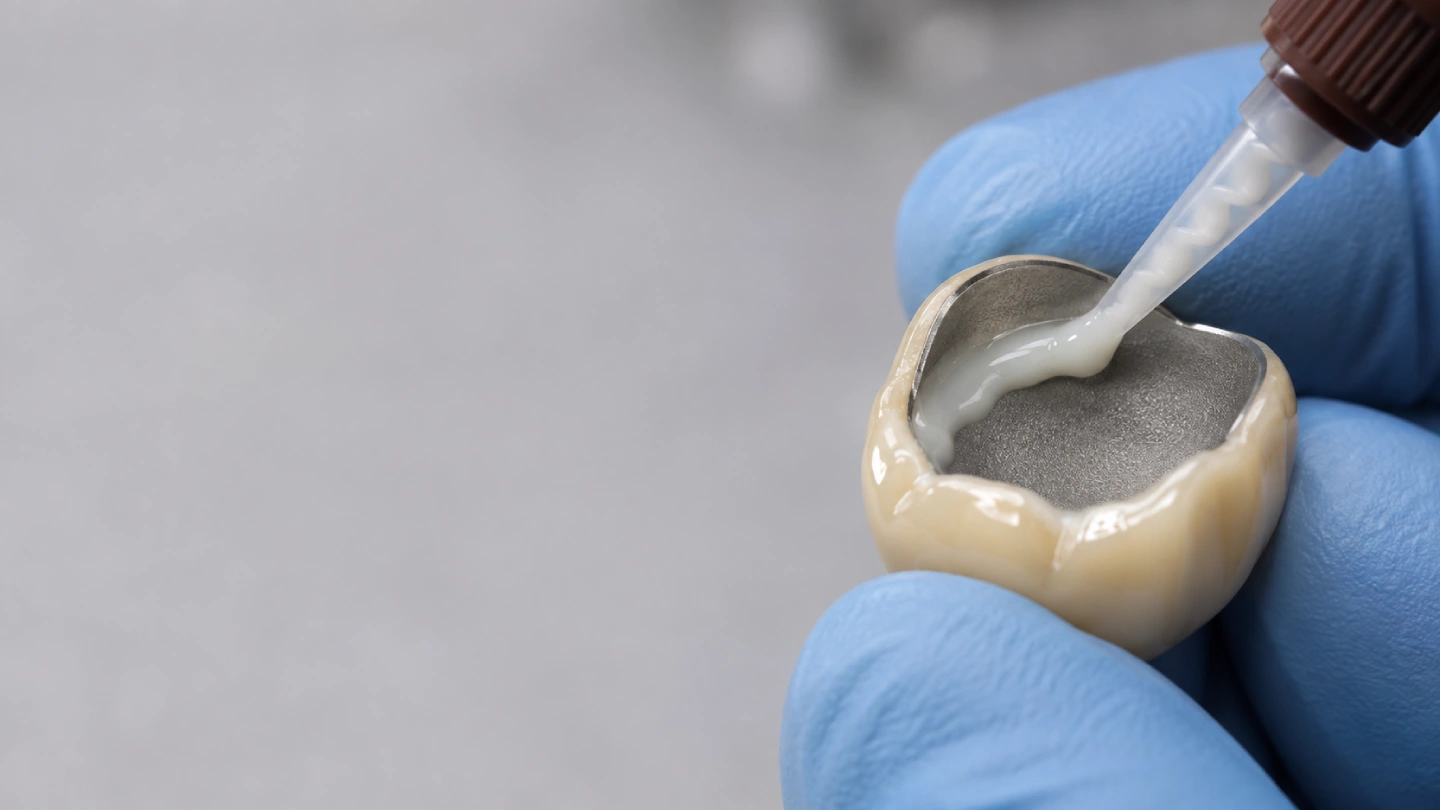
Introduction: The Real Question Isn’t “Which Cement”—It’s “Does This Prep Need Bonding”
When cementing a porcelain-fused-to-metal (PFM) crown, most guides hand you a list of cement types and leave you to guess. But U.S. practice data shows only 13.8% of PFM crowns are resin-bonded—the overwhelming majority use conventional luting cements like resin-modified glass ionomer (RMGI), which accounted for 84.4% of all water-based cementation in a 3,468-crown study.[^20]
This isn’t because dentists don’t know about resin cements. It’s because retentive PFM preparations don’t need adhesive protocols. The decision tree starts with prep geometry, not cement brands.
Core topics covered:
- Luting vs. bonding mechanisms—why the terms aren’t interchangeable
- Prep geometry thresholds that determine whether conventional cementation is adequate
- Product-specific protocols for RMGI, self-adhesive resin, and adhesive resin
- Excess cement removal timing (the 2-minute vs. 5-second rule)
- Troubleshooting retention failures—and why “switching cement” is rarely the fix
1. Cementing vs. Bonding: The Mechanism Difference That Matters
1.1 Conventional Luting = Mechanical Retention + Optional Chemical Interaction
Zinc phosphate, glass ionomer (GI), and RMGI rely primarily on mechanical interlocking between the cement, tooth preparation, and the PFM’s metal intaglio.[^3][^9] Glass ionomers add ionic bonding to calcium in tooth structure and fluoride release, but this doesn’t make them “adhesive” in the resin sense.[^9][^11]
Key point: These cements fill space and lock into surface irregularities. They depend on adequate axial wall height, controlled taper, and resistance form to resist displacement.[^25][^26]
1.2 Resin Bonding = Micromechanical + Chemical Adhesion
Adhesive resin protocols (e.g., Panavia V5, RelyX Ultimate) create:
- Tooth-side: Etched/primed hybrid layer penetrating dentin tubules
- Metal-side: Roughened surface + metal primer (MDP-containing primers bond to metal oxides; noble alloys may require different functional monomers)[^17][^16]
Self-adhesive resins (e.g., RelyX Unicem 2, Panavia SA Cement Plus) skip separate etch/prime steps but still rely on acidic monomers conditioning tooth structure—they’re not conventional luting cements in a tube.[^14][^15]
Clinical implication: Resin bonding can add retention to compromised preps, but it’s technique-sensitive: contamination, incomplete polymerization, or incompatible primers undermine the bond. It’s not a substitute for proper preparation geometry.[^9][^14]
2. The Prep Geometry Checkpoint: When Conventional Cementation Is Adequate
2.1 Quantitative Thresholds for Retentive PFM Preparations
Evidence-based complete-crown preparation guidelines recommend:[^25][^26]
Parameter | Target | Clinical Meaning |
|---|---|---|
Total occlusal convergence (TOC) | 10–20° | Lower = more parallel walls = more retention |
Minimum axial wall height | 3 mm (premolars/anteriors) |
4 mm (molars) | Short walls = less surface area = less retention | | Height-to-base ratio | ≥ 0.4 | Squat preps with wide bases resist lateral displacement better |
“Short clinical crown” = less than 2 mm of sound, opposing parallel axial wall after reduction.[^27] Grooves or boxes may help, but they cannot rescue a severely over-tapered preparation (>20° TOC).[^28][^29]
2.2 Clinical Practice Reality Check
When crowns repeatedly debond, the flowchart is:
- Check axial wall height and taper first
- Consider whether geometry can be improved (reduce cervical convergence, add auxiliary features)
- Only then evaluate whether resin bonding is justified and achievable with reliable isolation[^9][^28]
Resin cement is not a universal remedy for inadequate taper or insufficient wall height.[^20][^47] A frequently observed pattern in clinical discussion communities is that preparation geometry—not cement selection—determines retention outcomes in the majority of debonding cases.
3. Cement Classes for PFM: Mechanisms, Trade-offs, and When Each Fits
3.1 Conventional Luting Cements (For Retentive Preps)
Resin-Modified Glass Ionomer (RMGI)
Examples: Fuji PLUS, FujiCEM Evolve (GC); RelyX Luting Plus/2, Ketac Cem Plus (3M/Solventum)
- Mechanism: GI acid-base reaction + resin polymerization; ionic interaction with tooth calcium; fluoride release[^9][^12][^13]
- Why it’s common: Combines chemical adhesion to tooth structure with improved handling vs. conventional GI; less moisture-sensitive than pure GI but still requires avoiding overdrying[^12]
- U.S. use: The single most recorded cement type in the PBRN study—52.2% of all crowns were cemented with RMGI[^20]
- Fit: Retentive PFM preps where conventional cementation is appropriate
Conventional Glass Ionomer (GI)
Examples: Fuji I (GC), Ketac Cem (3M/Solventum)
- Mechanism: Acid-base setting; ionic bonding to calcium; fluoride release[^9][^10]
- Trade-off: Early set is moisture-sensitive—contamination and desiccation both harm the cement; lower strength than RMGI[^10]
- Fit: Metal/PFM crowns in high-caries-risk patients where fluoride release is desired and field control is adequate (fluoride release is a benefit, not a caries prevention guarantee)[^11]
Zinc Phosphate
Examples: Fleck’s (Keystone Industries)
- Mechanism: Acid-base setting; purely mechanical interlocking, no chemical adhesion to tooth[^3][^4]
- Clinical history: Long track record; thin film thickness; stiff; straightforward excess removal[^3][^5]
- Trade-off: Relies heavily on prep geometry; relatively soluble; initially acidic (can contribute to sensitivity in vital teeth)[^3][^4]
- Current use: Only 1.4% of crowns in the PBRN sample used zinc phosphate (vs. 84.4% RMGI among water-based cements)[^20][^5]
Zinc Polycarboxylate
Examples: Durelon (3M)
- Mechanism: Polyacrylic acid interacts with calcium alongside mechanical retention[^6][^7]
- Trade-off: Generally lower strength/retention than zinc phosphate; less commonly chosen when high stress or maximum retention is needed[^6][^8]
- Fit: Conventional option for metal-based crowns, often less irritating to pulp than zinc phosphate[^6]
3.2 Resin Cements (When Additional Retention Is Needed)
Self-Adhesive Resin Cement
Examples: RelyX Unicem 2 (3M/Solventum), Panavia SA Cement Plus (Kuraray Noritake), Maxcem Elite Chroma (Kerr)
- Mechanism: Acidic functional monomers condition tooth structure without separate etch/prime; some formulations bond to metal oxides[^14][^15]
- Advantage: More retention than conventional cements in lab tests; fewer steps than full adhesive protocol[^14][^15]
- Still requires: Clean surfaces, product-specific pretreatment, and does not make a poor prep predictably retentive[^15]
- U.S. use: 8.9% of crowns in PBRN study[^20]
Adhesive Resin Cement (Multi-Step Protocol)
Examples: Panavia V5 (Kuraray Noritake), RelyX Ultimate (3M/Solventum), Variolink Esthetic (Ivoclar)
- Mechanism: Tooth-side etch/prime/adhesive forms hybrid layer; restoration-side roughening + compatible metal primer (MDP for metal oxides; noble alloys need different chemistry)[^17][^16][^18]
- When to use: Short or compromised preparations where bonding is desirable and reliable isolation/protocol execution is achievable[^9][^17]
- Most technique-sensitive: Contamination control, compatible chemistry, adequate polymerization, and cleanup all matter[^9][^17]
- U.S. use: 29.2% of crowns were cemented with resin cement (self-adhesive + adhesive combined)[^19][^20]
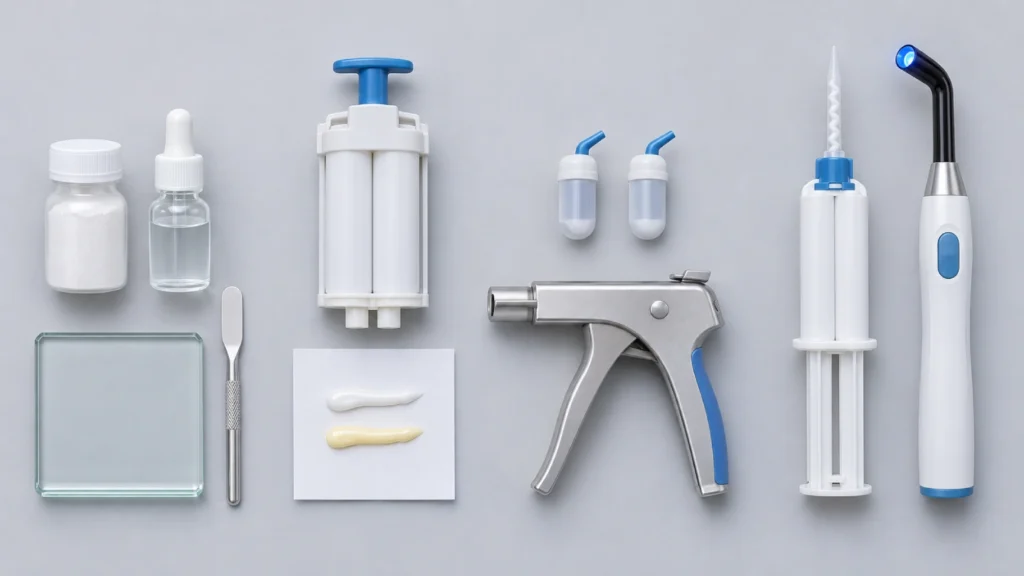
4. Chairside Protocol: The Steps That Actually Determine Retention
Critical reminder: The following is an evidence-informed workflow. Always follow your selected cement’s Instructions for Use (IFU)—mixing ratios, working times, cure schedules, and cleanup timing vary by product.[^2][^12]
4.1 Before Cement: Verify Fit and Function
- Complete seating check: If the crown doesn’t seat fully during try-in, do not proceed as if fit were acceptable[^30][^31]
- Verify: Margins, proximal contacts, contours, occlusion
- Make adjustments now—recheck fit after adjustments[^30]
4.2 Remove Provisional and Clean the Tooth
- Remove provisional cement and debris mechanically (e.g., pumice paste)[^12]
- Eliminate residues incompatible with definitive cement (temporary cement, disinfectant, desensitizer)[^12]
- For RMGI (per 3M protocol): Rinse with water and lightly dry, leaving prep moist—do not overdry[^12]
4.3 Isolation
Control saliva, crevicular fluid, and bleeding. Isolation is especially critical for adhesive resin.[^14][^9] If adequate field control cannot be maintained and the prep is retentive, a conventional cement may be more predictable than a contaminated resin protocol.[^9]
4.4 Treat the PFM Intaglio (Product-Specific)
3M PFM protocol example (manufacturer-specific, not universal):[^12][^1]
- Sandblast: 30 or 50 µm aluminum oxide at 2 bar (30 psi) to create matte surface
- Clean: Alcohol + oil-free air dry
- Why: Air abrasion improves resin-to-metal retention; particularly relevant when bonding is desired[^12][^1]
- Caution: Avoid abrading porcelain or thin framework areas unintentionally
For resin bonding: Use a primer compatible with the alloy and cement. MDP-containing primers (e.g., Z-Prime Plus, Monobond Plus) bond to metal oxides; noble alloys may require different functional monomers.[^17][^16] Do not assume ceramic silane alone primes metal.[^17]
4.5 Mix, Load, and Seat
- Follow product directions for powder/liquid, capsule, or automix
- Discard initial extruded increment if directed (prevents base/catalyst imbalance)[^4][^1]
- Apply thin, even layer to PFM intaglio—excess volume impedes seating[^4][^1]
- Seat fully along path of insertion with sustained axial pressure; maintain pressure through cleanup/set stage[^12]
- Check seating before cement sets[^12]
4.6 Remove Excess at the Cement’s Specified Stage (Not Interchangeable)
This timing is product-specific and non-negotiable:[^12]
Cement Example | Cleanup Timing | Set Time |
|---|---|---|
Ketac Cem Plus (RMGI) | 2 min after seating |
OR 5 sec tack light-cure per surface (crown held in place) | 5 min | | RelyX Unicem 2 (self-adhesive) | 1–2 sec tack cure, then scaler cleanup
⚠️ Do not over-tack-cure (cleanup becomes difficult) | Follow IFU |
Critical: Removing excess too early or too late creates clinical problems. Early = crown displacement; late = cement too hard to remove.[^12] Use the IFU for your cement, not these examples.
4.7 Final Check
- Remove interproximal excess carefully; floss contacts and inspect margins[^12][^32]
- Once set/cured, reassess occlusion in centric and excursions; adjust minimally and polish adjusted areas[^12][^32]
5. Special Situations: When Standard Protocol Needs Adjustment
5.1 Short or Non-Retentive Preparation
- First: Improve resistance form where feasible (reduce cervical convergence, add boxes/grooves if appropriate)[^27][^28]
- Then: Use resin cement when additional adhesive retention is needed and reliable protocol is achievable[^9][^27]
- Remember: Adhesive cement cannot correct fundamentally inadequate geometry[^9]
5.2 Subgingival Margins
- Margin location makes isolation and cleanup harder[^40]
- With adequate prep form but difficult moisture control, GI/RMGI may be more practical than adhesive resin[^14][^40]
- If resin retention is necessary, contamination control becomes critical[^40]
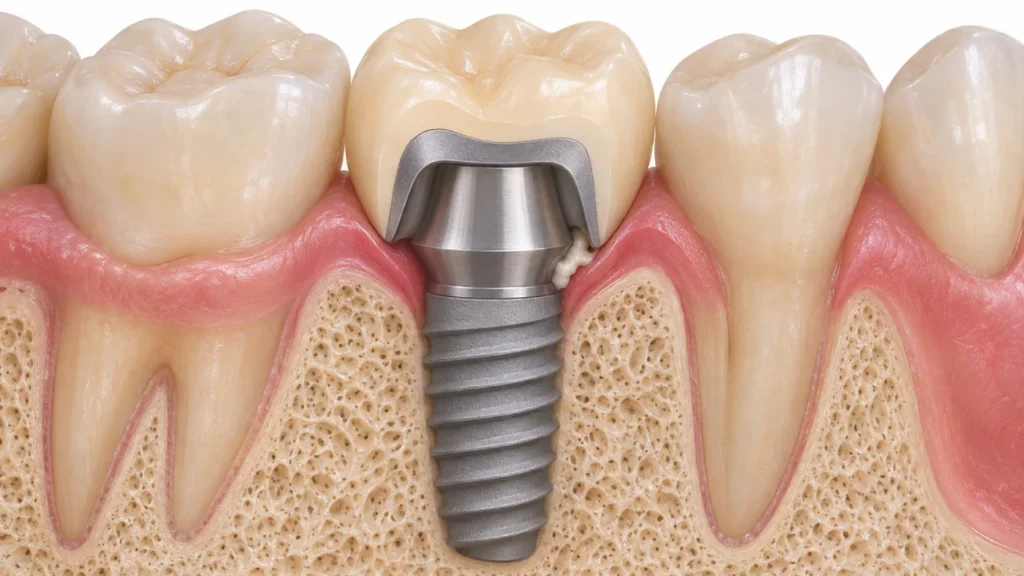
5.3 Implant-Supported PFM
Key additional concerns:[^41][^42][^43]
- Retrievability: Prefer screw retention when feasible
- Residual cement risk: Wilson’s endoscopic study found excess cement in 81% of implants presenting with peri-implant disease; 74% resolved after removal[^41]
- Protocol: Keep margins accessible; use controlled minimal cement volume; complete inspection/removal of excess[^41][^42]
5.4 Endodontically Treated Teeth
- Cement selection is secondary to remaining tooth structure, ferrule, and prep retention[^44][^9]
- Resin cement may help when retention is compromised, but neither cement nor a post substitutes for sound coronal structure[^44][^9]
- Ferrule is particularly important for preventing tooth/root fracture[^44]
5.5 High Caries Risk
- GI and RMGI release fluoride, so they may be reasonable choices when prep form permits[^9][^11]
- Do not promise prevention: Fluoride release from luting cement is not a replacement for caries-risk management, margin quality, hygiene, and recall[^9][^11]
5.6 Metal Allergy
- Changing cement does not remove exposure to the PFM alloy[^45][^46]
- If clinically relevant metal allergy is established or strongly suspected, identify the alloy and consider a metal-free alternative with the treating team[^45][^46]
- Context: ADA material guidance notes nickel sensitivity in 10–20% of the general population, though oral manifestations are rarer[^45]
6. Troubleshooting: When Things Go Wrong
6.1 Crown Won’t Seat During Cementation
Before cement sets, remove the crown rather than forcing it.[^12][^31]
Check:
- Proximal contacts (overly tight)
- Internal interferences
- Debris or temporary cement remnants
- Path of insertion
- Excessive cement volume or premature setting[^12][^31]
Correct the cause, clean prep/crown as appropriate, and retry. If crown still fails to seat, reassess fit or remake—do not accept a compromised margin.[^31]
6.2 Repeated Debonding
Investigate the cause before changing cement:[^20][^14][^47]
- Axial wall height and taper (the two most critical prep factors)[^20][^14]
- Core integrity
- Occlusal loading / parafunction
- Crown fit
- Contamination during cementation
- Surface treatment (was intaglio properly prepared?)
- Cement manipulation (correct mixing, timing, pressure?)
The PBRN study confirms: Preparation geometry and crown material are associated with bonding decisions—prep height and taper are central to retention.[^20] Resin is not a universal remedy for poor geometry.[^20][^47]
Clinical practice observation consistently shows that preparation design—not cement type—is the primary determinant in the majority of retention failure cases.
6.3 Removing a Cemented PFM Crown
Intact-removal options (from most conservative to most destructive):[^48][^49][^50][^51]
Method | Description | Use Case |
|---|---|---|
Ultrasonic instruments | Vibration disrupts cement bond | Quick attempt; may not work on well-bonded crowns |
Crown tractors / elevators | Christensen crown remover, WAMkey, Metalift | After sectioning; controlled force |
Richwil resin | Thermoplastic material; bite down, harden, pull | Temporary-cemented restorations primarily |
Crown sectioning | Diamond for porcelain → carbide for metal → separate and remove | Most reliable; crown is sacrificed |
Clinical technique observations (synthesized from practitioner discussions analyzing 30 crown removal cases):
- Use diamond bur for porcelain (coarse, 330 size common)
- Switch to carbide for metal (557 or 330 with crosscuts)
- Section buccal-occlusal-lingual line completely to gingival margin
- Engage crown separator/elevator in cut and torque gently
- If stuck, extend cuts mesio-distally and re-engage
Implant crown caution: Do NOT use jerky back-action force or aggressive ultrasonic removal—controlled sectioning is safer.[^51]
8. Key Takeaways: Decision Logic in Practice
8.1 The Decision Tree
Does the PFM prep meet retention criteria?
├─ YES (≥3mm walls, 10–20° TOC, H/B ≥0.4)
│ ├─ Use conventional cement: RMGI or GI (most common U.S. choice)
│ ├─ Zinc phosphate and polycarboxylate remain indicated alternatives
│ └─ Optional: Self-adhesive resin for added retention if desired
│
└─ NO (short walls, excessive taper, compromised resistance)
├─ First: Can geometry be improved? (reduce taper, add grooves/boxes)
├─ If improved → conventional cement now adequate
└─ If still compromised + reliable isolation achievable → adhesive resin
8.2 What Actually Predicts Retention
In order of importance:
- Axial wall height (3–4 mm minimum)[^25][^26]
- Total occlusal convergence (10–20° target)[^25][^26]
- Axial surface area and resistance form[^25][^27]
- Crown fit (complete seating, accurate margins)[^30][^31]
- Cement type (matters more when geometry is marginal)
8.3 Why PFM Crowns Rarely Get Bonded
U.S. practice reality: Only 13.8% of PFM crowns in the PBRN study were resin-bonded, vs. 70.8% for lithium disilicate and 38.8% for layered zirconia.[^20]
Reasons:
- PFM preps are typically designed for mechanical retention (adequate wall height/taper)
- Metal intaglio provides inherently retentive surface for conventional cements
- RMGI offers sufficient retention + fluoride release + easier cleanup than resin[^9][^12][^20]
- Resin bonding adds technique sensitivity without proportional benefit when prep is already retentive[^9][^14]
9. Frequently Asked Questions
Can I use the same cement for PFM that I use for zirconia?
Depends on the cement. Self-adhesive resins (e.g., RelyX Unicem 2) and RMGI (e.g., Ketac Cem Plus) are indicated for both PFM and zirconia.[^12][^14] But zirconia often benefits from adhesive bonding protocols (HF etch contraindicated; use sandblasting + MDP primer instead), while retentive PFM preps typically don’t need full bonding.[^9][^17] Follow the cement IFU and consider the prep.
What’s the difference between “cementing” and “bonding”?
Cementing (luting) = mechanical retention + optional chemical interaction (GI, RMGI, zinc phosphate). Bonding = micromechanical + chemical adhesion via resin (adhesive resin cement with etch/prime/adhesive protocol).[^9][^17] In U.S. practice, the PBRN study classified resin cement use as “bonded” vs. water-based cements as “nonbonded.”[^20]
How do I know if my prep is retentive enough for conventional cement?
Check: Axial wall height ≥3 mm (premolars) or ≥4 mm (molars); total occlusal convergence 10–20°; height-to-base ratio ≥0.4.[^25][^26] If you’re consistently under 2 mm of parallel wall (“short clinical crown”), conventional cement alone may be inadequate.[^27]
Why did my PFM crown debond?
Most common causes (in order):[^20][^47]
- Excessive prep taper or insufficient wall height
- Incomplete seating
- Contamination during cementation (moisture, saliva, blood)
- Incorrect cement handling (wrong mix ratio, expired material, improper cleanup timing)
- Parafunctional loading
- Core failure
Before switching cement, verify prep geometry and crown fit. Clinical observation consistently shows prep design—not cement type—as the primary factor in most retention failures.
What’s the best cement for PFM crowns?
There is no single “best.” For retentive preps, RMGI is the most commonly recorded choice in U.S. practice (52.2% of all crowns).[^20] It offers ionic bonding to tooth structure, fluoride release, and easier handling than conventional GI.[^9][^12] Zinc phosphate, polycarboxylate, and GI remain legitimate alternatives.[^9] For compromised retention, self-adhesive or adhesive resin becomes appropriate when isolation and protocol can be reliably executed.[^9][^14]
How long do I wait before cleaning excess cement?
Product-specific timing is non-negotiable:
- Ketac Cem Plus (RMGI): 2 min after seating OR 5 sec tack light-cure per surface[^12]
- RelyX Unicem 2 (self-adhesive): 1–2 sec tack cure, then remove[^12]
- Conventional GI: Wait until completely set before removal[^12]
Do not import timing from one cement to another—this is the #1 cause of difficult cleanup or crown displacement.[^12]
Should I sandblast the PFM intaglio before cementing?
For non-precious metal PFM: Yes, when using resin cement or seeking improved retention. The cited 3M protocol specifies 30 or 50 µm aluminum oxide at 2 bar (30 psi) to create a matte surface.[^12][^1] For conventional cement with a retentive prep: Less critical, though it doesn’t hurt. For noble/precious metal: Sandblasting helps, but bonding chemistry differs—use a primer formulated for noble alloys, not just MDP.[^17][^16]
Can I recement a PFM crown that came off?
Yes, if:
- The tooth/core is sound (no new decay, no fracture)
- The crown fits completely and margins are intact
- Old cement is thoroughly removed from both tooth and crown intaglio
- The cause of debonding is addressed (if it was a prep/fit issue, recementation alone won’t fix it)
Clinical guidance: Clean both surfaces thoroughly, verify fit, use RMGI or self-adhesive resin, and communicate realistic prognosis—if it failed once due to geometry, it may fail again.
Do I need rubber dam when cementing PFM crowns?
Not mandatory, but helpful for:
- Isolation during adhesive resin protocols (moisture control is critical)[^9][^14]
- Preventing aspiration of porcelain fragments during crown removal
- Controlling crevicular fluid in subgingival-margin cases
For routine RMGI cementation with adequate cheek retraction and suction, rubber dam is optional but recommended when field control is challenging.[^9][^14]
References
[^1]: Inside Dentistry. “Cements for PFM and All-Metal Restorations.” Inside Dentistry, November 2013. https://insidedentistry.net/2013/11/cements-for-pfm-and-all-metal-restorations/
[^2]: Lawson NC, et al. “Bonding crowns and bridges with resin cement: An American Dental Association Clinical Evaluators Panel survey.” J Am Dent Assoc. 2020;151(10):796–797.e2. doi:10.1016/j.adaj.2020.07.023. https://jada.ada.org/article/S0002-8177(20)30565-1/fulltext
[^3]: Foundation for Oral-facial Rehabilitation. “Fixed Prosthodontics – Dental Cements and Cementation Procedures.” https://www.ffofr.org/education/lectures/fixed-prosthodontics/dental-cements-and-cementation-procedures-2/
[^4]: Pocket Dentistry. “8: Dental cements.” https://pocketdentistry.com/8-dental-cements/
[^5]: Lawson NC, et al. “Choice of cement for single-unit crowns.” JADA June 2019. https://dralanatlas.com/wp-content/uploads/2019/07/Choice-of-cement-for-single-unit-crowns-JADA-JUNE-2019.pdf
[^6]: Dental Economics. “Discussing dental cements with Dr. Marvin Fier.” https://www.dentaleconomics.com/science-tech/cosmetic-dentistry-and-whitening/article/16387470/discussing-dental-cements-with-dr-marvin-fier
[^7]: PubMed. “Retentive characteristics of dental cementation materials.” PMID 23087930. https://pubmed.ncbi.nlm.nih.gov/23087930/
[^8]: ScienceDirect Topics. “Polycarboxylate Cement – an overview.” https://www.sciencedirect.com/topics/medicine-and-dentistry/polycarboxylate-cement
[^9]: Ghodsi S, et al. “Cement selection criteria for full coverage restorations: A comprehensive review of literature.” 2021; PMCID PMC8601696. https://pmc.ncbi.nlm.nih.gov/articles/PMC8601696/
[^10]: PMC. “Conventional and Contemporary Luting Cements: An Overview.” https://pmc.ncbi.nlm.nih.gov/articles/PMC3081255/
[^11]: PMC. “Fluoride exchange by glass-ionomer dental cements and its clinical effects: a review.” https://pmc.ncbi.nlm.nih.gov/articles/PMC10444020/
[^12]: 3M. “Made easy with 3M Ketac Cem Plus and RelyX Unicem 2: Easy use guide for PFM and zirconia crowns.” https://multimedia.3m.com/mws/media/1328802O/3m-ketac-cem-plus-and-unicem-2-easy-use-guide-for-pfm-and-zirconia-crowns.pdf
[^13]: 3M/Solventum. “3M RelyX Luting Plus Cement.” https://www.solventum.com/en-us/home/f/b00007413/
[^14]: PMC. “Choice of cement for single-unit crowns: Findings from the National Dental Practice-Based Research Network.” https://pmc.ncbi.nlm.nih.gov/articles/PMC6538426/
[^15]: ScienceDirect. “Retention of Metal-Ceramic Crowns With Contemporary Dental Cements.” https://www.sciencedirect.com/science/article/abs/pii/S0002817714645323
[^16]: PMC. “Influence of different surface treatments of nickel chrome metal alloy and types of metal primer monomers on the tensile bond strength of a resin cement.” https://pmc.ncbi.nlm.nih.gov/articles/PMC6626288
[^17]: British Dental Journal. “Predictable bonding of adhesive indirect restorations: factors for success.” https://www.nature.com/articles/s41415-021-3336-x
[^18]: The Journal of Prosthetic Dentistry. “Self-adhesive resin cement versus conventional cements on the failure rate of indirect single-tooth restorations: A systematic review and meta-analysis of randomized clinical trials.” https://www.thejpd.org/article/S0022-3913(24)00308-1/abstract
[^19]: ScienceDirect. “Choice of cement for single-unit crowns: Findings from The National Dental Practice-Based Research Network.” https://www.sciencedirect.com/science/article/abs/pii/S0002817719300388
[^20]: PubMed. “Choice of cement for single-unit crowns: Findings from The National Dental Practice-Based Research Network.” PMID 31030937. https://pubmed.ncbi.nlm.nih.gov/31030937/
[^21]: PubMed. “Dentist material selection for single-unit crowns: Findings from the National Dental Practice-Based Research Network.” PMID 27693778. https://pubmed.ncbi.nlm.nih.gov/27693778
[^25]: ScienceDirect. “Tooth preparations for complete crowns: An art form based on scientific principles.” Goodacre CJ, et al. https://www.sciencedirect.com/science/article/abs/pii/S0022391301577513
[^26]: ResearchGate. “Tooth preparations for complete crowns: An art form based on scientific principles.” https://www.researchgate.net/publication/12015675_Tooth_preparations_for_complete_crowns_An_art_form_based_on_scientific_principles
[^27]: PMC. “Short clinical crowns (SCC) – treatment considerations and techniques.” https://pmc.ncbi.nlm.nih.gov/articles/PMC3917630/
[^28]: Inside Dentistry. “Restoring a Tooth With a Short Clinical Crown.” August 2023. https://insidedentistry.net/2023/08/restoring-a-tooth-with-a-short-clinical-crown/
[^29]: PubMed. “Impact of Auxiliary Features on Retention of Short Dental Crowns: An In-Vitro Analysis of Box and Groove Preparations.” PMID 38444156. https://pubmed.ncbi.nlm.nih.gov/38444156/
[^30]: Roe Dental Lab. “What is the clinical workflow for a lab-fabricated PFM crown?” https://www.roedentallab.com/knowledge-base/what-is-the-clinical-workflow-for-a-lab-fabricated-pfm-crown-
[^31]: DDS Lab Blog. “How to ensure a dental crown fits | Dispatch #7.” https://blog.ddslab.com/fix-dental-crown-that-does-not-fit
[^32]: Alara Dental Blog. “Dental Cement for Crowns: Clinical Guide 2026.” https://alaradental.com/blog/dental-cement-for-crowns-guide
[^33]: PubMed. “Evaluation of hypersensitivity after the placement of metal-ceramic crowns cemented with two luting agents: Long-term results of a prospective clinical study.” PMID 28222871. https://pubmed.ncbi.nlm.nih.gov/28222871/
[^34]: PubMed. “A split-mouth randomized clinical trial of single crowns retained with resin-modified glass-ionomer and zinc phosphate luting cements.” PMID 15382776. https://pubmed.ncbi.nlm.nih.gov/15382776/
[^35]: PMC. “Comparison of marginal microleakage of metal copings cemented with three luting cements.” https://pmc.ncbi.nlm.nih.gov/articles/PMC8916601/
[^36]: ScienceDirect. “In vitro microleakage of luting cements and crown foundation material.” https://www.sciencedirect.com/science/article/abs/pii/S002239130117914X
[^37]: Sailer I, et al. “All-ceramic or metal-ceramic tooth-supported fixed dental prostheses (FDPs)? Part I: Single crowns.” https://www.sepes.org/wp-content/uploads/2021/11/A-systematic-review-of-the-survival-and-complication-rates.-Part-I.pdf
[^38]: PubMed. “All-ceramic or metal-ceramic tooth-supported fixed dental prostheses (FDPs)? A systematic review of the survival and complication rates. Part I: Single crowns (SCs).” PMID 25842099. https://pubmed.ncbi.nlm.nih.gov/25842099/
[^39]: PubMed. “A Systematic Review and Meta-analysis Evaluating the Survival, Failure, and Complication Rates of Metal-Ceramic, Veneered, and Monolithic All-Ceramic Tooth-Supported Single Crowns-Part 1.” PMID 41489982. https://pubmed.ncbi.nlm.nih.gov/41489982/
[^40]: Dentistry Today. “Ceramic Restorations – Guidelines for Cementing or Bonding.” https://www.dentistrytoday.com/ceramic-restorations-guidlines-cementing-bonding/
[^41]: PubMed. “The positive relationship between excess cement and peri-implant disease: a prospective clinical endoscopic study.” PMID 19722787. https://pubmed.ncbi.nlm.nih.gov/19722787/?dopt=Abstract
[^42]: PMC. “A Systematic Review of Cementation Techniques to Minimize Cement Excess in Cement-Retained Implant Restorations.” https://pmc.ncbi.nlm.nih.gov/articles/PMC8788496/
[^43]: PMC. “Effect of Crown Design, Cement Type and Margin Depth on the Removal of Cement Remnants Around Single Implant‐Supported Restorations. An In‐Vitro Study.” https://pmc.ncbi.nlm.nih.gov/articles/PMC13340517/
[^44]: Wiley Online Library. “The restoration of root filled teeth: a review of the clinical literature.” Bhuva et al. 2021. https://onlinelibrary.wiley.com/doi/full/10.1111/iej.13438
[^45]: ADA. “Materials for Indirect Restorations.” https://www.ada.org/resources/ada-library/oral-health-topics/materials-for-indirect-restorations
[^46]: PubMed. “Allergic reactions associated with metal alloys in porcelain-fused-to-metal fixed prosthodontic devices-A systematic review.” PMID 23115766. https://pubmed.ncbi.nlm.nih.gov/23115766/
[^47]: Mr Bur. “Fixed Prosthodontics Failure: Causes, Complications, and Clinical Solutions.” https://www.mrbur.com/en-us/blogs/education/when-fixed-prosthodontics-fails-clinical-lessons-from-crown-and-bridge-complications
[^48]: PubMed. “Review of techniques for the intact removal of a permanently cemented restoration.” PMID 28862589. https://pubmed.ncbi.nlm.nih.gov/28862589/
[^49]: AGD. “Review of techniques for the intact removal of a permanently cemented restoration.” https://www.agd.org/docs/default-source/self-instruction-(gendent)/gendent_so17_bajunaid.pdf?sfvrsn=2
[^50]: Journal of Interdisciplinary Dentistry. “Coronal disassembly systems and techniques: An overview.” https://journals.lww.com/joid/fulltext/2014/04010/coronal_disassembly_systems_and_techniques\_\_an.7.aspx
[^51]: Indian Journal of Dental Research. “New atraumatic easy removal technique for permanently cemented implant prostheses.” https://www.ovid.com/jnls/ijdr/fulltext/10.4103/0970-9290.107412~new-atraumatic-easy-removal-technique-for-permanently